
Pain Relief
Signs a Herniated Disc Is Healing
2026-06-17
5 min read

2026-06-22 • 4 min read
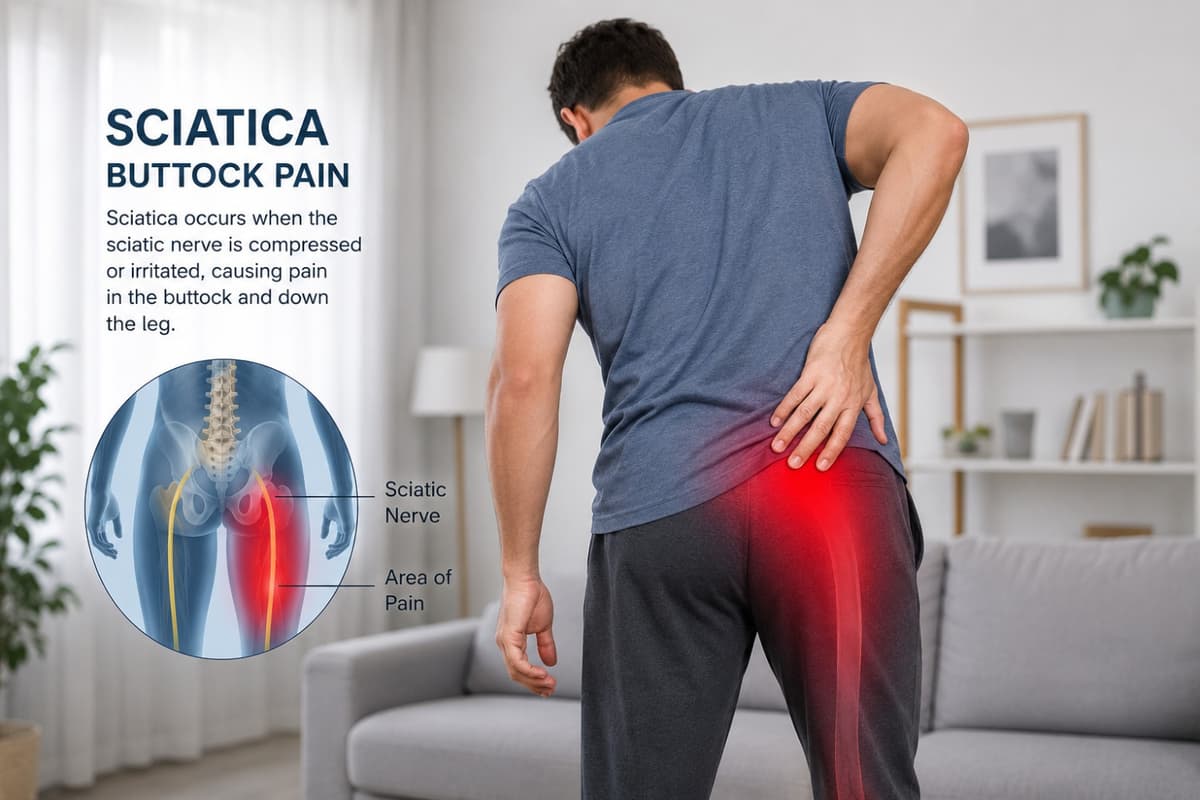
Few physical sensations are as uniquely disruptive as a sharp, electric shooting pain radiating deep through the gluteal region, down the back of the thigh, and into the lower leg. For millions of individuals navigating daily personal and professional responsibilities, experiencing sudden or chronic discomfort in the lower body can instantly halt productivity and drain vitality. When searching for answers, one fundamental question inevitably arises: what causes sciatica buttock pain? Understanding the underlying mechanical and inflammatory triggers of this condition is the first crucial step toward achieving lasting relief and restoring effortless mobility.
Rooted in anatomical reality and supported by guidance from authoritative health institutions such as the Mayo Clinic, Cleveland Clinic, and Harvard Medical School, sciatica is not a standalone diagnosis but rather a symptom of an underlying issue affecting the sciatic nerve [1] [2] [3]. Whether precipitated by a lumbar disc herniation, spinal stenosis, or deep muscular entrapment like piriformis syndrome, addressing the root cause requires a balanced approach combining modern physiological insights with holistic self-care. This comprehensive guide explores the anatomical mechanisms behind sciatic nerve irritation, outlines practical daily management strategies, and highlights how targeted botanical solutions like the Reset Emulsion and Reset Ultra Potent Gel provide fast, soothing comfort.
To comprehend what causes sciatica buttock pain, one must first examine the sciatic nerve itself. As the longest and thickest nerve in the human body, the sciatic nerve originates from multiple nerve roots exiting the lower lumbar spine (specifically L4 through S3) and the sacrum. These nerve roots converge in the pelvis, pass deep beneath the gluteus maximus and piriformis muscles in the buttock, and travel down each leg to supply sensation and motor control to the lower extremities.
When any structure along this complex anatomical pathway compresses, irritates, or inflames the nerve, shooting, burning, or aching pain manifests. Because the nerve runs directly underneath and sometimes through the piriformis muscle in the buttock, gluteal discomfort is frequently the very first and most pronounced symptom of sciatic nerve distress. For related perspectives on managing radiating discomfort and neck tension, explore guides on Pain Relief Neck Causes, Relief, and What Works Fast and Stiff Neck Muscles: Why They Tighten and How to Fully Release Them.
Clinical research confirms that sciatica is most frequently triggered by mechanical compression originating in the lumbar spine, though muscular factors in the hip region also play a substantial role [4]. Identifying the precise origin of nerve irritation is essential for tailoring effective recovery protocols.
The leading contributor to sciatic nerve compression is a lumbar disc herniation. The spinal discs act as shock absorbers between the vertebrae. When the outer fibrous ring of a disc tears or weakens, the gel-like inner core can bulge outward and press directly against adjacent lumbar nerve roots. This mechanical pressure, compounded by localized chemical inflammation, sends pain signals shooting down the pathway of the sciatic nerve into the buttock and leg [5]. As individuals age, natural degenerative changes such as spinal stenosis (narrowing of the spinal canal) and bone spurs can similarly constrict the space available for nerve roots, precipitating chronic flare-ups.
In addition to spinal sources, what causes sciatica buttock pain can sometimes be traced entirely to the hip and gluteal musculature. The piriformis muscle is a small stabilizer located deep in the buttock that assists in hip rotation. In a significant percentage of the population, the sciatic nerve runs directly adjacent to or even pierces straight through the piriformis muscle. When this muscle becomes chronically tight, inflamed, or spasmed—often due to prolonged sitting, repetitive athletic strain, or postural imbalances—it compresses the sciatic nerve. This condition, known as piriformis syndrome, mimics lumbar disc sciatica precisely, causing deep gluteal ache and radiating leg discomfort [6]. To explore complementary movement and recovery routines, read about Stiff Neck Exercises That Actually Release Tightness and Restore Easy Movement and recognizing warning signs via Is Your Stiff Neck a Bigger Problem? Signs That Demand Attention.
While addressing mechanical spinal alignment through physical therapy and posture correction is vital for long-term recovery, acute flare-ups of buttock and leg pain demand immediate, soothing intervention. Conventional oral painkillers often carry systemic side effects and fail to address localized muscle tightness surrounding the sciatic nerve pathway.
Applying targeted topical solutions allows active botanical compounds to penetrate the dermal barrier and deliver localized relief directly to overactive muscles and inflamed nerve pathways. The Reset Emulsion utilizes advanced nanotechnology with particle sizes under 85 nanometers to achieve up to 45% better analgesic activity, ensuring rapid absorption without a greasy residue [7]. For more intense, deep-seated muscular discomfort and severe tension associated with sciatic flare-ups, the Reset Ultra Potent Gel delivers double the concentration of active Ayurvedic herbs—including Boswellia serrata, Wintergreen, and Nirgundi—to relax deep tissue spasms and soothe persistent soreness. For specialized insights into traditional remedies, explore resources on Sciatica Treatment in Ayurveda: Exercises and What Actually Works and evaluating Roll-On for Headache: Fast Relief or Just Hype.
Navigating what causes sciatica buttock pain requires adopting a proactive, multi-dimensional lifestyle strategy. Integrating gentle movement, ergonomic adjustments, and supportive self-care rituals prevents minor stiffness from escalating into debilitating nerve entrapment.
Prolonged sitting is one of the primary catalysts for sciatic flare-ups, as sustained pressure on the gluteal muscles restricts local micro-circulation and compresses nerve pathways. Incorporating regular standing breaks, ergonomic lumbar support cushions, and gentle nerve-flossing stretches can dramatically reduce symptom frequency. Furthermore, maintaining a strong core stabilizes the lumbar spine, alleviating excessive load on spinal discs. To explore foundational recovery principles further, review guides on Pain Relief Oil: How It Works and When You Should Use It and Ayurvedic Pain Relief Oil: Natural Ingredients That Actually Work.
Managing localized nerve discomfort and muscular spasms should be effortless, clean, and completely aligned with a natural wellness philosophy. The Reset product line bridges ancient botanical wisdom with modern scientific rigor to deliver uncompromised relief.
Powered by synergistic Ayurvedic ingredients like Boswellia serrata (Shallaki) for anti-inflammatory support, Nirgundi for muscle relaxation, and Wintergreen for natural analgesia, both the Reset Emulsion and Ultra Potent Gel provide targeted comfort without synthetic harshness. Whether you choose the portable, mess-free roll-on emulsion for on-the-go convenience or the high-potency gel for deep muscular release, these formulations empower you to move through life unhindered by discomfort [8].
Understanding what causes sciatica buttock pain empowers you to shift from passive frustration to active, informed recovery. Whether your discomfort stems from lumbar disc compression or deep piriformis muscle tightness, true wellness is achieved by combining ergonomic discipline, intelligent movement, and targeted botanical care. By embracing the Reset philosophy of holistic physical optimization, you can quiet nerve irritation, melt away muscle tension, and step forward into a life of ease, balance, and boundless mobility.
The most common causes of sciatica buttock pain include lumbar disc herniation pressing on nerve roots, spinal stenosis, degenerative disc disease, and piriformis syndrome where the tight gluteal muscle entraps the sciatic nerve.
While both conditions cause pain radiating through the buttock and leg, piriformis syndrome stems from direct compression of the sciatic nerve by a tight or spasmed hip muscle, whereas lumbar disc sciatica originates from nerve root irritation in the lower spine.
Yes. Prolonged sitting increases mechanical pressure on the lumbar spine and compresses the gluteal muscles against the sciatic nerve, significantly exacerbating inflammation, stiffness, and radiating discomfort.
The Reset Emulsion and Ultra Potent Gel combine 7 potent Ayurvedic herbs—including Boswellia serrata and Wintergreen—using advanced nanotechnology to deliver fast-absorbing, targeted relief to tense muscles and sore areas along the sciatic pathway.
Yes. Formulated with 100% natural herbal ingredients and a zero-side-effect profile, Reset topical formulations are designed for safe, sustained daily application to manage recurring muscle spasms and stiffness.
You should seek immediate medical evaluation if your sciatica is accompanied by progressive leg weakness, loss of bowel or bladder control (cauda equina syndrome), or severe, unremitting pain following a traumatic injury.
Gentle walking is generally beneficial as it promotes spinal circulation and prevents stiffness, provided you maintain an upright posture and avoid overexertion or long strides that trigger sharp shooting pains.
Yes. Gentle stretches targeting the piriformis muscle, hamstrings, and lower back can help release muscular tension surrounding the nerve, though stretches should always be performed gently without forcing painful movements.
•Nerve Root vs. Muscle: Sciatica buttock pain is primarily triggered by lumbar spine compression (herniated discs/stenosis) or deep gluteal tension (piriformis syndrome).
•Anatomical Pathway: The sciatic nerve’s path beneath the gluteal muscles makes deep buttock ache an early and prominent indicator of nerve irritation.
•Targeted Transdermal Relief: Nanotechnology-driven topicals like the Reset Emulsion and Ultra Potent Gel deliver active herbs directly to sore tissues for rapid comfort.
•Ergonomic Discipline: Avoiding prolonged sitting and incorporating regular movement breaks are essential preventative habits against flare-ups.
•Natural Synergy: Combining Ayurvedic botanicals like Boswellia and Nirgundi offers a safe, non-invasive approach to managing everyday muscle and nerve discomfort.
1. Mayo Clinic. Sciatica: Symptoms, Causes, and Risk Factors. Retrieved from https://www.mayoclinic.org/diseases-conditions/sciatica/symptoms-causes/syc-20377435
2. Cleveland Clinic. Sciatica: What It Is, Causes, Symptoms, and Treatment. Retrieved from https://my.clevelandclinic.org/health/diseases/12792-sciatica
3. Harvard Medical School / Harvard Health Publishing. What Should You Do When Sciatica Flares?. Retrieved from https://www.health.harvard.edu/pain/what-should-you-do-when-sciatica-flares
4. American Medical Association (AMA). What Doctors Want Patients to Know About Sciatica and Spinal Health. Retrieved from https://www.ama-assn.org/public-health/prevention-wellness/what-doctors-want-patients-know-about-sciatica
5. National Health Service (NHS UK). Sciatica: Causes and Back Problems. Retrieved from https://www.nhsinform.scot/illnesses-and-conditions/muscle-bone-and-joints/neck-and-back-problems-and-conditions/sciatica/
6. Cleveland Clinic. Piriformis Syndrome: Symptoms, Causes, and Treatment. Retrieved from https://my.clevelandclinic.org/health/diseases/23495-piriformis-syndrome
7. Reset Wellness. Reset Emulsion Pain Relief Roll-On Product Specifications and Nanotechnology Data. Retrieved from https://www.reset.in/products/emulsion
8. Reset Wellness. Reset Ultra Potent Gel Product Specifications and Herb Profiles. Retrieved from https://www.reset.in/products/ultra-potent-gel
Share this article:
A 2X more powerful formula for enhanced relief.

₹799.00
₹794.00
Detox your body today with powerful herbs.

₹929.00
₹749.00
An easy to apply potent formula with roll-on massager

₹549.00
₹449.00
| Condition / Trigger | Primary Anatomical Site | Common Symptoms & Presentation |
|---|---|---|
| Lumbar Disc Herniation | Lower spine (L4-S1 vertebrae) | Sharp, shooting pain traveling from lower back through buttock and down leg |
| Piriformis Syndrome | Deep gluteal region / hip | Deep buttock ache, worsened by prolonged sitting, climbing stairs, or internal rotation |
| Spinal Stenosis | Lumbar spinal canal | Chronic dull ache, numbness, and fatigue in legs exacerbated by standing or walking |
| Sacroiliac Joint Dysfunction | Pelvic region / tailbone area | Radiating pain in lower back and buttocks that mimics true nerve root compression |
| Topical Product | Formulation Type | Primary Benefit for Sciatica & Muscle Spasms |
|---|---|---|
| Reset Emulsion | Nanotechnology Roll-On (<85 nm) | Fast-absorbing, mess-free 100-roll format with 45% enhanced analgesic action |
| Reset Ultra Potent Gel | Concentrated Botanical Gel | 2X stronger formula powered by 7 Ayurvedic herbs for deep-seated muscle tension |
| Traditional Oils | Heavy Liquid Oils | Standard surface massage requiring frequent reapplication and causing clothing stains |
| Synthetic Creams | Chemical Analgesics | Temporary cooling/heating sensation with potential skin irritation upon prolonged use |
| Lifestyle Category | Recommended Practices for Sciatica Management | Habits to Avoid |
|---|---|---|
| Ergonomics & Seating | Using lumbar support, taking 5-minute movement breaks every hour | Slouching on soft couches, sitting uninterrupted for hours at a desk |
| Mobility & Exercise | Gentle core strengthening, hamstring stretches, supervised nerve flossing | Heavy deadlifts with improper form, high-impact running during flare-ups |
| Targeted Relief Rituals | Massaging Reset Emulsion or Ultra Potent Gel into gluteal and lower back areas | Ignoring persistent radiating numbness or relying solely on temporary fixes |
| Hydration & Nutrition | Consuming anti-inflammatory omega-3s, staying well-hydrated for disc health | Diets high in processed sugars and trans-fats that promote systemic inflammation |
| Herb / Active Ingredient | Botanical Source | Primary Action in Reset Formulations |
|---|---|---|
| Boswellia serrata | Shallaki Tree Resin | Inhibits inflammatory 5-LOX enzymes to soothe nerve-adjacent tissue irritation |
| Nirgundi (Vitex negundo) | Five-Leaved Chaste Tree | Traditional Ayurvedic extract renowned for relieving deep muscle spasms |
| Wintergreen Leaf | Gaultheria fragrantissima | Natural methyl salicylate source providing rapid local analgesic action |
| Mentha piperata (Menthol) | Peppermint Extract | Delivers an immediate cooling sensation to soothe overactive pain receptors |
| Camphor Wood Chips | Cinnamomum camphora | Stimulates peripheral circulation to relax tense gluteal and lower back tissues |

