Ultra potent gel
A 2X more powerful formula for enhanced relief.

₹799.00
₹649.00
4.6

2026-06-17 • 5 min read
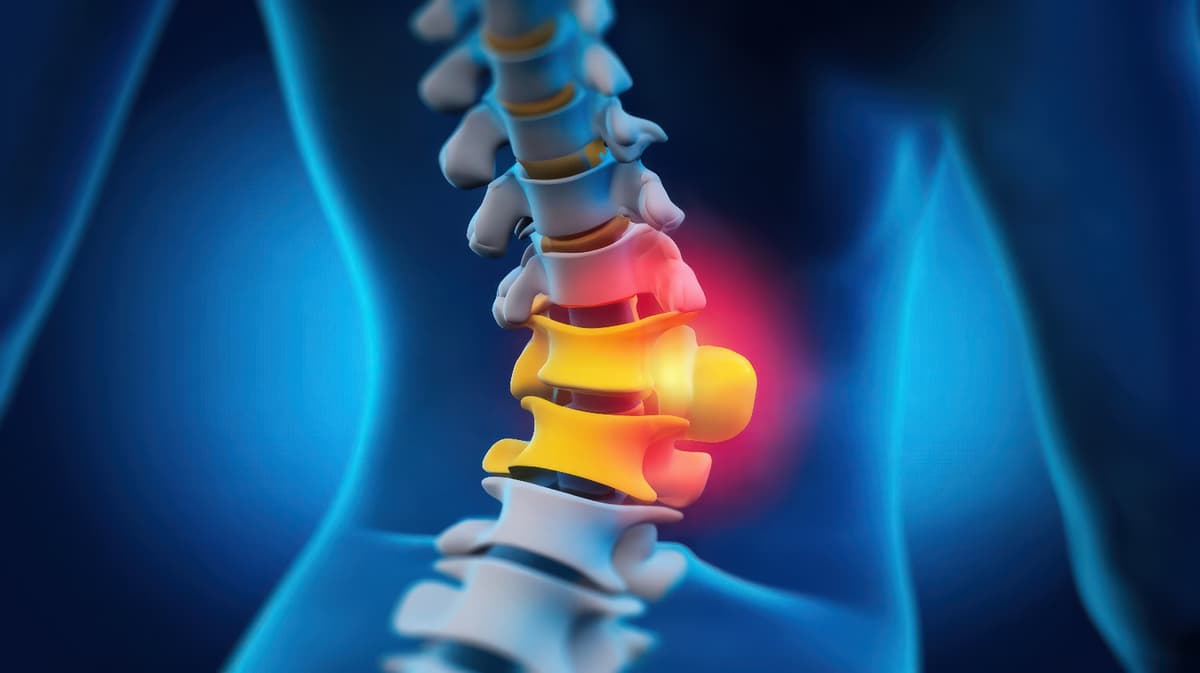
Somewhere around week three, most people with a herniated disc start asking the same question: is this actually getting better, or am I just getting used to the pain? It's a fair thing to wonder. Recovery from a slipped disc rarely feels like a straight line — some days you bend without a second thought, and the next morning a stiff twinge reminds you the job isn't done. Learning to read the signs a herniated disc is healing takes the guesswork out of that in-between stage.
Your body is doing something remarkable in the background: reabsorbing leaked disc material, calming inflamed nerves, and slowly rebuilding strength you didn't know you'd lost. This guide walks through what that process actually looks like week to week, the specific signs that tell you you're on track, the handful of red flags that mean it's time to call a doctor, and the daily habits — including targeted topical support — that make the difference between a slow recovery and a steady one.
A disc herniates when the soft, gel-like center of a spinal disc pushes through a weakened area in its tougher outer wall, putting pressure on a nearby nerve. According to MedlinePlus, a service of the U.S. National Library of Medicine, this most often occurs in the lower back, and the resulting pressure on spinal nerves is what produces the pain, numbness, or weakness people associate with a "slipped disc."
Healing isn't a single event — it's a sequence. Understanding the phases helps you set realistic expectations instead of judging your progress day by day.
●Inflammatory phase — your immune system rushes to the site, which is uncomfortable but necessary; this is usually when pain and muscle spasm are at their worst
●Resorption phase — your body gradually breaks down and clears the displaced disc material, easing pressure on the nerve; many herniations visibly shrink on later imaging during this window
●Repair phase — the outer disc wall stabilizes, nerve signaling gradually normalizes, and strength slowly returns to affected muscles
Timelines vary widely by person and severity, but MedlinePlus notes that it can take several months to a year or more before someone returns to all of their normal activities without pain — a useful reminder to measure recovery in trend lines, not single days.
One of the earliest and most reliable signs of healing is pain that retreats toward the spine rather than staying spread down the leg. Physical therapists call this centralization, and it's a genuinely encouraging pattern — it suggests the pressure on the nerve root is easing, even before the pain intensity drops significantly.
If your pain originally radiated down one leg, pay attention to how far it travels day to day. Less spread, even with similar intensity, is progress. If your pain has consistently favored one side of your lower back, our guide to right side back pain breaks down how to tell muscular pain apart from nerve-related pain in more detail.
Numbness and tingling — often felt in the calf, foot, or toes with a lower-back herniation — should gradually soften as the nerve recovers. Many people notice it first as a return of "fullness" in the skin, before full sensation comes back. Muscle strength follows a similar pattern: the ability to push off your toes, climb stairs without your leg giving way, or hold a squat a little longer are all small, measurable wins.
●Sleeping through more of the night without pain waking you up
●Needing less pain medication to get through the day
●Sitting for longer stretches — driving, desk work — before discomfort sets in
●Bending to tie your shoes or reaching for a low shelf without bracing first
Signs of Healing vs. Signs You Need a Doctor Now
Most herniated disc recovery follows a gradual, encouraging path. But a small number of symptoms are not part of normal healing — they signal nerve compression severe enough to need urgent medical attention.
The right-hand symptoms can point to cauda equina syndrome, a rare but serious complication that needs same-day medical evaluation. For general guidance on when back-related symptoms warrant a doctor's visit, MedlinePlus advises flagging any weight loss, fever, change in bladder or bowel habits, or loss of balance to your provider.
The "Why" — The Science Behind Disc Recovery
MedlinePlus describes the standard approach to a herniated disc as a short period of rest and pain relief, typically followed by physical therapy — not weeks of staying still. Prolonged bed rest can actually slow recovery by weakening the very core and back muscles that support your spine during healing. Gentle, guided movement keeps blood flow to the area and helps prevent the stiffness that makes flare-ups more likely later.
Our article on lower back pain causes covers the everyday habits — prolonged sitting, poor lifting mechanics, weak core strength — that both trigger herniations and slow recovery when left unaddressed.
The lower back carries more mechanical load than any other part of the spine, which is why MedlinePlus identifies it as the most common site for disc herniation. Within the lower back, the L4-L5 and L5-S1 levels see the highest share of cases, since they bear the most weight during everyday bending and lifting.
If your reports mention the L4-L5 level specifically, our detailed breakdown of L4-L5 pain symptoms explains exactly what that level controls and why symptoms show up where they do.
The "How" — Supporting Healing Today
●Walk in short, frequent sessions rather than one long walk — it keeps circulation moving without overloading the disc
●Maintain a neutral spine when sitting; a rolled towel at the lower back helps if your chair lacks support
●Avoid twisting under load — turn your whole body instead of rotating just your spine when lifting
●Build up gentle core and glute strength once acute pain has settled, since these muscles share the load with your spine
For a structured approach once you're past the acute phase, lower back pain relief exercises walks through movements sequenced for safe progression, and how to improve posture covers the daily adjustments that keep pressure off a healing disc.
A herniated disc heals from the inside, but targeted topical care can make the process noticeably more comfortable while your body does that work — easing muscle guarding, calming surface-level inflammation, and helping you stay mobile enough to keep the healing movement going.
Reset's pain relief range — the Ultra Potent Gel and the Emulsion Roll-On — is formulated with Wintergreen leaf, Mentha piperata (menthol), Neelgiri (eucalyptus), Nirgundi (Vitex negundo), camphor, Boswellia serrata, and Ajmoda (celery seed), delivered via nanotechnology for deeper penetration than a standard rub. The Emulsion is specifically formulated for sciatica-type radiating pain, which makes it a natural fit for the nerve-related discomfort a herniated disc often causes.
Ultra Potent Gel vs. Emulsion: Matching Product to Recovery Stage
Do's and Don'ts During Herniated Disc Recovery
●Signs a herniated disc is healing include pain that shrinks in distance down the leg, returning sensation and strength, better sleep, and less reliance on medication
●Healing happens in phases — inflammatory, resorption, and repair — and can reasonably take several months to a year for full recovery
●Sudden bladder or bowel changes, saddle numbness, or rapidly worsening leg weakness are red flags that need same-day medical care, not home management
●Gentle, consistent movement supports healing more than prolonged rest, according to standard clinical guidance
●Reset's Ultra Potent Gel and Emulsion Roll-On offer targeted, non-oral comfort at different stages of disc recovery, using concentrated Ayurvedic actives
Most people see meaningful improvement within six weeks, though full recovery without pain can take several months to a year. The vast majority of herniated discs improve with rest, movement, and physical therapy rather than surgery.
Often, yes. The body naturally reabsorbs displaced disc material over time, and many people recover full function without surgical intervention, particularly when symptoms are caught and managed early.
Generally yes. Gentle, frequent walking supports circulation and prevents the stiffness that prolonged rest can cause. Start with short distances and increase gradually based on comfort.
Most people notice pain that becomes more intermittent and less far-reaching down the leg, gradually improving sensation, and small daily wins like better sleep or easier bending — even while some stiffness remains.
It's possible to have flare-ups during recovery, especially after overexertion. This doesn't necessarily mean healing has reversed, but a significant or sudden worsening always warrants a call to your doctor.
Seek immediate medical attention if you experience loss of bladder or bowel control, numbness in the groin or inner thighs, or rapidly worsening leg weakness — these can indicate a rare but serious complication.
Sources: MedlinePlus (National Library of Medicine, National Institutes of Health) — medlineplus.gov/ency/article/000442.htm and medlineplus.gov/ency/article/007494.htm
This article is for informational purposes only and is not a substitute for professional medical advice, diagnosis, or treatment.
Share this article:
A 2X more powerful formula for enhanced relief.
₹799.00
₹649.00
A dose of immunity and goodness with a tangy twist

₹439.00
₹419.00
A herbal dose of complete wellness

₹439.00
An easy to apply potent formula with roll-on massager

₹549.00
₹449.00
| Phase | What's happening | What you might feel |
|---|---|---|
| Inflammatory (early weeks) | Immune response clears irritants around the nerve; swelling is at its peak | Sharpest pain, muscle spasm, possible sciatica down the leg |
| Resorption (following weeks) | Displaced disc material is gradually reabsorbed; pressure on the nerve starts to ease | Pain becomes intermittent rather than constant; less radiating |
| Repair and remodeling (months) | Scar tissue stabilizes the disc wall; nerve function slowly restores | Residual stiffness, returning strength, occasional flare after activity |
| Encouraging sign | Red flag — seek care immediately |
|---|---|
| Leg pain that's shrinking in distance, even slowly | Sudden loss of bladder or bowel control |
| Numbness or tingling that's gradually softening | New numbness in the groin or inner thighs |
| Strength slowly returning in the affected leg | Rapidly worsening weakness in one or both legs |
| Pain that's manageable and trending downward | Severe pain paired with fever or unexplained weight loss |
| Recovery stage | Best fit | Why |
|---|---|---|
| Inflammatory phase — sharp, localized pain | Ultra Potent Gel | 2X concentrated actives with 54% improved analgesic activity, suited to intense early-stage discomfort |
| Resorption phase — radiating leg or sciatica-type pain | Emulsion Roll-On | Formulated specifically for sciatica and radiating nerve pain, with 45% better analgesic activity in a lightweight format |
| Repair phase — residual stiffness after activity | Either, based on preference | Gel for deeper, occasional stiffness; Emulsion for light daily maintenance |
| On the go — work, travel, gym bag | Emulsion Roll-On | Non-staining, absorbs quickly, easy to reapply without interrupting your day |
| Do | Don't |
|---|---|
| Keep moving gently, even on lower-pain days | Stay in bed for days at a stretch |
| Track how far leg pain travels, not just its intensity | Ignore leg pain that's spreading or worsening |
| Apply topical relief consistently during flare-ups | Return to heavy lifting before you're cleared |
| Maintain neutral spine posture while sitting and standing | Twist your spine under load when lifting |