
Pain Relief
L5-S1 Disc Bulge Recovery Time
2026-06-29
5 min read

2026-04-09 • 5 min read
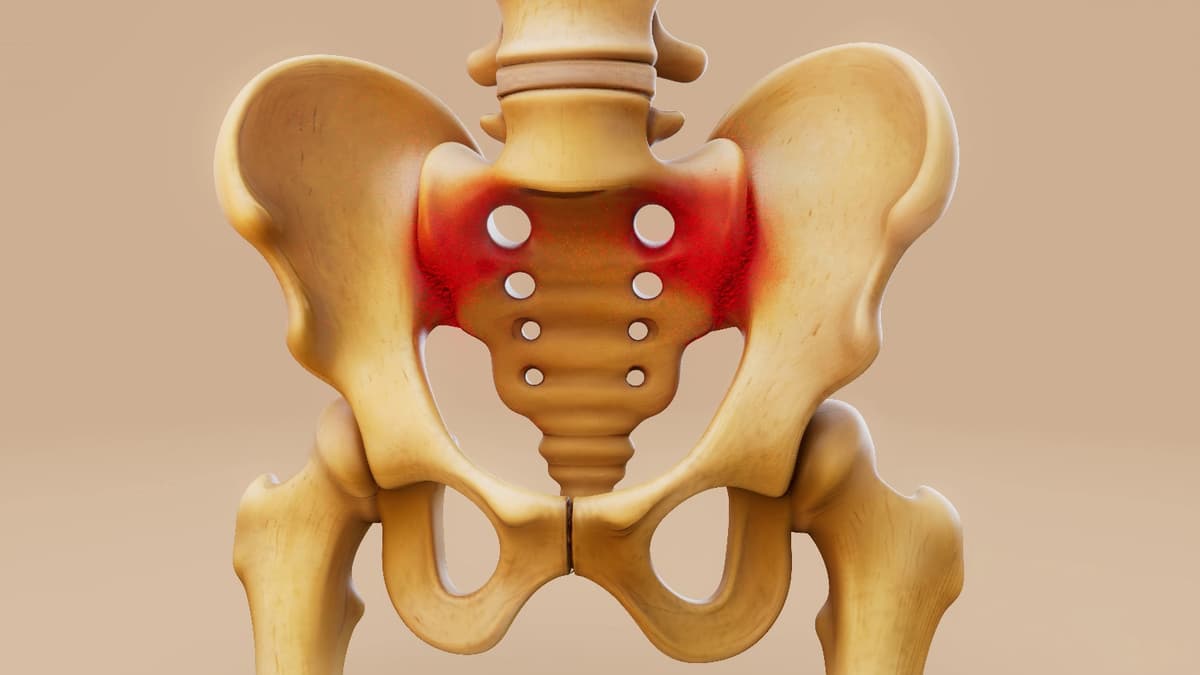
There is a deep, dull ache that starts just below your lower back — sometimes shifting to one side of the buttock, sometimes radiating into the thigh or groin. You have tried stretching. You have tried rest. The pain keeps returning. If this sounds familiar, your sacroiliac joint may be the silent culprit behind it all.
Pain originating from the iliac crest, pelvic bone, and sacral region is remarkably common — yet chronically misdiagnosed. Many people spend months chasing sciatica or disc herniation diagnoses when the real source sits at the junction of the spine and pelvis: the sacroiliac (SI) joint.
This guide breaks down what the SI joint is, why it hurts, and — most importantly — what you can actually do about it today. Whether you are newly diagnosed or have been managing this pain for years, the answers are here.
The sacroiliac joint connects the sacral region — the triangular bone at the base of your spine — to the iliac crest of each pelvic bone. These two large joints (one on each side of the pelvis) bear the entire weight of your upper body and absorb shock with every step you take.
The anterior superior iliac spine (ASIS) is the bony prominence you can feel at the front of your hip. It anchors several key muscles and ligaments that stabilise pelvic movement. When the SI joint is inflamed or unstable, pain often radiates from this area toward the lower back, groin, and thigh.
Table 1 — Anatomy of the Sacropelvic Region at a Glance
SI joint pain does not have a single cause — and that is precisely why it is so often missed. It can be triggered by structural imbalances, trauma, inflammatory disease, or even hormonal changes during pregnancy. If you have been wondering whether your lower back pain has a deeper root, this overview of back pain causes may help connect the dots.
The most common triggers include:
•Pregnancy and postpartum ligament laxity, which destabilises the pelvic ring
•Falls or direct trauma to the pelvic bone or iliac crest region
•Ankylosing spondylitis and other inflammatory arthritis conditions
•Leg-length discrepancy that places uneven load across the SI joint
•Prolonged sitting or desk work that shortens hip flexors and stresses the sacral region
•Heavy lifting with poor pelvic mechanics
Table 2 — Common Causes of SI Joint Pain & Who They Affect
Because the SI joint sits deep within the pelvic structure, its pain patterns are notoriously deceptive. People frequently mistake it for a herniated disc, sciatica, or even kidney pain. Understanding what is actually happening in your body is the first step toward effective relief.
Common symptoms include:
•A deep, aching pain on one or both sides of the lower back, just above the buttock crease
•Stiffness and reduced range of motion when rising from a chair after sitting
•Pain that worsens when standing on one leg, climbing stairs, or transitioning from sitting to standing
•Radiating discomfort into the groin, hip, or back of the thigh — often mistaken for sciatica
•A sensation of instability or 'giving way' in the pelvis during walking
Women are disproportionately affected — hormonal and structural differences create greater pelvic instability. For a related perspective on how joint issues specifically affect women, see what causes knee pain in females.
The SI joint is unusual in the body. Unlike most joints, it moves very little — just 2 to 4 degrees of rotation — but it sustains enormous compressive force during everyday activities. When its surrounding ligaments become inflamed, overstretched, or stiffened, the joint loses its shock-absorbing capacity.
This condition is formally known as sacroiliitis — inflammation of the SI joint. It disrupts the coordinated load transfer between the lumbar spine, pelvic bone, and lower limbs. Nearby nerve roots from the L4 to S3 spinal levels run through the sacral region, which explains why SI joint dysfunction creates that convincing sciatica-like shooting pain down the leg.
Mechanically, even a small asymmetry — a slightly rotated iliac crest, a stiffened piriformis muscle, or minor leg-length discrepancy — is enough to throw off the entire pelvic kinetic chain. The result is not just local pain; it is a cascade of compensatory tension throughout the hips, lumbar spine, and knees.
The good news is that the vast majority of SI joint pain cases respond well to conservative treatment. You do not need surgery or complex interventions to find meaningful relief. What you need is the right combination of targeted movement, anti-inflammatory support, and consistent daily care.
The most evidence-backed approaches include:
•Physical therapy: pelvic stabilisation exercises, including bridges, clamshells, and gentle hip flexor stretches
•Hot and cold therapy: ice in the first 48 hours of a flare; moist heat for chronic stiffness
•SI joint belts or bracing: provide external stability during acute phases
•NSAIDs: short-term use for acute inflammation; not suitable for long-term daily use
•Corticosteroid injections: offer targeted relief lasting 1 to 3 months in resistant cases
•Topical herbal analgesics: daily application to the sacral region and iliac crest for ongoing management
Many of the same physiotherapy principles that help SI joint recovery also apply to other joint conditions. If you have had shoulder stiffness alongside your pelvic pain, our guide on frozen shoulder causes and recovery covers the movement-first approach in more detail.
Table 3 — SI Joint Treatment Comparison: Conventional vs. Holistic
When it comes to managing the day-to-day inflammation and discomfort of sacroiliac joint pain, topical herbal formulations offer a compelling alternative to oral NSAIDs — especially for those seeking a sustainable, side-effect-free approach to daily care.
Two products from Reset are particularly well-suited to SI joint management:
A roll-on herbal emulsion ideal for daily application over the sacral region, iliac crest, and surrounding soft tissue. Apply in circular motion 2–3 times a day. Preservative-free, non-greasy, and portable.
A 2X potency herbal pain relief gel powered by nanotechnology for deeper skin penetration. Particularly effective during acute pain flares or when deeper tissue relief is needed.
Both products share the same powerful botanical base — chosen specifically for their anti-inflammatory, analgesic, and joint-supportive properties:
Table 4 — Key Herbal Ingredients & Their Actions for SI Joint Pain
Sleep is when your body does its deepest repair work — yet the wrong sleeping position can undo hours of daytime progress. SI joint pain often spikes at night, particularly when rolling over or getting in and out of bed.
The positions that consistently reduce pressure on the pelvic bone and sacral region include:
•Side sleeping in the foetal position with a firm pillow between your knees — this neutralises pelvic tilt and reduces rotational force on the SI joint
•Back sleeping with a pillow placed under your knees — reduces lumbar lordosis and shares load across the sacrum evenly
•Avoid stomach sleeping entirely — it forces the lumbar spine into extension and creates asymmetrical stress on the iliac crest
For women dealing with SI pain that worsens during or after menstruation, this guide on Ayurvedic remedies for period pain covers complementary approaches for hormonal-related pelvic discomfort.
In Ayurveda, pain in the sacral and pelvic region is typically understood as a manifestation of aggravated Vata dosha — characterised by dryness, instability, and erratic movement of prana (vital energy) through the lower body. The SI joint, as a high-load mobile structure, is inherently vulnerable to Vata imbalance, particularly as we age or during times of stress and depletion.
The Ayurvedic approach to SI joint care goes beyond symptom management. It involves:
•Warming and oleating the pelvic region through herbal oil application — the botanical base in Reset products aligns directly with this principle
•Gentle movement practices such as yoga and pranayama to restore Vata balance
•Dietary adjustments favouring warm, nourishing, easily digestible foods
•Adequate rest during acute flares — Ayurveda treats rest not as passivity but as active recovery
This holistic framework is also why many people find Ayurvedic interventions effective for adjacent conditions — Ayurvedic treatment for cervical spondylosis follows a similar principle of addressing the root systemic imbalance rather than just the local joint.
How long does it take for SI joint pain to heal?
Recovery time varies depending on the cause and severity. Mild to moderate SI joint pain from muscle strain or pregnancy typically improves within 4 to 12 weeks with consistent physiotherapy and topical anti-inflammatory support. Chronic conditions such as ankylosing spondylitis require longer, ongoing management. The key variable is consistency — daily targeted care accelerates recovery significantly compared to intermittent treatment.
What is the best sleeping position for sacroiliac joint pain relief?
Side sleeping with a pillow between the knees is generally the most effective position for relieving pressure on the pelvic bone and sacral region. It prevents the top leg from rotating the pelvis forward, which is a major driver of nighttime SI pain. If you prefer sleeping on your back, placing a pillow under your knees reduces lumbar extension and distributes sacral load more evenly. Avoid sleeping on your stomach.
What is the anterior superior iliac spine (ASIS)?
The anterior superior iliac spine — commonly abbreviated as ASIS — is the bony protrusion you can feel at the front of your hip, at the top-front corner of the pelvic bone. It serves as a critical attachment point for the sartorius muscle, the inguinal ligament, and several other structures that govern pelvic and hip stability. Pain near the ASIS is often associated with SI joint dysfunction, hip flexor strain, or stress fractures in active individuals.
What is the sacral region?
The sacral region refers to the area of the lower spine occupied by the sacrum — a large, triangular bone formed by five fused vertebrae (S1 to S5). It sits between the two iliac bones of the pelvis and connects the spinal column to the pelvic girdle. The sacral region is central to load transfer between the upper and lower body, and it houses nerve roots that supply sensation and motor function to the pelvis, legs, and bladder.
What is the best thing to do for sacroiliac joint pain?
The most effective first steps are: targeted physiotherapy exercises (pelvic stabilisation and gentle stretching), consistent heat or cold application depending on whether the pain is acute or chronic, and daily topical herbal support to manage inflammation at the joint surface. Avoiding prolonged sitting, sleeping in a supported position, and maintaining a healthy body weight are equally important lifestyle factors. For severe or persistent cases, consult a physiotherapist or orthopaedic specialist for an assessment.
Can I use topical gels like Reset for SI joint pain?
Yes. Topical herbal products such as the RESET Easy-to-Rub Emulsion and RESET Ultra Potent Gel can be applied directly over the sacral region and iliac crest as part of a daily management routine. Their botanical ingredients — particularly Nirgundi, Boswellia serrata, Menthol, and Wintergreen — have well-documented anti-inflammatory and analgesic properties. They work best as a complement to physiotherapy rather than a standalone solution for structural SI joint issues.
•Sacroiliac joint pain originates at the junction of the sacral region and pelvic bone — and is far more common than most people realise
•Pain around the iliac crest, anterior superior iliac spine, and lower back that worsens with positional change is a key hallmark of SI dysfunction
•Conservative treatment — physiotherapy, rest, heat/cold, and anti-inflammatory support — resolves most cases without surgery
•Herbal topicals containing Nirgundi, Boswellia serrata, Menthol, and Wintergreen offer effective, daily sacral region relief
•RESET Easy-to-Rub Emulsion and RESET Ultra Potent Gel are purpose-built for this kind of localised joint and soft-tissue management
•Sleep position, lifestyle habits, and Ayurvedic principles of Vata balance all play a meaningful role in long-term recovery
→ Ayurvedic Treatment for Cervical Spondylosis
→ What Causes Frozen Shoulder — Signs, Stages & Recovery
→ What Causes Knee Pain in Females
→ Best Ayurvedic Remedies for Period Pain
→ Abdominal & Stomach Pain Guide — Causes, Quadrants, and Relief
Share this article:
An easy to apply potent formula with roll-on massager

₹549.00
₹449.00
A 2X more powerful formula for enhanced relief.

₹799.00
₹794.00
Infused with 6 powerful essential oils

₹1,299.00
₹999.00
| Structure | Location | Function |
|---|---|---|
| Sacral Region | Base of spine, above tailbone | Connects spine to pelvis; absorbs spinal load |
| Iliac Crest | Top rim of the pelvic bone | Anchors muscles and SI joint ligaments |
| Pelvic Bone (Ilium) | Hip girdle — left and right | Weight-bearing, balance, and gait stability |
| Anterior Superior Iliac Spine (ASIS) | Front-top of iliac bone | Key muscle and ligament attachment point |
| Sacroiliac Joint | Junction of sacrum and ilium | Transfers load; allows minimal pelvic movement |
| Cause | Who It Affects Most | Typical Severity |
|---|---|---|
| Pregnancy / Postpartum | Women (especially third trimester) | Moderate to High |
| Trauma or Fall | Athletes, active individuals, elderly | Variable |
| Ankylosing Spondylitis | Young adults, more common in males | High |
| Leg-Length Imbalance | General population | Low to Moderate |
| Prolonged Sitting / Poor Posture | Desk workers, drivers | Low to Moderate |
| Heavy Lifting / Overuse | Manual workers, gym-goers | Moderate |
| Approach | Method | Duration | Side Effects |
|---|---|---|---|
| NSAIDs (oral) | Ibuprofen / Diclofenac | Short-term only | GI irritation, risk with long-term use |
| Physiotherapy | Targeted pelvic exercises | 4 to 12 weeks | None |
| SI Joint Injection | Corticosteroid / local anaesthetic | 1 to 3 months per dose | Minimal; localised discomfort |
| Topical Herbal Relief | Herbal emulsion or gel (daily) | Daily — ongoing | Negligible; patch-test advised |
| Ayurvedic Botanicals | Internal + external herbal approach | Long-term management | Rare |
| Pelvic Bracing | SI belt / support band | Acute phase | None |
| Ingredient | Traditional Use | Action for SI Joint Pain |
|---|---|---|
| Nirgundi (Nirgundi Patta) | Southeast Asian Ayurveda | Anti-inflammatory and analgesic — reduces localised joint inflammation |
| Boswellia serrata (Shallaki) | Indian Ayurvedic medicine | Supports joint health; reduces stiffness and chronic inflammatory markers |
| Wintergreen Berries | North American traditional use | Rich in methyl salicylate — acts as a natural aspirin-like analgesic |
| Menthol (Pudina Satt) | Peppermint extract | Cooling effect numbs pain signals; immediate sensory relief |
| Kapoor Bark (Camphor) | East Asian traditional use | Calming and anti-inflammatory; reduces swelling and muscular soreness |
| Ajmoda Beej (Celery Seed) | Mediterranean Ayurveda | Anti-inflammatory support for long-term pain management |
| Eucalyptus Globulus | Traditional analgesic herb | Antioxidant properties; helps reduce local MPO-driven inflammation |

