
Pain Relief
L4-L5 Pain Symptoms: What Your Lower Back Is Actually Trying to Tell You
2026-06-10
5 min read

2026-05-08 • 5 min read
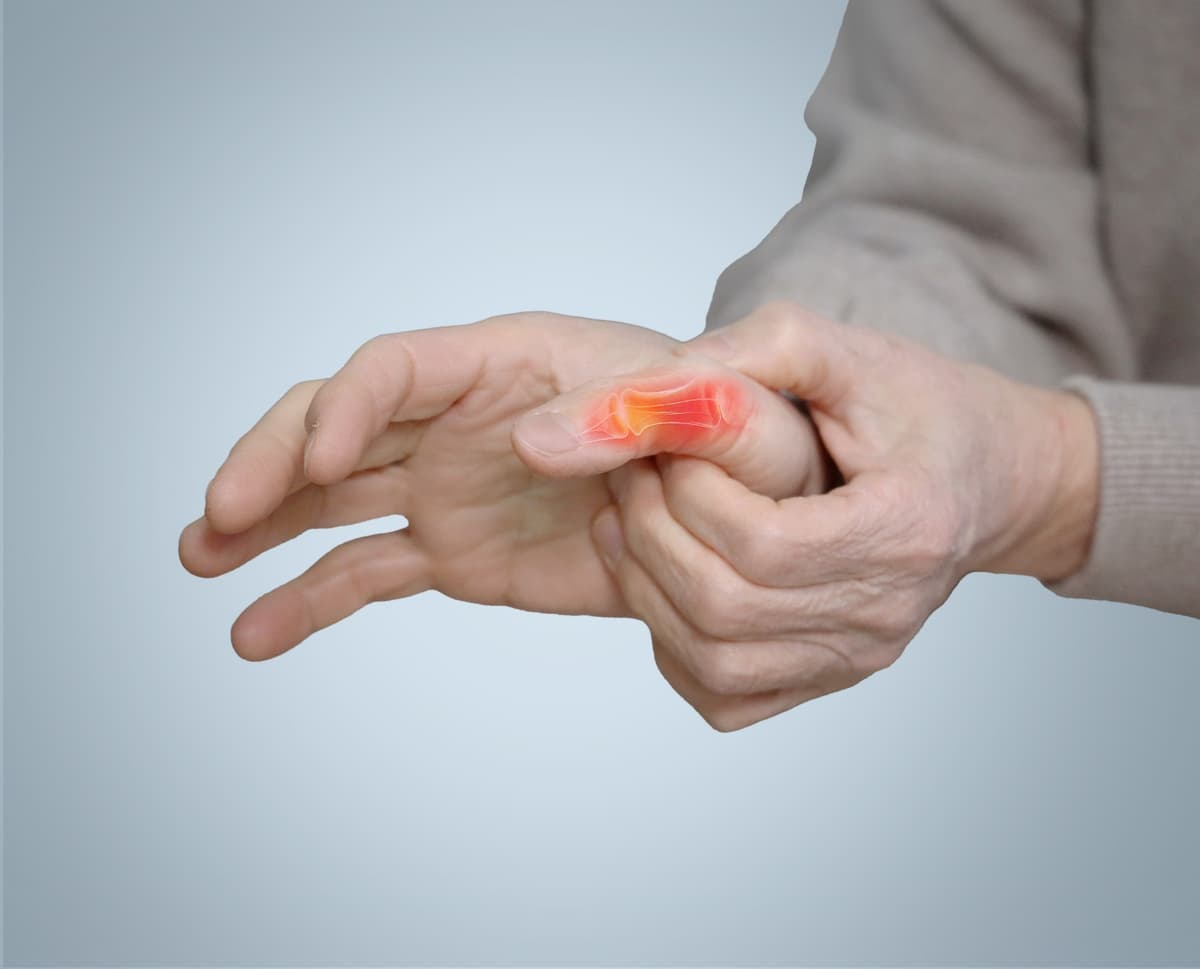
Arthritis in fingers and hand joints is caused by:
• Cartilage breakdown with age (Osteoarthritis) — the most common cause
• Autoimmune attack on joint lining (Rheumatoid Arthritis) — affects both hands symmetrically
• Uric acid crystal deposits (Gout) — sudden, severe flares
• Skin-linked inflammation (Psoriatic Arthritis) — co-occurs with psoriasis
Each type affects different joints, progresses differently, and requires a tailored treatment approach. Early detection and the right intervention can dramatically slow — or stop — progression.
Your hands are the tools through which you interact with the world — typing, cooking, holding, creating, caring. When pain in finger joints begins to interrupt that relationship, even the smallest tasks become a reminder that something is wrong. Finger joint pain affects millions of people across India and the world, yet it remains widely misunderstood. Many assume it is simply aging. Others push through it. Some wonder why their knuckles suddenly swelled overnight. The reality is that arthritis in hands takes several distinct forms — each with its own cause, progression pattern, and optimal treatment strategy — and understanding which type you are dealing with is the essential first step toward genuine relief.
This guide is for anyone experiencing hand pain, stiffness in the morning, swollen finger joints, or a growing difficulty with grip and fine motor tasks. We will cover what causes arthritis in fingers at a biological level, how to recognize early arthritis in hands before significant damage occurs, how to test for it, and — most importantly — what you can do today, tomorrow, and long-term to protect your hand joints and reclaim the quality of life you deserve.
Sudden finger joint pain — pain that appears to arrive without warning — is one of the most alarming early experiences for people with arthritis. You go to bed fine and wake up with stiff, aching hands. You reach for a jar and feel a sharp, unexpected pain at the base of your thumb. A knuckle swells and feels warm to the touch with no obvious injury. These experiences are not random. They reflect specific biological processes that have often been building quietly for months or years before breaking through into conscious awareness.
Understanding which joints are involved is essential for identifying the type of arthritis at play. Each finger contains three joints, and the thumb has two. The knuckles at the base of each finger — where the finger meets the hand — are called the metacarpophalangeal (MCP) joints. These are the large knuckles you can see when you make a fist. The middle knuckles of each finger are the proximal interphalangeal (PIP) joints. The end knuckles — the smallest ones, closest to the fingertip — are the distal interphalangeal (DIP) joints. The base of the thumb, where it meets the wrist, is the carpometacarpal (CMC) joint — the most mechanically stressed joint in the hand and the most common site for thumb arthritis. Each of these joints contains cartilage, synovial fluid, and a fibrous capsule — and each can be affected differently depending on the type of arthritis involved.
Arthritis in fingers is not a single disease. It is an umbrella term covering multiple distinct conditions that share one common outcome: joint damage. The five primary causes of finger and hand arthritis are age-related cartilage erosion (osteoarthritis), autoimmune attack on the joint lining (rheumatoid arthritis), psoriasis-linked joint inflammation (psoriatic arthritis), uric acid crystal deposition (gout), and post-traumatic joint degeneration following a fracture or injury. Each has a different mechanism, different trigger, and different natural history — which is why the same stiff finger can mean very different things in a 35-year-old woman versus a 65-year-old man versus someone with a history of skin psoriasis.
Genetics play a significant role across most types. A family history of rheumatoid arthritis substantially increases your personal risk. Hormonal factors are equally important — women are three times more likely than men to develop RA, and the prevalence of osteoarthritis in the hands spikes sharply after menopause due to the decline in estrogen, which plays a protective role in cartilage maintenance. Lifestyle factors — particularly smoking (which dramatically increases RA risk), diet (high-purine foods trigger gout), and repetitive manual work — also contribute meaningfully to whether and when arthritis develops. For broader musculoskeletal context, our guide at reset.in/blog/what-causes-back-pain explains how systemic inflammatory conditions affecting the hands often co-occur with spinal and lower body joint problems.
The earliest stage of hand arthritis is characterized by subtle changes that are easy to dismiss. In osteoarthritis, Stage 1 involves minimal cartilage loss with mild synovial inflammation — producing occasional aching after prolonged hand use, slight morning stiffness that resolves quickly, and perhaps a faint tenderness when pressing on a specific knuckle. There may be no visible swelling yet. Grip strength may feel very slightly reduced. Radiographs at this stage may appear near-normal, with only minor joint space narrowing visible to a trained eye. This is the most treatable stage — the window during which lifestyle changes, targeted exercises, and topical anti-inflammatory support can meaningfully slow or arrest progression. Unfortunately, it is also the stage most often ignored.
Early rheumatoid arthritis in the hands presents differently from early osteoarthritis, and the distinction matters enormously for treatment. In Stage 1 RA, the synovial membrane — the lining of the joint — becomes inflamed, thickened, and begins producing excess fluid. This produces the characteristic soft, spongy swelling at the MCP and PIP joints (the base and middle knuckles) rather than the hard, bony enlargement of osteoarthritis. Morning stiffness lasting more than 30 minutes — often over an hour — is a hallmark. Both hands are typically affected symmetrically. Fatigue, low-grade fever, and a general sense of unwellness may accompany joint symptoms. Crucially, blood tests at this stage may reveal elevated inflammatory markers (CRP, ESR) and the presence of rheumatoid factor (RF) or anti-CCP antibodies, enabling early diagnosis and early intervention with disease-modifying drugs before structural joint damage occurs.
For a full understanding of how RA progresses beyond the hands, our detailed guide on the 4 stages of rheumatoid arthritis covers the complete clinical trajectory and treatment implications at each stage.
The following symptoms are the most clinically significant indicators of arthritis in the hands and fingers. Their pattern — which joints are affected, when pain is worst, and what it is accompanied by — points toward the specific type of arthritis involved.
•Persistent or recurring pain in finger joints or knuckles — aching, sharp, or burning in quality
•Morning stiffness lasting more than 15 minutes — particularly in the MCP or PIP joints
•Visible swelling at one or more knuckles — soft and spongy (RA) or hard and bony (OA)
•Warmth or redness around an affected joint
•Reduced grip strength — difficulty opening jars, holding a pen, or wringing a towel
•Clicking, grinding, or popping sensations during finger movement (crepitus)
•Bony nodules at the end knuckles (Heberden's nodes — OA) or middle knuckles (Bouchard's nodes — OA)
•Whole-finger swelling, often called 'sausage digits' — a key sign of psoriatic arthritis
•Nail changes — pitting, ridging, or separation from the nail bed — suggesting psoriatic arthritis
•Deformity — fingers drifting toward the little finger side (ulnar deviation in RA) or developing swan-neck or boutonnière deformities
Thumb arthritis deserves specific attention because it is both extremely common and disproportionately disabling. The carpometacarpal (CMC) joint at the base of the thumb — the saddle joint that gives the thumb its unique range of motion — bears enormous mechanical load in virtually every hand activity. Pinching, gripping, opening lids, typing, and writing all stress this joint repeatedly. Over time, cartilage at the CMC joint wears down, producing pain specifically at the base of the thumb (just above the wrist), weakness in pinch grip, and sometimes a visible bump or swelling at the joint. Women are significantly more affected than men, and symptoms typically begin in the fifth decade. Splinting the CMC joint, combined with targeted strengthening of the thumb's supporting muscles and topical anti-inflammatory support, is the most effective conservative approach.
Testing for arthritis in the hands involves a combination of clinical examination, blood tests, and imaging. During a physical examination, a healthcare provider assesses the pattern of joint involvement, the character of any swelling (soft versus hard), range of motion, grip strength, and the presence of bony deformities or nodules. Blood tests form the cornerstone of diagnosing inflammatory arthritis: rheumatoid factor (RF) and anti-CCP antibodies confirm seropositive RA; elevated uric acid levels suggest gout; raised CRP and ESR indicate active systemic inflammation; and HLA-B27 testing may be relevant for certain spondyloarthropathies. Imaging plays a crucial complementary role. Plain X-rays reveal joint space narrowing, erosions, and bony changes in more advanced disease. Ultrasound and MRI can detect synovial inflammation and early erosions before they appear on X-ray, enabling diagnosis and treatment initiation at the earliest and most treatable stage.
The word 'cure' requires some nuance when applied to arthritis. Most forms of hand arthritis cannot currently be reversed — cartilage, once lost, does not regenerate spontaneously — but they can be effectively managed, their progression slowed dramatically, and their functional impact minimized to the point where many patients achieve near-normal hand function. The treatment approach depends on the type and stage. For osteoarthritis, treatment focuses on symptom management, joint protection, and maintaining mobility: topical and oral NSAIDs for pain, hand physiotherapy, ergonomic adaptations, splinting for the thumb CMC joint, and — in advanced cases — joint replacement or fusion surgery. For rheumatoid arthritis, the approach is disease-modifying: DMARDs such as methotrexate remain the cornerstone, with biologic agents (TNF inhibitors, JAK inhibitors) used for moderate-to-severe cases. The critical insight is that early, aggressive treatment of RA dramatically improves long-term outcomes — every month of active inflammation without treatment means further irreversible joint erosion. For those with cervical involvement alongside hand RA, reset.in/blog/best-ayurvedic-treatment-for-cervical-spondylosis offers relevant parallel guidance.
Targeted hand exercises are one of the most consistently evidence-supported interventions for both osteoarthritis and rheumatoid arthritis in the hands. They improve grip strength, maintain joint range of motion, reduce stiffness, support the surrounding tendon structures, and — importantly — have been shown in clinical trials to reduce pain scores comparable to splinting alone. Perform these exercises gently, within a pain-free range, once or twice daily:
•Finger bend and straighten — gently curl all fingers toward the palm, then straighten fully; repeat 10 times
•Thumb opposition — touch the tip of each finger to the tip of the thumb in sequence; repeat 5 times on each hand
•Finger spread — place hand flat, spread fingers as wide as comfortable, hold 5 seconds, relax; repeat 10 times
•Wrist rotation — with a relaxed fist, rotate the wrist in full circles, 10 times each direction
•Tendon glide — starting with fingers straight, progressively form a hook fist, a full fist, and a straight fist; move through all positions slowly
•Grip squeeze — use a soft foam ball or rolled towel; squeeze gently for 5 seconds, release; repeat 10 times
During active flares — when joints are acutely swollen and warm — gentle range-of-motion movements are preferable to resistance exercises. Resume strengthening once the flare subsides. For co-occurring frozen shoulder or upper limb stiffness, reset.in/blog/what-causes-frozen-shoulder-signs-stages-and-recovery-guide provides a complementary exercise and recovery framework.
Ayurveda classifies finger and hand joint pain under Sandhivata (joint disorder due to Vata imbalance) and Amavata (inflammatory arthritis with toxic accumulation — corresponding closely to RA). Treatment in Ayurveda addresses the inflammatory cascade through botanical medicine, dietary modification, and therapeutic oil application — an approach that has accumulated millennia of clinical observation and is now increasingly supported by modern phytochemical research. Key Ayurvedic herbs for hand and finger arthritis include Shallaki (Boswellia serrata) for its documented 5-LOX inhibition and cartilage-protective effects, Nirgundi (Vitex negundo) for its topical analgesic and anti-inflammatory flavonoid complex, Ashwagandha for immune modulation and stress-related flare prevention, and Guggul for its traditional use in Vata-Kapha joint conditions. Regular oil application (Abhyanga) to the hands and fingers is specifically recommended in Ayurvedic practice — the warmth and herbal actives together reduce joint stiffness, maintain periarticular tissue health, and provide meaningful symptomatic relief.
For localized finger and hand joint relief, the RESET Easy-to-Rub Emulsion combines Nirgundi and Wintergreen in a lightweight, non-greasy roll-on format that can be applied precisely to individual knuckles, the thumb CMC joint, or across the hand. Nirgundi's vitexin and luteolin suppress the inflammatory enzymes driving joint tissue damage, while Wintergreen's methyl salicylate increases localized blood flow and provides rapid analgesic relief at the site of pain. Free of preservatives, artificial fragrance, and harsh chemicals, it is safe for daily use — apply in gentle circular motions over affected joints 2 to 3 times daily, and allow 20 minutes for absorption before washing hands.
While genetic predisposition to arthritis cannot be changed, the degree to which those genes express themselves is significantly influenced by lifestyle. An anti-inflammatory dietary pattern — rich in omega-3 fatty acids (fatty fish, walnuts, flaxseed), polyphenols (berries, green tea, turmeric), and leafy greens — reduces the systemic inflammatory background that accelerates joint damage. Limiting refined carbohydrates, ultra-processed foods, red meat, and alcohol reduces inflammatory markers in the blood. For those with gout risk, a low-purine diet is specifically important. Staying well-hydrated supports joint lubrication through synovial fluid production. Collagen supplementation has emerging evidence for supporting cartilage health in OA. Smoking cessation is the single most impactful lifestyle change for anyone with a family history of RA — smokers have two to four times the risk of developing the condition compared to non-smokers.
For people who use their hands extensively — whether in a physical trade, at a keyboard, or in domestic tasks — joint protection principles are a long-term investment in hand health. Use ergonomic tools with wider, cushioned grips that reduce pinch force requirements. Avoid prolonged gripping or repetitive pinching motions; take regular breaks and change grip patterns frequently. Use jar openers, electric can openers, and other adaptive devices to reduce peak load on the CMC joint. When typing, keep wrists in a neutral position and avoid resting the weight of the forearms on the wrist joint.
•Arthritis in fingers and hand joints is not a single condition — osteoarthritis, rheumatoid arthritis, psoriatic arthritis, and gout each have distinct causes, joint patterns, and treatment needs.
•Early arthritis in hands is the most treatable stage. Morning stiffness lasting more than 30 minutes, symmetric swelling at the base and middle knuckles, and unexplained fatigue are early warning signs of RA that warrant urgent evaluation.
•The DIP joints (end knuckles) and thumb CMC joint are most commonly affected in osteoarthritis; the MCP and PIP joints (base and middle knuckles), always symmetrically, are the signature of rheumatoid arthritis.
•Diagnosis requires a combination of clinical examination, blood tests (RF, anti-CCP, CRP, uric acid), and imaging — early MRI or ultrasound can detect synovitis before X-ray changes appear.
•For RA, early treatment with DMARDs dramatically improves long-term outcomes; every month of untreated active inflammation causes cumulative irreversible joint erosion.
•Daily hand exercises — finger bends, tendon glides, grip strengthening — are among the most evidence-supported interventions for maintaining function and reducing pain across all types of hand arthritis.
•Topical herbal support with Nirgundi and Wintergreen provides targeted, daily-use localized relief without gastrointestinal side effects — an ideal complement to physiotherapy and oral treatment protocols.
•Prevention is possible: an anti-inflammatory diet, smoking cessation, ergonomic joint protection, and early medical attention for persistent symptoms can significantly reduce the risk and severity of hand arthritis.
Arthritis in fingers is caused by one of five primary mechanisms: age-related cartilage breakdown (osteoarthritis), autoimmune attack on the joint lining (rheumatoid arthritis), psoriasis-linked inflammation spreading to finger joints (psoriatic arthritis), uric acid crystal deposition (gout), or joint damage following a past injury (post-traumatic arthritis). Genetics, hormonal factors (especially estrogen decline in women), smoking, diet, and repetitive hand use all influence whether and when arthritis develops. Each type affects different joints and requires a different treatment approach.
Sudden onset finger joint pain most commonly signals a gout flare (uric acid crystals triggering acute intense inflammation in one or more joints), an early RA flare (where the autoimmune process breaks through a threshold of subclinical inflammation), or an acute psoriatic arthritis episode. It can also follow an unrecognized minor injury or reflect a period of exceptional stress — both psychological and physical stress can trigger inflammatory arthritis flares. If finger joint pain appears suddenly, is severe, involves visible redness and warmth, or is accompanied by systemic symptoms like fever or fatigue, seek medical evaluation promptly rather than waiting to see if it resolves on its own.
Testing for hand arthritis involves three complementary approaches. A physical examination assesses the pattern of joint involvement, quality of swelling, range of motion, grip strength, and the presence of nodules or deformities. Blood tests screen for rheumatoid factor, anti-CCP antibodies, CRP, ESR, and uric acid levels to identify the type of arthritis and its inflammatory activity. Imaging — beginning with X-rays and progressing to ultrasound or MRI if needed — visualizes structural joint changes, cartilage loss, bone erosions, and synovial inflammation. Early diagnosis is significantly more achievable today than it was a decade ago due to advances in MRI and ultrasound-guided assessment.
Getting rid of arthritis in fingers — in the sense of eliminating symptoms and preventing progression — is achievable for most people with the right combination of medical management, physiotherapy, lifestyle changes, and daily joint care. For RA, disease-modifying drugs (DMARDs) can achieve remission in a significant proportion of patients when started early. For OA, a combination of targeted hand exercises, ergonomic adaptation, appropriate pain management, and topical anti-inflammatory support can provide sustained meaningful relief. For gout, dietary changes and uric acid-lowering medication can virtually eliminate flares. The key is not waiting — the earlier treatment begins, the better the long-term outcome.
Arthritis in fingers does not currently have a universal cure in the sense of completely restoring lost cartilage or permanently eliminating the autoimmune process. However, the distinction between 'cure' and 'effective management' becomes practically irrelevant when treatment is optimized: many patients with RA achieve sustained clinical remission on modern biologics; OA patients with well-managed disease retain near-normal hand function for decades; gout is effectively curable with uric acid-lowering therapy combined with dietary management. The Reset approach — combining evidence-based medical care with Ayurvedic topical support and targeted physiotherapy — gives your hands the best possible foundation for long-term health.
Prevention of hand arthritis is most effective when started before symptoms appear. Key strategies include maintaining a consistent anti-inflammatory diet rich in omega-3s, polyphenols, and collagen-supporting nutrients; ceasing smoking (which dramatically elevates RA risk); managing body weight to reduce systemic inflammation; protecting hand joints from repetitive strain through ergonomic tools and regular movement breaks; performing regular hand mobility and strengthening exercises; and seeking early medical evaluation if family history of RA or gout is present. For those already in early stages, the same strategies apply with added medical monitoring to track inflammatory markers and catch progression before significant joint damage occurs.
Explore these related guides for a complete picture of pain, joint health, and Ayurvedic recovery:
→ What Causes Knee Pain in Females
→ What Causes Back Pain — A Complete Guide
→ Best Ayurvedic Treatment for Cervical Spondylosis
→ What Causes Frozen Shoulder: Signs, Stages & Recovery
→ Abdominal and Stomach Pain Guide
→ Ayurvedic Medicine for Headache
→ Best Ayurvedic Remedies for Period Pain
→ Which Oil Is Best for Teeth Pain
Share this article:
An eco-conscious and powerful solution designed for sustainable living and effective pain management

₹999.00
₹899.00
An optimal choice for safe and natural pain relief.

₹349.00
₹249.00
Infused with 6 powerful essential oils

₹1,299.00
₹999.00
For instant action and faster absorption

₹369.00
₹349.00
An easy to apply potent formula with roll-on massager

₹549.00
₹449.00

| Type | Root Cause | Joints Most Affected | Typical Onset | Who's Most at Risk |
|---|---|---|---|---|
| Osteoarthritis (OA) | Age-related cartilage wear and tear | DIP joints (end knuckles), base of thumb (CMC) | Gradual, 50+ | Older adults, women, manual workers, post-menopausal |
| Rheumatoid Arthritis (RA) | Autoimmune — immune system attacks synovial lining | MCP & PIP joints (middle and base knuckles); symmetric both hands | Any age; peaks 30–60 | Women (3x more), family history, smokers |
| Psoriatic Arthritis (PsA) | Inflammation linked to psoriasis skin disease | DIP joints, entire finger ('sausage digit') | 30s–50s | People with psoriasis; 1 in 3 develop joint involvement |
| Gout | Uric acid crystals deposited in joints | Any joint; often big toe, but fingers in chronic cases | Sudden acute flares | Men, high-purine diet, alcohol use, kidney disease |
| Post-Traumatic Arthritis | Joint damage following injury or fracture | The specific injured joint(s) | Months to years after injury | Anyone with a history of finger/hand fracture or ligament injury |

| Symptom | Osteoarthritis | Rheumatoid Arthritis | Psoriatic Arthritis | Gout |
|---|---|---|---|---|
| Pain Timing | Worse with use; improves with rest; evening peak | Worst in the morning; improves with movement | Variable; can be worse after rest | Sudden, intense flares — often at night |
| Stiffness | After inactivity; short-lasting morning stiffness (<30 min) | Prolonged morning stiffness (>1 hour) | Morning stiffness; can be severe | During flare only |
| Swelling Pattern | Hard, bony swelling at joint edges (Heberden's/Bouchard's nodes) | Soft, spongy, symmetrical swelling | Whole finger swelling ('dactylitis') | Hot, red, intensely swollen single joint |
| Knuckles Affected | End knuckles (DIP) and middle knuckles (PIP) | Knuckles at base of fingers (MCP) and middle (PIP) | End knuckles (DIP); asymmetric | Any, including MCP and PIP; big toe most common |
| Skin Changes | None typically | None directly; may have rheumatoid nodules | Psoriasis plaques on skin; nail changes (pitting) | Skin may peel after flare; tophi (uric acid lumps) in chronic cases |
| Systemic Symptoms | Local only — no systemic fatigue or fever | Fatigue, low-grade fever, weight loss, anaemia | Fatigue; linked to psoriasis flares and stress | Fever during acute flare; kidney involvement in chronic gout |
| Both Hands? | Often asymmetric | Always symmetric — both hands mirrored | Often asymmetric | Usually one joint at a time |
| Treatment Method | Best For | How It Works | Evidence Level |
|---|---|---|---|
| NSAIDs (oral / topical) | Acute pain and inflammation management | COX inhibition reduces prostaglandin-driven inflammation | Strong — first-line for OA and mild RA flares |
| DMARDs (methotrexate, hydroxychloroquine) | RA, PsA — disease modification | Suppress autoimmune activity; reduce joint erosion over time | Strong — gold standard for RA treatment |
| Biologics (TNF inhibitors) | Moderate-to-severe RA/PsA unresponsive to DMARDs | Block specific cytokines (TNF-alpha, IL-6) driving immune attack | Strong — highly effective but expensive and immunosuppressive |
| Splinting / Bracing | OA thumb, acute RA flares, post-injury | Immobilises joint to reduce mechanical stress and inflammation | Moderate — particularly effective for CMC (thumb base) OA |
| Hand Physiotherapy | All types — strength, mobility, function | Targeted exercises rebuild joint support; prevent stiffness and deformity | Strong — improves grip, reduces pain, slows deformity |
| Ayurvedic Topical Emulsion (Nirgundi + Wintergreen) | Localized joint pain and inflammation; daily maintenance | COX-2 inhibition (Nirgundi) + methyl salicylate counter-irritant (Wintergreen) via transdermal absorption | Moderate — strong traditional evidence; growing phytochemical validation |
| Corticosteroid Injection | Acute RA or OA flare in specific joint | Directly suppresses local inflammation | Strong short-term; not suitable for repeated long-term use |
| Joint Replacement Surgery | End-stage OA or RA with severe deformity | Replaces damaged joint with prosthetic; restores function | Strong — effective but last resort after conservative management |
| Strategy | Early / Preventive (No Diagnosis Yet) | Active Management (Diagnosed Arthritis) |
|---|---|---|
| Diet | Anti-inflammatory diet: omega-3s, turmeric, berries, green vegetables; limit refined sugar and processed foods | Continue anti-inflammatory diet; limit purines if gout; consider collagen supplementation for OA |
| Exercise | Finger strengthening and mobility exercises to maintain cartilage health; grip training | Range-of-motion exercises, gentle resistance; hand physiotherapy under guidance |
| Ergonomics | Use ergonomic tools; avoid repetitive gripping; take regular breaks from keyboards and devices | Adaptive tools (jar openers, pen grips, voice typing); splinting for painful joints during tasks |
| Weight Management | Reduce systemic inflammation by maintaining healthy body weight; reduces uric acid in gout risk | Active weight management reduces systemic inflammation that drives RA and PsA progression |
| Topical Support | Preventive oil massage with herbal emulsions to maintain joint lubrication and circulation | Regular topical application of analgesic herbal emulsion for localized pain relief and daily joint care |
| Stress Management | Chronic stress elevates inflammatory markers; yoga, breathwork, and sleep hygiene reduce baseline inflammation | Stress directly triggers RA and PsA flares; mindfulness, sleep, and adaptogenic herbs (Ashwagandha) are key |
| Medical Monitoring | Annual blood panels if family history of RA or gout; early imaging if symptoms develop | Regular rheumatology review; monitor inflammatory markers (CRP, ESR, RF); imaging to track joint space |

