
Muscle Strain and Sports Injury: Causes and Fastest Recovery Tips
2026-08-25 • 4 min read
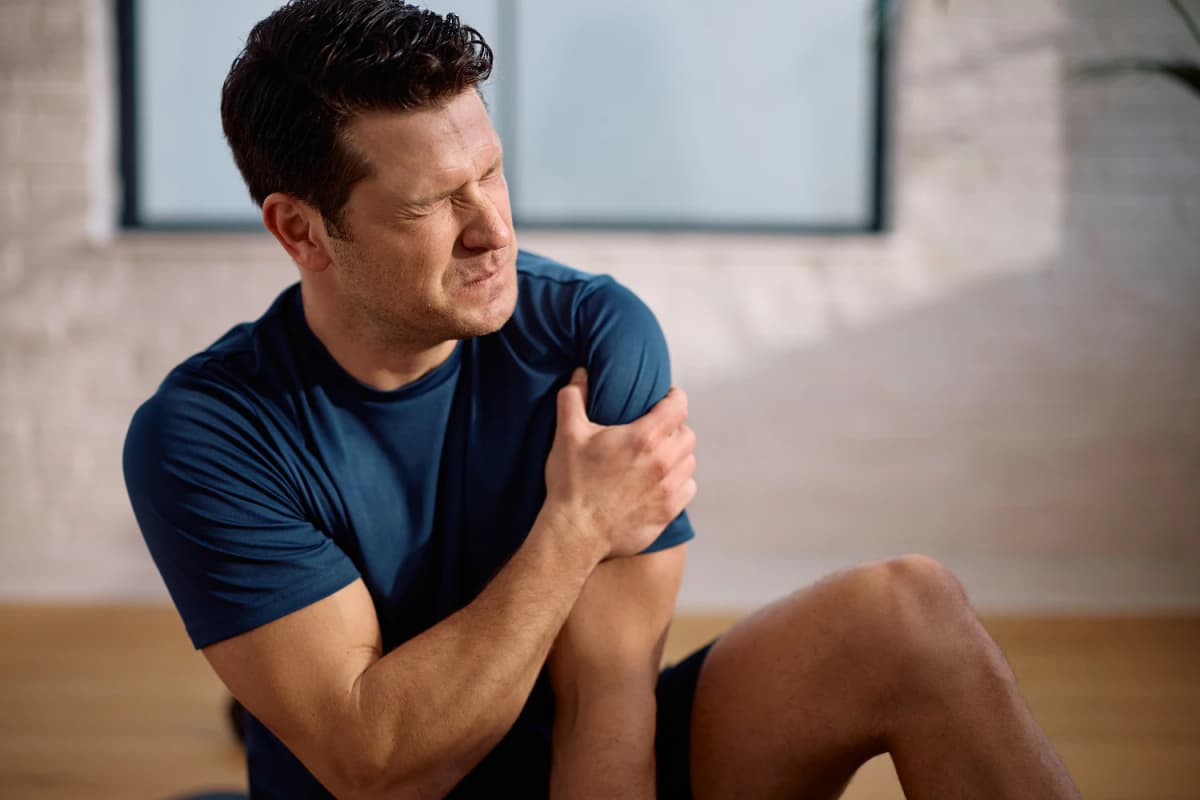
It happens in half a second. You push off for a sprint, reach for a wide ball, or lunge for a shot at the kitchen line, and something at the back of your thigh grabs hard. You stop. You limp. And the first question is always the same: how bad is this?
Most of the time, the answer is "manageable." Good muscle strain treatment in the first few days, followed by patient loading, gets most people back on the field in weeks rather than months. This guide covers what a strain actually is, how sports injury recovery works, the pulled muscle relief that helps, and the warm-up habits that keep it from happening again.
Strain, sprain or soreness? Knowing what you're dealing with
The words get used interchangeably, but they describe different injuries. A strain is an overstretched or torn muscle, which is why people call it a pulled muscle. A sprain is a torn or twisted ligament, the tissue that holds a joint together (NHS). Strains also include injuries to tendons, the cords that tie muscle to bone (NIAMS).
Then there's the stiff, achy feeling two days after a hard session. That is delayed onset muscle soreness, or DOMS, and it is a normal response to training rather than an injury. Our guide to muscle soreness after a workout covers it in depth.
Strain vs sprain vs DOMS
Why it happens: the science of a pulled muscle
What actually tears
Muscles are bundles of long fibers that shorten to create force. The risky moment is when a muscle is contracting hard while being stretched at the same time. Picture the hamstring in the last split second of a sprint stride, braking the lower leg as it swings forward. If the load outruns what the fibers can handle, some of them tear. Usually the damage sits where muscle meets tendon, the weakest link in the chain.
The usual suspects
Cold muscles, fatigue late in a match, a sudden jump in training volume and a previous strain in the same spot all raise the risk. NIAMS advises against exercising when you are tired or in pain for exactly this reason (NIAMS). Hamstrings, calves, groin muscles and the lower back take the most hits, especially in sports built on sprinting and sharp changes of direction: football, cricket, badminton and, increasingly, pickleball.
Muscle strain grades
Clinicians sort strains into three grades by how many fibers are damaged. Recovery times below are rough ranges. Your age, fitness and the exact muscle all shift them.
Muscle strain grades at a glance
The first 72 hours: RICE method step by step
For the first 2 to 3 days, the NHS recommends RICE to bring down swelling and support the injury, and now adds a first step, protection, making it PRICE (NHS). The steps are simple. Doing them properly is what counts.
RICE, step by step
Equally important is what to avoid. Northern Ireland's official health service site describes this as avoiding HARM in the first 72 hours: heat, alcohol, running and massage, which can increase bleeding and swelling or cause further damage (nidirect). Some NHS services also advise holding off ibuprofen tablets for the first 48 hours, since it may slow early healing (NHS Wales). A pharmacist can tell you what suits you.
What's changed in sports medicine
RICE isn't the last word anymore. In 2019, physiotherapists Blaise Dubois and Jean-Francois Esculier proposed PEACE & LOVE in the British Journal of Sports Medicine. It keeps the protection and elevation, questions how much ice helps healing itself, and pushes earlier, pain-guided movement. The practical takeaway: ice is useful for pain, but prolonged total rest is not the goal.
After the first few days: how sports injury recovery really speeds up
Here's the honest part. Nothing makes torn fibers knit dramatically faster. What you can control is not slowing the process down. Once you can move without pain stopping you, keep moving so the muscle doesn't stiffen (NHS). Start with easy range of motion, then light strengthening, then sport-specific drills. Pain up to a mild ache is fine. Sharp pain means ease off.
Most strains feel better within about 2 weeks, but the NHS suggests avoiding strenuous exercise such as running for up to 8 weeks to avoid further damage (NHS). That gap between "feels fine" and "is fine" is where most repeat injuries happen. Heat, once swelling has settled, can ease stiffness. Sleep and enough protein give the repair process its raw materials. Neither is glamorous. Both matter.
Topical pulled muscle relief: how it works
Pain gels and rubs with menthol, camphor or wintergreen work through the skin's nerve endings. Menthol and camphor create a cooling sensation, wintergreen's methyl salicylate a gentle warmth, and these sensations compete with pain signals so the area simply hurts less. It is comfort while healing happens, which is often exactly what you need to move again.
A few safety rules apply to any product of this kind. The US Food and Drug Administration has warned that, in rare cases, menthol and methyl salicylate products have caused skin burns. Its advice is to avoid broken or irritated skin, skip tight bandages over the product, never add a heating pad on top, and stop and seek help if you notice burning or blistering (FDA, via US Pharmacist). Because methyl salicylate is related to aspirin, check with a doctor first if you have an aspirin allergy or take blood thinners.
Reset Ultra Potent Gel
Reset Ultra Potent Gel is the strongest formula in Reset's pain relief range, built on seven herbal actives: Wintergreen, Menthol, Neelgiri (eucalyptus), Nirgundi, Camphor, Boswellia serrata and Ajmoda (celery seed). Nirgundi and Boswellia have long been used in Ayurveda for muscle and joint comfort. The non-sticky gel absorbs quickly, so it suits a kit bag or a post-match routine.
Apply it on clean, dry skin over the sore muscle 2 to 3 times a day, and let it absorb fully. Think of it as the comfort layer in your recovery plan, alongside RICE in the early days and gradual strengthening after.
Prevention: the warm-up and cool-down that actually matter
NIAMS lists warming up and cooling down among its basic prevention steps (NIAMS). The best evidence comes from football. The FIFA 11+ program, a structured 20-minute warm-up, was tested in a large trial of young female players published in the BMJ in 2008, and teams using it had roughly a third fewer injuries. With World Cup fever still in the air, it is a good model for any sport.
The principle is gradual: raise your heart rate, move joints through their full range, then rehearse the fast movements your sport demands. If you play racquet sports, our look at whether pickleball is good exercise shows how quickly quick lateral moves can catch a cold muscle out.
A 15-minute warm-up routine for sports
The mental side of recovery
Injury is frustrating, and it can quietly shake your confidence. Many athletes come back physically healed but still hesitate on the first full sprint. That hesitation is normal. Rebuilding trust in the muscle takes a few sessions of gradually faster, harder efforts. Set small milestones, notice each one, and treat recovery as training rather than time lost. A clear head brings you back stronger than a rushed one.
When to see a doctor
Most strains heal with home care. Get checked if any of these apply (HSE):
•the pain is severe or getting worse
•there is a lot of swelling or bruising, or it keeps spreading
•you can't put weight on the leg or use the limb normally
•you heard a pop, see a dent in the muscle, or feel numbness
•things are not improving after about two weeks
Frequently asked questions
What's the difference between a strain and a sprain?
A strain affects muscles or tendons, while a sprain affects the ligaments around a joint.
How long does a mild muscle strain take to heal?
Mild strains typically heal in 1 to 3 weeks with rest and care. The NHS notes most sprains and strains feel better after about 2 weeks.
What's the fastest way to ease strain pain?
The RICE method (Rest, Ice, Compression, Elevation) in the first 2 to 3 days, combined with topical pain relief. Neither speeds healing dramatically, but together they make the recovery period far more comfortable.
Should I use heat or ice on a pulled muscle?
Ice in the first 2 to 3 days to ease pain and swelling. Heat later, once swelling has gone down, to loosen stiffness. Never put heat over a menthol or wintergreen gel.
Can I keep playing with a mild strain?
It's not a good idea. Playing through a fresh strain is the most common way a grade 1 turns into a grade 2. Stop, follow RICE and return gradually.
How do I know if a muscle is torn?
A pop at the moment of injury, a visible dent, heavy bruising or being unable to use the muscle at all suggest a more serious tear. These need a doctor's assessment.
Is massage good for a pulled muscle?
Not in the first 72 hours, as it may increase bleeding and swelling. Gentle massage later in recovery can ease tightness.
Does stretching before sport prevent strains?
A dynamic warm-up that gradually builds to sport speed has better support than long static stretches before play. Save longer holds for the cool-down.
Key takeaways
•A strain affects muscle or tendon; a sprain affects a joint ligament.
•Effective muscle strain treatment starts with RICE for 2 to 3 days and avoiding heat, alcohol, running and massage.
•Sports injury recovery is about not rushing: most strains feel better in 2 weeks but need longer before full sprinting.
•Topical gels offer pulled muscle relief by easing pain while the muscle heals; follow the safety rules.
•A structured 15 to 20 minute warm-up is your best protection against the next strain.
•Severe pain, a pop, a visible gap or no improvement in two weeks means see a doctor.
References
•NHS. Sprains and strains. https://www.nhs.uk/conditions/sprains-and-strains/
•HSE (Ireland). Sprains and strains. https://www2.hse.ie/conditions/sprains-and-strains/
•nidirect (Northern Ireland). Sprains and strains. https://www.nidirect.gov.uk/node/10745
•NHS Wales. Sprains and strains self-help. https://thepracticeofhealth.nhs.wales/clinics-services/self-help-care/minor-common-ailments/sprains-strains
•Reset. Ultra Potent Gel product page. https://www.reset.in/products/ultra-potent-gel
Share this article: