
What Is Pickleball — And Is It Actually a Good Exercise?
2026-05-20 • 5 min read
Introduction
There's a sport sweeping gyms, parks, and community centers across the world — and chances are you've already heard the name, laughed a little at it, and moved on. That's a mistake. Pickleball is not a trend. It is now the fastest-growing sport in several countries, and the science behind why it works as exercise is genuinely compelling. Whether you're a weekend warrior, a desk-bound professional looking for a reason to move, or someone navigating joint pain who still wants an active social life, pickleball deserves your attention.
In this guide, we'll break down exactly what pickleball is, how you play it, the proven health benefits it delivers, and why smart recovery — especially for your knees, shoulders, and back — is the non-negotiable companion to every game you play.
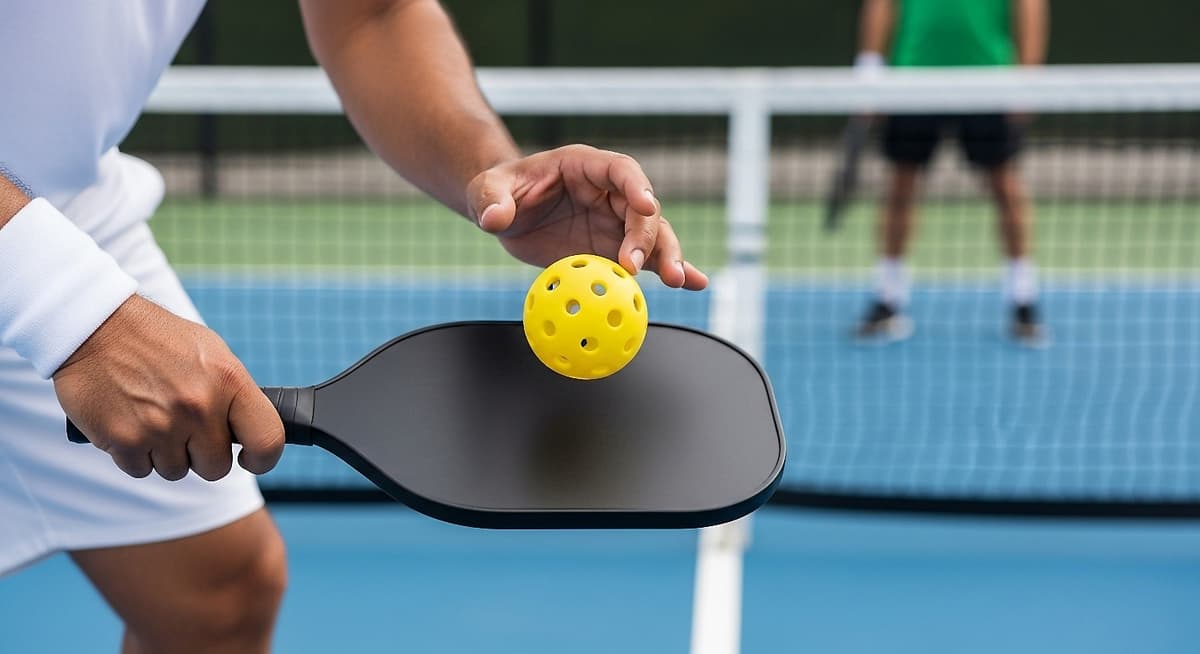
Pickleball is a paddle sport played on a small court that combines elements of tennis, badminton, and ping-pong. It burns significantly more calories than walking, strengthens cardiovascular health, and is low-impact enough for all ages — including seniors and beginners.
So, What Exactly Is Pickleball?
Pickleball was invented in 1965 on Bainbridge Island, Washington, by three fathers looking for a game their kids could play in the backyard. They improvised — a badminton court, ping-pong paddles, and a perforated plastic ball. The result was something unusually addictive. The name, for the record, came from the family dog. Or from the term 'pickle boat,' depending on who you ask. Either way, the name stuck, and so did the sport.
Today, pickleball is played on a court roughly the size of a badminton doubles court (20 by 44 feet), with a net that sits slightly lower than a tennis net. Players use solid paddles — typically made from graphite, composite, or wood — to hit a lightweight, hollow ball with holes in it (similar to a wiffle ball) back and forth across the net. The game can be played as singles or doubles, indoors or outdoors, casually or competitively.
The compact court size is one of the key reasons pickleball health benefits are so accessible — you cover meaningful distance without the relentless sprinting that tennis demands. Points are short. Rallies are fast. And the learning curve is genuinely gentle.
How Do You Play Pickleball?
The game begins with an underhand serve, hit diagonally into the opposite service box. Unlike tennis, only the serving team can score points — a system called rally scoring is sometimes used in recreational play, but traditional pickleball uses side-out scoring. Games are typically played to 11 points, and you must win by 2.
The most distinctive element of pickleball is the 'kitchen' — officially called the non-volley zone, a 7-foot area on both sides of the net where players cannot volley the ball (hit it out of the air). This rule forces strategy over raw power, which is exactly what makes the sport accessible to a wide range of ages and fitness levels. You don't need to be fast or strong. You need to be smart.
Key rules to know: The ball must bounce once on each side after a serve (the double-bounce rule). You cannot enter the kitchen to volley. Serves are always underhand. Faults result in a side-out or point loss.
Table 1: Pickleball vs. Tennis vs. Badminton at a Glance
The Science Behind Why Pickleball Is Such Good Exercise
Here's where the numbers get interesting. Research from Brigham Young University found that recreational pickleball elevates heart rate to 70–75% of maximum — placing it firmly in the aerobic training zone. That's the sweet spot for cardiovascular conditioning. For context, a leisurely walk typically keeps you at 50–60% of max heart rate. Pickleball sits meaningfully higher.
In terms of calorie burn, studies show pickleball burns approximately 36% more calories than brisk walking over the same duration. A 60-minute recreational game can torch anywhere from 400 to 600+ calories depending on your weight, play intensity, and whether you're playing singles or doubles. Singles demands more ground coverage and consistently delivers a higher metabolic load.
What makes pickleball particularly smart exercise is its interval-like nature. You sprint, pause, react, pause. This stop-start pattern mimics high-intensity interval training (HIIT) principles — short bursts of elevated intensity followed by brief recovery — which research consistently shows is more effective for fat loss and cardiovascular health than steady-state cardio alone.
The sport also demands significant lateral movement, quick direction changes, and hand-eye coordination — all of which engage your stabilizer muscles, improve proprioception (your body's sense of its own position), and challenge your nervous system in ways that traditional gym workouts often don't.
Table 2: Calories Burned in 30 Minutes — Pickleball vs. Other Popular Activities
Pickleball Health Benefits — What Your Body Actually Gains
The pickleball health benefits extend well beyond calorie burn. Here's what regular play genuinely delivers:
•Heart health: Consistent play improves VO2 max, reduces resting heart rate, and lowers blood pressure over time — comparable to other moderate-intensity aerobic activities.
•Bone density: Weight-bearing activity like pickleball stimulates bone remodeling, which is especially significant for women post-menopause and older adults managing osteoporosis risk.
•Balance and coordination: The constant lateral shuffling, split-step footwork, and racket-to-ball tracking sharpen proprioception and neuromuscular coordination — reducing fall risk in older populations.
•Mental health: Pickleball is a social sport. You are rarely playing alone. The combination of physical movement, social interaction, light competition, and the dopamine hit of a well-placed shot creates a potent mood-lifting cocktail. Studies on older adults show significant reductions in depression and loneliness in regular pickleball players.
•Weight management: The caloric expenditure, combined with the fact that pickleball is genuinely enjoyable (meaning people actually stick with it), makes it an effective long-term tool for weight management.
Is Pickleball Safe for Seniors and Beginners?
The honest answer is yes — with appropriate awareness. The smaller court reduces the amount of running required compared to tennis. The underhand serve and lower net reduce shoulder stress. The lighter paddle and slower ball lower the forces transmitted to elbow and wrist joints. For seniors especially, pickleball offers a rare combination: genuine aerobic challenge, meaningful social connection, and manageable physical demand.
That said, no sport is injury-free. The most common pickleball injuries involve the knees (from lateral cuts and quick stops), the shoulder (from repetitive paddle swings), and the lower back (from the forward-bent stance during play). Beginners sometimes overlook the importance of warming up properly and cooling down with stretches — which significantly increases injury risk on the court.
The smart approach: Start with recreational doubles, keep sessions to 30–40 minutes, invest in proper court shoes with lateral support, and — critically — don't skip your post-game recovery routine.
Table 3: Pickleball for Different Fitness Levels — What to Expect
Getting Started — What Do You Actually Need?
The barrier to entry for pickleball is refreshingly low. Here's what you need to get on the court:
•A paddle: Entry-level graphite or composite paddles range from ₹1,500 to ₹4,000 in India. Avoid wood paddles — they're heavier and harder on your arm.
•Pickleballs: Indoor balls (softer, smaller holes) and outdoor balls (harder, larger holes) are both available online for under ₹500 for a pack of three.
•Court shoes: This is non-negotiable. Running shoes lack lateral support. Look for court shoes or cross-trainers that stabilize side-to-side movement.
•A court: Many badminton courts can double as pickleball courts with portable nets. Several cities in India now have dedicated pickleball facilities — check local sports clubs, gyms, and community centers.
Most beginners can learn the basic rules and rally confidently within a single session. The learning curve is one of the sport's greatest gifts — it gets fun very quickly, which means you'll come back.
The One Thing Every Pickleball Player Needs to Think About: Recovery
Here's what most new pickleball players don't expect: the sport is deceptively demanding. The rapid direction changes, the constant low stance, the lateral shuffles — your knees, hips, shoulders, and lower back feel it the next morning, especially in the first few weeks before your body adapts.
Smart recovery isn't a luxury — it's what lets you play again the day after. And when it comes to managing post-game soreness naturally, topical herbal formulas have a meaningful role to play.
For deeper muscle and joint relief: The Reset Ultra Potent Pain Relief Gel is formulated with concentrated Wintergreen — a natural analgesic — using advanced nanotechnology for 2x deeper penetration. Apply it directly to the knees, shoulders, or lower back after a session for fast-acting, non-greasy relief. With 54% improved analgesic activity compared to standard gels, it's built for people who take their recovery as seriously as their play.
For on-the-go, between-session care: The Reset Easy-to-Rub Emulsion Roll-On is a herbal roll-on that you can slip into your kitbag and use courtside. Made with Nirgundi and free from harsh chemicals and artificial fragrances, it's gentle enough for daily use — roll it over stiff shoulders or tight knees before warming up or after cooling down. Two to three applications a day keep minor discomfort from turning into a forced break from the game.
Both products are built on Reset's founding philosophy: that natural, plant-based care — backed by pharmaceutical-grade science — should be the first line of response to everyday physical discomfort. Not numbing pills. Not passive rest. Active, intelligent recovery.
Table 4: Common Pickleball Injuries & Natural Recovery Tips
Key Takeaways
•Pickleball is a paddle sport combining elements of tennis, badminton, and ping-pong — played on a small court with solid paddles and a hollow plastic ball.
•It is genuinely excellent exercise: it elevates your heart rate into the aerobic training zone and burns approximately 36% more calories than brisk walking.
•The pickleball health benefits span cardiovascular fitness, bone density, balance, coordination, mental health, and weight management.
•It is one of the most beginner- and senior-friendly sports available — low-impact, easy to learn, and deeply social.
•Recovery matters: knee soreness, shoulder ache, and lower back tightness are common in new players. Herbal topical care with Reset's Ultra Potent Gel and Emulsion Roll-On supports faster, smarter recovery.
•Getting started requires minimal investment — a paddle, the right shoes, and a nearby court. The rest you'll figure out in your first game.
Frequently Asked Questions
What is pickleball and how do you play it?
Pickleball is a paddle sport played on a 20×44-foot court with a solid paddle and a lightweight perforated plastic ball. Two or four players hit the ball over a low net using underhand serves and strategic placement. Only the serving side can score, games go to 11 points (win by 2), and the non-volley zone (or 'kitchen') near the net prevents power-smashing — making the game strategic and accessible to all ages.
Is pickleball good exercise for seniors?
Yes — it may be one of the best exercise options available for older adults. The compact court reduces total running distance, the underhand serve minimizes shoulder strain, and the lighter paddle reduces forces on the elbow and wrist. Research specifically on older adults shows pickleball improves cardiovascular fitness, balance, and bone density, while also significantly reducing loneliness and depression thanks to its inherently social format.
How many calories does pickleball burn?
A 60-minute recreational doubles game typically burns between 400 and 500 calories for a person weighing around 70 kg. Singles play pushes that closer to 500–600+ calories. Studies show pickleball burns roughly 36% more calories than brisk walking over the same time period, placing it in the moderate-to-high intensity range of common recreational activities.
Is pickleball hard to learn for beginners?
Not at all — it's one of the easiest racket sports to pick up. Most beginners can sustain a basic rally within their first session. The underhand serve is intuitive, the scoring system is straightforward, and the smaller court means less ground to cover. Most players find the game genuinely fun within minutes, which is a big part of why it has grown so explosively. No prior racket sport experience is necessary.
How is pickleball different from tennis?
The most significant differences are court size, equipment, and physical demand. A pickleball court is roughly one-quarter the size of a tennis court, meaning far less running. The paddle is solid (not strung), making it easier to control, and the wiffle-like ball travels more slowly than a tennis ball. Serves are always underhand in pickleball (tennis uses overhand), and the non-volley zone eliminates power-smashing near the net. The result is a game that is far more accessible, significantly lower-impact, and much easier to learn — while still delivering real cardiovascular and fitness benefits.
Share this article: