
Pain Relief
Sore After Ganpati Visarjan? Fast Back & Leg Pain Relief
2026-08-27
4 min read

2026-08-28 • 4 min read
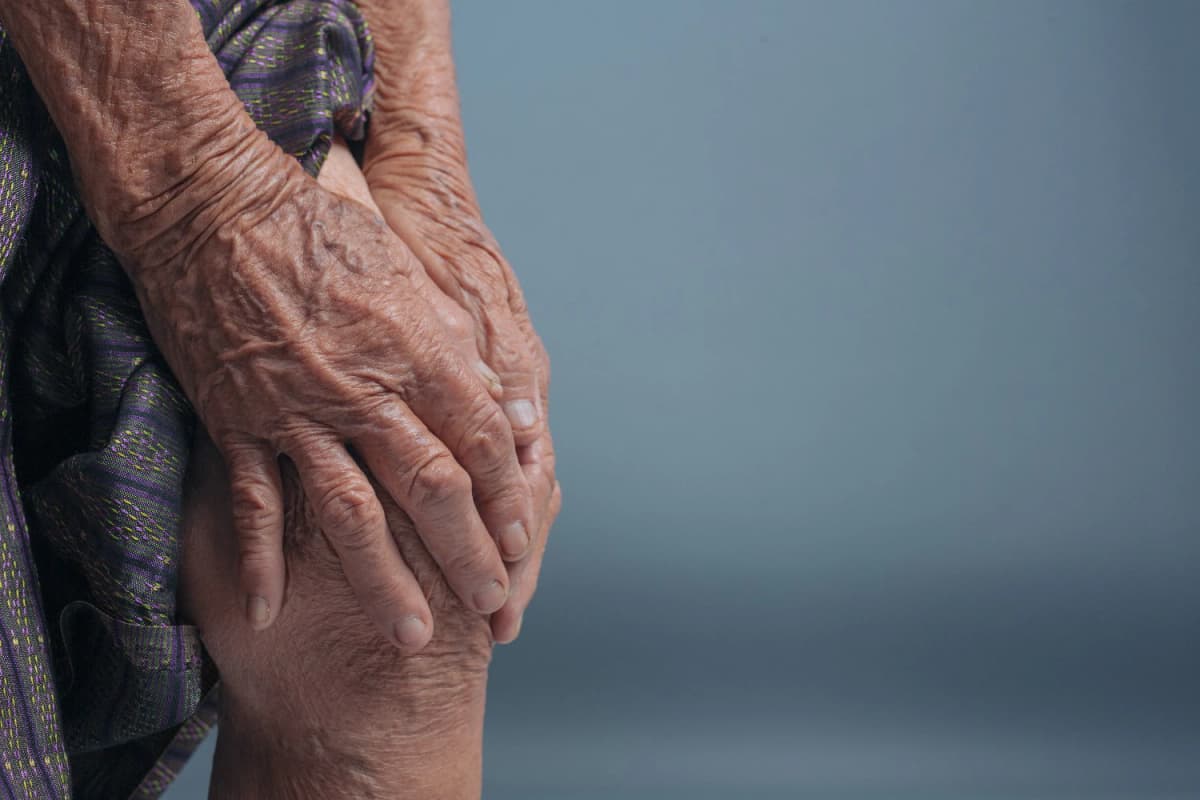
By the third evening of Ganpati, something predictable happens in a lot of Indian homes. The idol is glowing, the modaks are ready, the aarti thali goes around, and near the back sits an elder smiling through the ache in both knees. This guide is about joint pain relief for elderly during festivals, written for the son, daughter, or grandchild who wants a parent to enjoy the whole celebration instead of quietly dreading the sitting part.
Ganesh Chaturthi in 2026 runs from September 14 to the visarjan around the 25th. That means roughly ten days of floor-sitting for aarti, often twice a day. For a 68-year-old with stiff joints, that adds up fast. The reassuring part is that most of this pain is preventable with a little planning. You don't have to change the rituals. You only have to change how the body meets them.
Think about what the festival actually asks of the body. On day one there is the sthapana, then morning and evening aarti through the days, and finally the bending and lifting around visarjan. Most other occasions are gentler on the legs. At a wedding you sit in chairs. A regular Diwali puja is over in twenty minutes. Ganpati is different because it repeats, twice a day, for more than a week. That repetition is what turns ordinary knee pain sitting for puja into something an elder starts to dread by the third or fourth day.
The position itself is ancient, and for a supple body it is perfectly healthy. The trouble shows up when a joint that has already lost some of its cushioning is asked to hold a deep bend again and again.
Table 1. Common puja postures and how hard each is on an older knee.
When you settle into cross-legged sitting or kneel in vajrasana, the knee folds deep and the pressure across the joint surface climbs. A younger knee handles this without complaint. An older knee often can't, because the cartilage that used to spread that load has thinned. The NHS describes osteoarthritis as the protective cartilage on the ends of the bones breaking down, which leaves you with pain, swelling, and a joint that is harder to move (nhs.uk). The knee is one of the joints it affects most.
Here is the part most families get wrong. They assume the deep fold is the enemy and tell the elder to just rest. The bigger issue is usually time, not posture. Hold any deep bend for twenty minutes and the muscles fatigue, blood flow to the lower leg drops, and the moment of standing up becomes the sharpest pain of the evening.
Age and body weight both raise the odds. The CDC notes that osteoarthritis is the most common form of arthritis and that women are more likely to develop it than men, particularly after 50, with extra weight adding stress that makes knee pain worse (cdc.gov). None of this means the elder should sit less and less. Research summarized by the NIH points the other way: moving too little weakens the muscles that stabilize the knee, so the joint ends up feeling more unstable rather than safer (ncbi.nlm.nih.gov). The goal is smarter movement, not a chair for ten days straight.
Some people will sail through the ten days and some won't. Keep a closer eye on anyone with diagnosed osteoarthritis, an old knee injury from years ago, a history of carrying extra weight, or women past forty-five, who as a group live with more knee osteoarthritis than men. Morning stiffness that takes a few minutes to walk off is another quiet signal that the joints could use some support this festival.
Table 2. Telling ordinary festival stiffness apart from a warning sign.
The best time to solve this is before Bappa arrives, not on day three when the knee is already swollen. The single most useful move is to give the elder a genuine choice of how to sit at the puja spot, so nobody feels forced onto a bare floor. Good knee support for sitting cross legged puja is mostly about raising the hips and shortening the bend.
A firm cushion or a folded blanket under the seat lifts the hips above the knees, which means the knee no longer has to fold as deep. A low meditation stool, the kind used for seiza, lets someone stay at floor level while taking almost all of the fold out of the knee. And there is nothing wrong with a sturdy chair at the edge of the puja area. Devotion lives in the folded hands and the attention, not in whether the knees are on the ground. If you are still working out where the pain actually sits, a knee pain location chart helps you describe it to a doctor, and if you want a daily oil to massage in, here is a guide to which oil is best for knee pain relief.
Table 3. Seating options for cross-legged puja, compared.
Once the seating is sorted, a few small habits do the rest. The most important one is simple: don't let the knee lock into a single position. A useful rule of thumb is to shift every twenty minutes or so, from cross-legged to legs folded to one side to a brief stand near the back of the room.
A few things that genuinely help through the days:
●A two-minute warm-up before aarti: slow ankle circles and gentle knee bends while sitting in a chair, so the joint isn't cold when it folds.
●Standing and walking during the parts of the ritual that allow it, instead of holding one pose the whole time.
●Getting up in stages, with a hand on the knee or a nearby surface, rather than springing straight up.
●A warm compress and a few minutes with the legs raised in the evening, which takes the edge off the day's stiffness.
If the pain does flare mid-festival, our guide to the fastest way to relieve knee pain has a few things you can try the same day.
Even with good seating, evenings can feel stiff, and that is where a topical helps. This is the moment Reset's pain relief range was built for. For an elder who finds it hard to bend down and rub in a cream, the Deep Penetrating Spray and the Emulsion roll-on are far easier to use, since there is no reaching or kneading involved. The Soothing Gel is worth knowing about too: it works through natural methyl salicylate from wintergreen and is free of diclofenac, which matters when a person is already on other medicines and their doctor has asked them to go easy on painkillers. Across the range the botanicals are the same familiar ones, wintergreen, menthol, eucalyptus, camphor, and Boswellia serrata, giving that warming and cooling feel that helps a stiff knee loosen before bed.
One honest word. A topical soothes the surface soreness and stiffness. It does not repair arthritis, and it isn't meant to. Use it as comfort, and if the person leans on stronger oral options, read our take on pills for knee pain and the plain-spoken guide to what works fast and what to avoid before reaching for the best painkiller for knee pain.
Comfort is what you feel tonight. Strong joints are built quietly over months, through what a person eats and how much they move. During a festival that gets harder, because meals get skipped and routines slide, so it helps to keep the basics topped up. Bone needs calcium and the vitamin D that lets the body use it. The muscle around the knee needs protein. Omega-3 fats help settle joint inflammation, and vitamin C matters more than people realise, because the body uses it to build the collagen that cartilage is made from.
Table 4. Nutrients that support aging joints, and where to find them.
This is where Reset's vitals range can quietly fill the gaps a hectic ten days leaves in the diet. The Vitamin C gummies support the collagen side of the equation, and the daily multivitamin covers the general shortfalls when meals are all over the place. Treat it as a way to hold the baseline steady rather than a joint cure, and let it work alongside the food on the plate, not in place of it. If the aching knees belong to a woman in the family, our piece on what causes knee pain in females is worth a read.
Most festival knee pain is just tired joints, and it settles with rest and warmth. Some pain is not, and it helps to know the difference. Get medical advice if the knee swells suddenly, feels hot, locks or catches, gives way underfoot, or the person simply can't take weight on that leg. Pain that drags on for hours or into the next day, or arrives with a fever, is a signal too. The NHS advises seeing a GP when symptoms of osteoarthritis are persistent (nhs.uk), and that advice holds double during a festival, when it is tempting to push through and worry about it later.
●Ganpati asks for far more floor-sitting than most festivals, which is why elderly knees start to struggle by the third or fourth day.
●The deep bend of cross-legged and kneeling positions raises pressure on the joint, but the real trouble is holding it too long, not the pose itself.
●Raise the hips with a firm cushion, offer a low stool, and keep a chair nearby. A chair does not make the prayer any less sincere.
●Move often, warm up before aarti, and stand up in stages rather than all at once.
●Use a topical like Reset's spray or roll-on for evening stiffness, support the joints with good nutrition, and see a doctor for sudden swelling, heat, locking, or an inability to bear weight.
Not by itself. For a healthy joint the position is fine. The problem is when an older knee with worn cartilage holds that deep fold for a long stretch, which drives up pressure and stiffness. Shorten the sitting, raise the hips, and it becomes much more manageable.
Give them a raised, firm seat or a low meditation stool, let them lean against a wall, and let them switch positions every twenty minutes. A short warm-up before aarti and a warm compress at night handle most of the rest.
No. Faith sits in the intention and the folded hands, not in the height of the seat. Many temples and families keep chairs for elders precisely so they can be present for the full aarti without pain.
Straighten and gently move the leg, apply warmth, raise the legs for a few minutes, and rub a topical spray or roll-on into the stiff area. If it keeps flaring, our full guide on the fastest way to relieve knee pain has more.
It can, simply because there is far less repeated floor-sitting. Plenty of families choose the Dedh Din format for exactly this kind of practical reason. If your household keeps the full ten days, the seating and movement tips above matter more, not less.
National Health Service (NHS), UK. Osteoarthritis. https://www.nhs.uk/conditions/osteoarthritis/
Centers for Disease Control and Prevention (CDC), USA. Osteoarthritis (OA). https://www.cdc.gov/arthritis/osteoarthritis/
Centers for Disease Control and Prevention (CDC), USA. Arthritis Risk Factors. https://www.cdc.gov/arthritis/risk-factors/index.html
National Institutes of Health (NIH), InformedHealth.org (NCBI Bookshelf). Overview: Osteoarthritis of the knee. https://www.ncbi.nlm.nih.gov/books/NBK544982/
Share this article:
A 2X more powerful formula for enhanced relief.

₹799.00
₹649.00
An easy to apply potent formula with roll-on massager

₹549.00
₹449.00
A harmonious blend of nature and science for instant relief.

₹89.00
₹79.00
| Posture | How the knee sits | Strain on an older knee |
|---|---|---|
| Sitting on a chair | Bent near 90°, feet flat on the floor | Low |
| Low stool or raised cushion | Moderate bend, hips above the knees | Low to moderate |
| Cross-legged (sukhasana) | Deep bend, hips rotated outward | Moderate to high |
| Kneeling (vajrasana) | Deep fold, body weight through the knee | High |
| Deep squat (visarjan lifting) | Maximum bend, often under load | Highest |
| What you notice | Usually just stiffness | Get it checked |
|---|---|---|
| Timing | Eases within a few minutes of standing | Pain lasts for hours or into the next day |
| Swelling | None, or very mild | Sudden swelling, or the joint feels hot |
| Movement | Loosens as you walk it off | Knee locks, catches, or gives way |
| Weight | Bears weight normally | Can't put weight on the leg |
| Other signs | Just tiredness | Fever, redness, or warmth in the joint |
| Option | Option Why it helps the knee | Keep in mind |
|---|---|---|
| Firm cushion or folded blanket | Lifts the hips above the knees, so the bend is shallower | Use something firm, not a soft pillow that sinks |
| Low meditation / seiza stool | Keeps you at floor level while taking the fold out of the knee | Buy or improvise one before the festival |
| Sturdy chair at the puja edge | Almost no knee bend and easy to stand from | Place it respectfully; the prayer is no less sincere |
| Rolled towel behind the knee | Reduces how deep the joint bends while kneeling | Slip it in for the longer aartis |
| Wall or sofa back for support | Shares the load with the back and steadies the sitting | Sit close enough to actually lean |
| Nutrient | Why the joint needs it | Everyday sources |
|---|---|---|
| Calcium | Keeps the bone under the cartilage strong | Milk, curd, ragi, sesame, leafy greens |
| Vitamin D | Lets the body actually use the calcium | Morning sunlight, fortified milk, eggs |
| Protein | Builds the muscle that supports the knee | Dal, paneer, eggs, chicken, soya |
| Omega-3 | Helps calm inflammation in the joint | Flaxseed, walnuts, fish |
| Vitamin C | Needed to make collagen for cartilage | Amla, guava, citrus, capsicum |

