
Fatty Liver: Diet Tips and Natural Detox Remedies That Help
2026-08-19 • 4 min read
A routine blood test is usually how people first hear the words fatty liver. The report flags SGPT or SGOT a little above range, the doctor mentions the liver in passing, and suddenly you are searching for a fatty liver diet at eleven at night. Good news first: for most people, this is not a life sentence. It is a signal. MASLD, the current medical name for fatty liver disease, responds well to changes in what you eat and how you live, and a fatty liver natural detox routine built on real foods for liver health can move those numbers back down. This piece covers what is actually happening inside the liver, which foods help and which make things worse, what the science says about why diet matters so much, and where Ayurvedic herbs and a simple after-meal habit can support the rest.
What fatty liver actually means
Doctors now call it MASLD, short for metabolic dysfunction-associated steatotic liver disease. It replaced the older term NAFLD (nonalcoholic fatty liver disease) a couple of years ago, mostly to make clear that the problem is metabolic, tied to how your body handles sugar and fat, not just a description of what shows up on a scan.
A healthy liver holds a small amount of fat, usually under about 5 percent of its weight. MASLD begins when that climbs higher. On its own, extra fat in the liver often causes no pain and no obvious symptoms, which is exactly why so many people find out from a blood test rather than how they feel. Left unmanaged over years, it can progress to inflammation (steatohepatitis, or MASH) and eventually scarring. Caught early, though, it is one of the more reversible conditions in medicine.
Signs of a healthy liver versus a liver under strain
The SGOT/SGPT connection: reading the numbers right
SGPT (ALT) and SGOT (AST) are enzymes that live inside liver cells. When those cells are stressed or damaged, some of the enzyme leaks into the blood, which is why a blood test can pick it up before you feel anything. Reference ranges vary a little by lab, but ALT commonly sits somewhere around 7 to 56 U/L and AST around 8 to 48 U/L in adults. A mild bump, say one and a half to two times the upper limit, is common in early fatty liver and is frequently diet-reversible. Sharper or repeated elevations deserve a doctor's attention rather than a home remedy. Reset's guide to SGOT and SGPT walks through what each enzyme actually measures, and the normal range of SGPT and what an elevated SGPT reading means go deeper into the numbers if that is what brought you here.
Why diet moves the needle: the science in short
The liver turns excess sugar and refined carbohydrate into fat through a process called de novo lipogenesis, and when you consistently eat more of these than your body burns, some of that fat gets stored right where it is made. Insulin resistance makes this worse: the more resistant your cells become to insulin, the more fat the liver tends to pack away. According to the National Institute of Diabetes and Digestive and Kidney Diseases (NIDDK), diet and weight loss are the primary, evidence-backed ways to manage MASLD, and losing even 5 to 10 percent of body weight can meaningfully reduce liver fat and inflammation. Mayo Clinic's self-care guidance for MASLD points in the same direction, with a Mediterranean-style eating pattern, built around vegetables, whole grains, legumes, fish, and olive oil, coming up as the most consistently studied approach.
None of this requires a drastic overhaul overnight. Small, sustained shifts in what fills your plate matter more than any single detox day.
Foods that help versus foods that work against your liver
The plate today: practical steps for a fatty liver diet
The how, without turning your kitchen upside down:
•Build meals around the plate method: half vegetables, a quarter lean protein, a quarter whole grains.
•Swap one sugary drink a day for water, black coffee or unsweetened green tea.
•Cook with olive oil, mustard oil or groundnut oil instead of repeated deep-frying.
•Add a source of fibre, such as oats, dal or vegetables, to every meal to slow sugar absorption.
•Move for at least 30 minutes most days. Even brisk walking measurably reduces liver fat over time.
•Aim for consistent sleep. Poor sleep is linked to worse insulin resistance and more liver fat.
•Cut back on alcohol, or stop it altogether if your liver enzymes are already raised.
A sample day of liver-friendly eating
Ayurvedic herbs for liver support
Alongside diet, several herbs have a long history in Ayurveda specifically around liver and digestive wellness. They are not a substitute for the food changes above, but they can be a reasonable complement for someone who wants extra, consistent support.
•Kalmegh (Andrographis paniculata): traditionally used to support the liver's natural detox processes.
•Daru Haldi (Berberis aristata): used in Ayurveda for liver and metabolic support.
•Manjishta (Rubia cordifolia): associated with healthy circulation and detoxification in traditional use.
•Guduchi (Tinospora cordifolia): a widely used Ayurvedic herb for immunity and general liver wellness.
•Punarnava (Boerhavia diffusa): traditionally used as a mild diuretic that supports kidney function and reduces water retention.
Ayurvedic herbs at a glance
Where Detox Candy fits in
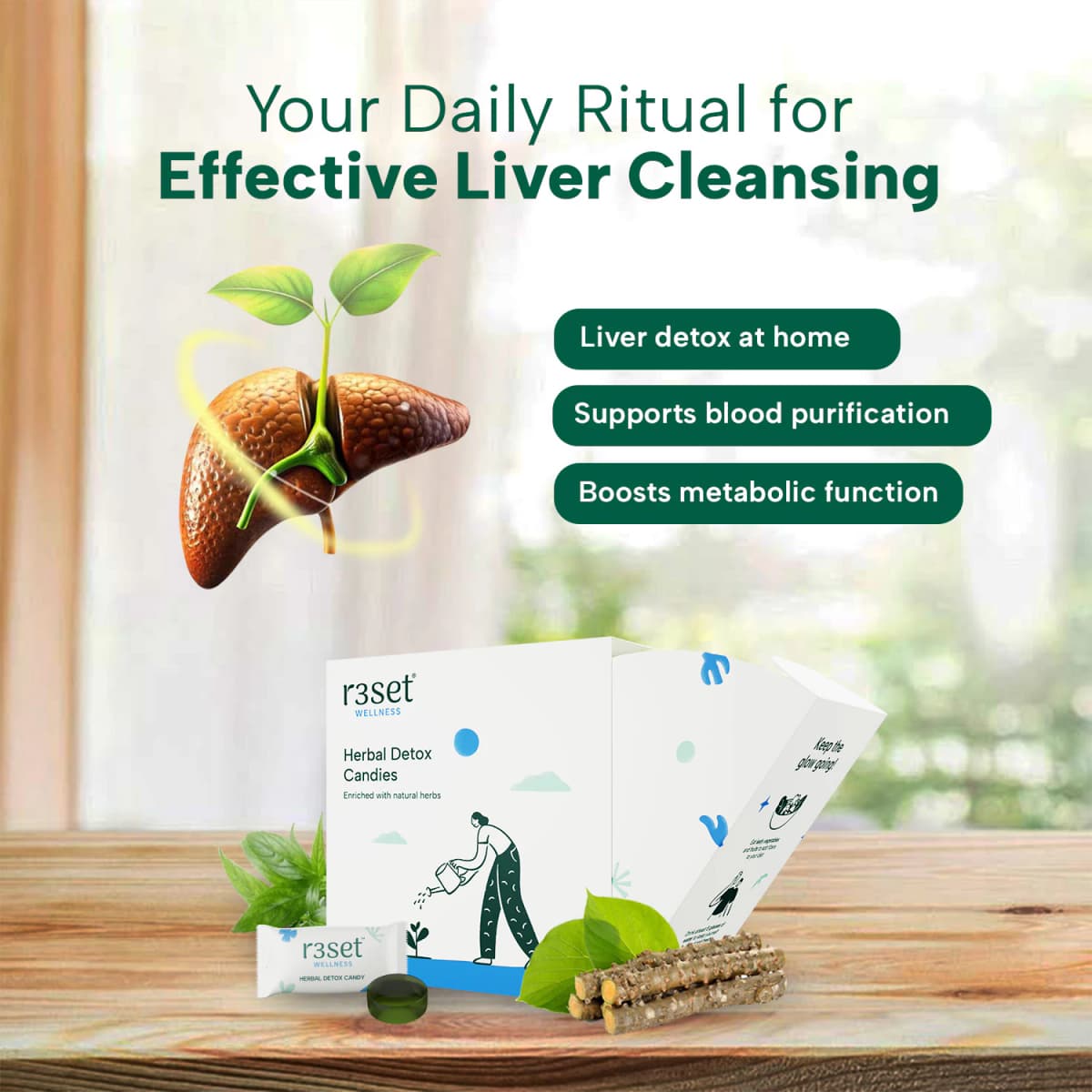
Reset's Herbal Detox Candy brings Kalmegh, Daru Haldi, Manjishta, Guduchi and Punarnava together in an after-meal candy, meant as a small daily habit rather than a fix on its own. Two to three candies a day, chewed after meals, is the suggested routine, with no powders or bitter decoctions involved. It is worth being clear-eyed here: the candy is designed to support normal liver function and everyday wellness, not to treat elevated SGPT or SGOT or replace medical care. If your enzymes are persistently high or you already have a diagnosed liver condition, that conversation belongs with a doctor first, and any herbal or dietary support should sit alongside that guidance, not instead of it. Reset's blog on liver detox support candy covers the format in more detail.
Key takeaways
•Fatty liver (MASLD) is common and, caught early, usually manageable through diet and lifestyle alone.
•Mildly raised SGPT or SGOT is often diet-reversible; sharp or repeated rises need a doctor's input.
•A Mediterranean-style pattern, rich in vegetables, whole grains and unsaturated fats, has the strongest evidence behind it.
•Ayurvedic herbs like Kalmegh, Daru Haldi, Manjishta, Guduchi and Punarnava can complement, not replace, dietary change.
•Small, repeatable habits, like a daily after-meal candy or a 30-minute walk, tend to outlast dramatic short detoxes.
FAQs
What foods should I avoid with fatty liver?
Avoid sugary drinks, refined carbs, fried foods, and processed or red meat.
Can fatty liver be reversed?
Yes, in many cases, through diet, weight loss and lifestyle changes.
Do natural detox candies help the liver?
Herbal ingredients can support liver function, but they should complement, not replace, a healthy diet.
References
National Institute of Diabetes and Digestive and Kidney Diseases (NIDDK), “Definition & Facts of NAFLD & NASH,” niddk.nih.gov
Mayo Clinic, “Fatty liver disease (MASLD) diet,” mayoclinic.org
Mayo Clinic, “Self-care for fatty liver disease (MASLD),” mayoclinic.org
Mayo Clinic Health System, “Redefining liver health,” mayoclinichealthsystem.org
Share this article: