
Is Egg Veg or Non Veg? The Complete Guide to Understanding Eggs
2026-05-11 • 4 min
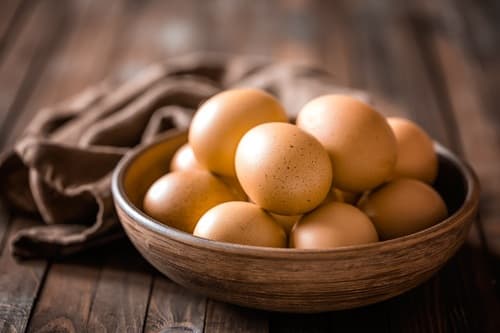
A comprehensive look at one of the most debated food questions — is egg veg or non veg, especially in the Indian context.
Introduction: The Great Egg Debate
Walk into any Indian household, cafeteria, or food court, and you'll likely encounter a label that reads "Veg" or "Non-Veg" — and eggs often sit awkwardly between the two. The question of whether egg is veg or non veg has sparked countless dinner-table debates, religious discussions, and nutritional arguments for decades.
Whether you're filling out a dietary preference form, planning a meal for guests, or simply trying to understand your own food choices better, knowing where eggs stand in the veg vs. non-veg spectrum is genuinely important. So, is egg a veg or non veg food? Let's unpack this question from every possible angle — biological, ethical, cultural, religious, and nutritional.
What Exactly Is an Egg? A Biological Starting Point
To answer whether egg is non veg or veg, we must first understand what an egg actually is — biologically speaking.
Commercially produced eggs — the ones you find in every supermarket and local kirana store — are unfertilized eggs. A hen produces these eggs as part of its natural reproductive cycle, regardless of whether a rooster is present. These unfertilized eggs do not contain an embryo, meaning they have zero potential to develop into a chick under any circumstances.
Here's a quick breakdown of egg composition:
Egg White (Albumen): Primarily water and protein. No genetic material capable of developing life.
Egg Yolk: Contains fats, proteins, vitamins, and minerals. In an unfertilized egg, this cannot develop into a living creature.
Shell: Calcium carbonate. Completely inert.
This biological reality is central to the debate around whether is egg veg or non veg — because by strict biological definition, a commercially available egg contains no animal life or embryo.
Is Egg Veg or Non Veg? The Scientific Perspective
From a purely scientific standpoint, unfertilized eggs occupy a gray zone. Here's why:
No Life, No Death: Since a commercially sold egg is unfertilized, no living creature is killed or harmed in its production.
It Is an Animal Byproduct: However, an egg does originate from an animal — a hen — making it, by definition, an animal-derived product.
Comparison to Milk: Milk is widely accepted as vegetarian despite being an animal product. Eggs share a similar logic — they come from animals but do not require the animal's death.
So, scientifically, whether egg is a veg or non veg food depends entirely on your definition. If "non-vegetarian" means "derived from animals," then eggs are non-veg. If "non-vegetarian" means "requiring the killing of an animal," then eggs are closer to vegetarian.
Is Egg Veg or Non Veg in India? Understanding the Indian Context
The question of is egg veg or non veg in India is particularly layered, and the answer is not as straightforward as it may seem in Western countries.
The Indian Vegetarian Spectrum
India is home to the world's largest vegetarian population, and Indian vegetarianism is deeply rooted in cultural, religious, and ethical values. Unlike Western vegetarianism, which is often a lifestyle choice, Indian vegetarianism is frequently a matter of religious observance.
Here's how different groups in India view eggs:
1. Strict Vegetarians (Saatvik Diet) Many Hindus following a sattvic (pure) diet strictly avoid eggs. They consider eggs non-vegetarian because:
They originate from a hen's reproductive system.
They are classified as animal products.
Some interpret them as potential life forms (even unfertilized ones).
2. Jains Jainism, which places the highest value on non-violence (ahimsa), strictly prohibits eggs. The reasoning includes the belief that even unfertilized eggs contain micro-organisms.
3. Eggetarians A large and growing segment of Indians identify as eggetarians — people who are otherwise vegetarian but consume eggs. This group believes eggs are acceptable because:
Commercially produced eggs are unfertilized.
No animal is harmed or killed for egg production.
Eggs are nutritionally valuable, especially in protein-deficient diets.
4. The Green Dot / Brown Dot Confusion In India, packaged food is labeled with a green dot for vegetarian and a brown/red dot for non-vegetarian items. Eggs officially fall under the non-vegetarian (brown dot) category as per the Food Safety and Standards Authority of India (FSSAI). This makes eggs officially non-veg in India from a food regulation standpoint — though the debate in households and communities continues.
Religious Views: Is Egg Non Veg or Veg?
Religion plays a massive role in how millions of Indians answer the question — is egg veg or non veg?
Hinduism
There is no single uniform stance across all of Hinduism. Many Hindus do consume eggs without conflict. Others, particularly those following strict Brahminical traditions or Vaishnavism, avoid eggs entirely. The issue often comes down to interpretation of ahimsa (non-violence) and regional/family traditions.
Jainism
Eggs — even unfertilized ones — are strictly forbidden in Jainism. Jains follow a rigorous interpretation of non-violence that extends to not consuming underground vegetables like onions and garlic, so eggs are clearly off the table.
Buddhism
Buddhist dietary rules vary by tradition. Some Buddhist monks avoid eggs; others permit them. In lay Buddhist practice in India, egg consumption is often a personal choice.
Islam and Christianity
Both Islam and Christianity permit the consumption of eggs (with Islam requiring that the hens be raised in accordance with halal principles). Eggs are universally considered non-vegetarian in these frameworks since vegetarianism is not a religious requirement.
Sikhism
Sikhism does not have a universal dietary rule about eggs, and many Sikhs consume eggs freely.
The Nutritional Case: Why This Debate Matters
Understanding whether egg is a veg or non veg item also has real nutritional implications, especially in a country like India where protein deficiency is widespread.
Eggs Are Nutritional Powerhouses
One large egg (approximately 50 grams) provides:
Nutrient
Amount
Calories
~70 kcal
Protein
~6 grams
Fat
~5 grams
Carbohydrates
~0.6 grams
Vitamin D
~10% DV
Vitamin B12
~9% DV
Choline
~27% DV
Selenium
~22% DV
Iron
~3% DV
For strict vegetarians who avoid eggs, getting adequate protein, Vitamin B12, Vitamin D, and complete amino acids can be challenging. This is why nutritionists often encourage at least considering eggs — or finding equivalent plant-based substitutes.
For those who do consume eggs, they provide complete protein (all nine essential amino acids), making them one of the most nutritionally complete foods available.
The Ethical Dimension: Is Egg Non Veg or Veg on Moral Grounds?
Beyond religion and biology, the egg debate also intersects with animal ethics.
Unfertilized Eggs and Harm
Many ethical vegetarians argue that since an unfertilized egg cannot develop into a chick, consuming it does not involve harm to a sentient being. Under this logic, egg is closer to veg than non veg.
Factory Farming Concerns
However, others point out that the production of eggs often involves:
Confinement of hens in battery cages under poor conditions.
Culling of male chicks at birth (since they cannot lay eggs).
Forced molting and other practices in industrial egg farming.
From this perspective, even if the egg itself is not "non-veg," the industry behind it raises serious ethical questions that some vegetarians prefer not to support.
Free-Range and Ethical Eggs
A growing market of free-range, cage-free, and organic eggs attempts to address these concerns. Some ethical vegetarians are comfortable consuming eggs from backyard hens or certified humane farms.
The Eggetarian Identity: A Modern Middle Ground
In urban India, the term eggetarian has become increasingly popular. Eggetarians eat eggs but avoid meat, poultry (other than eggs), and seafood. They occupy a comfortable space between strict vegetarians and omnivores.
Why is the eggetarian category growing?
Health Consciousness: Eggs are seen as a protein-rich, affordable, and easily accessible food.
Flexibility: Eggetarians can eat at a wider variety of restaurants and social situations without strict dietary challenges.
Nutritional Completeness: Especially for young adults, athletes, and children, eggs fill nutritional gaps that a purely plant-based diet may leave.
Evolving Cultural Norms: Urban India is witnessing a relaxation of traditional food taboos, with younger generations making independent, often nutrition-informed choices.
What Do Dietitians and Doctors Say?
Most registered dietitians and doctors in India classify eggs as non-vegetarian for labeling and dietary tracking purposes — but they universally recommend eggs as part of a healthy diet for those who are open to consuming them.
Key expert opinions:
FSSAI (India's food regulator) classifies eggs as non-vegetarian.
Indian Council of Medical Research (ICMR) nutritional guidelines include eggs as a high-quality protein source recommended for all ages.
WHO recognizes eggs as one of the most nutritionally complete foods available.
Egg White vs. Egg Yolk: Does It Change the Veg/Non-Veg Status?
Some people wonder if just eating egg whites makes things more "vegetarian." The logic goes: since the yolk carries more of the nutritional complexity, is the white more neutral?
The answer is: No, this does not change the classification. Both the white and the yolk come from the same unfertilized egg, produced by an animal. From a classification standpoint, they are equally animal-derived products.
However, from a caloric and fat perspective, egg whites are lower in calories and contain no cholesterol, making them popular for fitness-oriented diets.
Common Myths About Eggs
Let's bust a few persistent myths surrounding the egg is veg or non veg debate:
Myth 1: "All eggs can become chicks." False. Only fertilized eggs can potentially develop into chicks. Commercially sold eggs are unfertilized and cannot develop into any living creature.
Myth 2: "Eggs have blood in them." False. Occasionally, a small blood spot may appear in an egg, but this is due to a ruptured blood vessel during formation — not evidence of fertilization or life.
Myth 3: "Brown eggs are more natural or vegetarian-friendly." False. Egg color depends on the breed of hen, not on its diet, living conditions, or whether the egg is fertilized.
Myth 4: "Eating eggs is the same as eating chicken." False. An unfertilized egg is not a chicken at any stage of development. It is an egg cell — biologically distinct from the meat of an animal.
Global Perspective: How Other Countries View the Egg Question
Globally, the is egg veg or non veg question is answered differently:
Western Countries: Most Western vegetarians (lacto-ovo vegetarians) freely consume eggs. Vegans do not.
Japan: Eggs are a staple food across all dietary categories.
China: Eggs are considered completely neutral and are consumed widely.
Middle East: Eggs are non-vegetarian but permissible under Islamic dietary laws.
USA/Europe: The term "vegetarian" in these regions almost always includes eggs. People who avoid eggs specifically are termed "vegan" or "ovo-vegetarian."
The uniquely Indian classification of eggs as non-veg is not a global consensus but rather a reflection of India's specific cultural, religious, and regulatory framework.
Final Verdict: Is Egg Veg or Non Veg?
So, what's the final answer?
Officially (in India): Egg is non-vegetarian, as classified by FSSAI. It carries a brown dot on packaging.
Biologically: Commercially sold eggs are unfertilized, meaning no life is present or destroyed. In that sense, eggs occupy a gray zone.
Ethically: Depends on your values. If harm-free production is the standard, eggs can be acceptable. If animal-derived = non-veg, then eggs are non-veg.
Religiously: Varies widely by faith and personal interpretation.
Nutritionally: Eggs are one of the healthiest and most complete foods available, regardless of their classification.
The honest answer is that whether egg is a veg or non veg food depends on the framework you use to define vegetarianism. India officially calls it non-veg. Western vegetarians mostly consider it veg. Eggetarians carve out their own middle ground.
What matters most is making informed, conscious food choices based on your health needs, ethical values, and personal beliefs — rather than following labels blindly.
Conclusion
The debate around is egg veg or non veg — and more specifically, is egg veg or non veg in India — is not just a dietary question. It touches on biology, religion, ethics, nutrition, and cultural identity. There is no single "correct" answer that applies to everyone.
What is clear is this:
Eggs are animal-derived products.
Commercially sold eggs are unfertilized and involve no killing of a living being.
India officially classifies eggs as non-vegetarian.
Globally, many vegetarians consume eggs without conflict.
Nutritionally, eggs are among the most valuable foods you can include in your diet.
Whether you call yourself vegetarian, non-vegetarian, or eggetarian — understanding the full picture of egg is non veg or veg helps you make choices that align with your values and your health goals.
Share this article: