
Which Ayurvedic Pain Relief Oils & Herbs Actually Work?
2026-03-16 • 5 min read
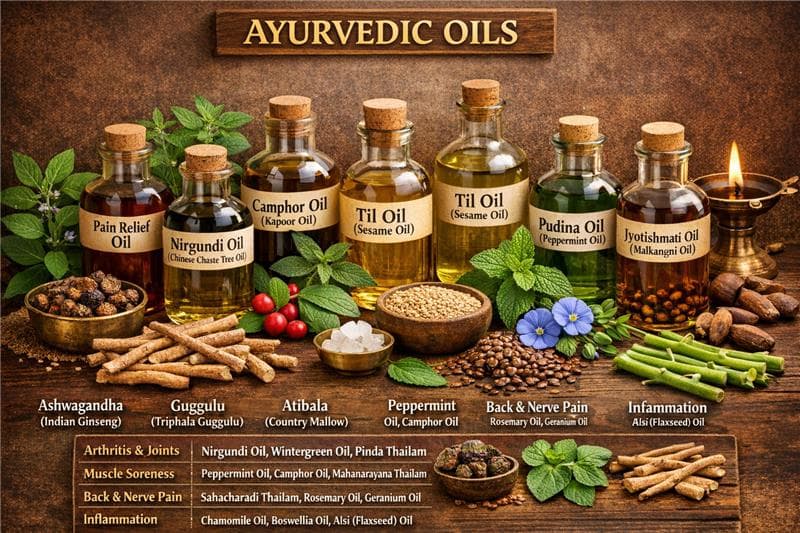
Which Ayurvedic Pain Relief Oils & Herbs Actually Work?
The most effective Ayurvedic pain relief oils combine Nirgundi, Gandhapura (Wintergreen), Camphor, Sesame, and Peppermint to address joint pain, muscle soreness, and inflammation. These botanicals work by improving circulation, reducing pro-inflammatory cytokines, and activating natural pain receptors — offering faster, targeted relief when applied topically.
Table of Contents
1. Why are Ayurvedic oils effective for natural pain relief?
2. What are the root causes of chronic pain and how does Ayurveda treat them?
3. Which specific Ayurvedic oils are most effective for joint and muscle pain?
4. What makes Nirgundi effective for joint and nerve pain?
5. How does Wintergreen Oil relieve pain topically?
6. How does Camphor work as a natural analgesic?
7. Why is Sesame Oil more than just a carrier in Ayurvedic pain relief?
8. What role does Flaxseed Oil play in reducing chronic inflammation?
9. How does Peppermint Oil provide immediate relief for muscle pain?
10. What does Jyotishmati do for nerve pain?
11. How does Ashwagandha reduce chronic musculoskeletal pain?
12. Why is Guggulu considered a natural NSAID alternative?
13. How does Atibala protect joint lubrication and reduce arthritis pain?
14. What makes Hadjod effective for bone and cartilage recovery?
15. What is the biological process behind how Ayurvedic pain oils work?
16. What is the best way to apply Ayurvedic pain oil for maximum absorption?
17. How many times a day should I use Ayurvedic oil for chronic conditions?
18. What are the long-term health benefits of using Ayurvedic pain relief?
19. How does Ayurvedic pain management compare to allopathic medicine?
20. How do I choose the right Ayurvedic product for my specific type of pain?
21. What lifestyle and diet changes support Ayurvedic pain recovery?
22. Frequently Asked Questions about Ayurvedic Pain Management
Why are Ayurvedic oils effective for natural pain relief?
Ayurvedic pain relief oils are multi-herb topical formulations that address pain through several mechanisms simultaneously — reducing inflammation, relaxing muscles, and improving circulation. Unlike single-pathway pharmaceuticals, they combine botanicals that work together to deliver natural, sustained relief for joint pain, muscle stiffness, and nerve discomfort.
Ayurvedic pain relief oils are herbal formulations based on the principles of Ayurveda, a traditional Indian healing system practiced for thousands of years. They are commonly used to help relieve joint pain, muscle stiffness, inflammation, back pain, and nerve-related discomfort.
Unlike many synthetic pain relievers that target a single mechanism, Ayurvedic oils contain multiple medicinal herbs that work together to reduce inflammation, relax muscles, and support tissue recovery.
In Ayurveda, pain is often linked to an imbalance of Vata dosha, which governs movement and nerve function. Factors such as overexertion, poor posture, cold weather, stress, or aging can aggravate Vata, leading to stiffness and aching in the muscles and joints.
When applied with gentle massage, these oils help improve blood circulation, reduce stiffness, calm inflammation, and support better joint mobility — providing natural relief from everyday body pain.
What are the root causes of chronic pain and how does Ayurveda treat them?
Chronic musculoskeletal pain stems from five interconnected causes: persistent inflammation, poor circulation, muscle tension, nerve sensitisation, and joint degeneration. Ayurveda addresses all five simultaneously by reducing inflammatory mediators, improving tissue perfusion, and supporting nerve and connective tissue health — unlike NSAIDs, which only suppress one pathway.
Chronic musculoskeletal pain — whether from arthritis, back injuries, sports strain, or age-related degeneration — has several interconnected root causes:
• Inflammation: Chronic inflammation damages cartilage, irritates nerve endings, and causes persistent pain as the immune system releases cytokines and prostaglandins in response to ongoing tissue damage.
• Poor circulation: Reduced blood flow means healing nutrients don't reach damaged tissue, and metabolic waste accumulates at the pain site.
• Muscle tension and spasm: Compensatory tension around an injury point creates a painful secondary layer of stiffness that outlasts the original injury.
• Nerve sensitisation: Over time, pain pathways become hyper-responsive to stimuli that shouldn't be painful — a process called central sensitisation.
• Joint degeneration: In conditions like osteoarthritis, cartilage breakdown exposes bone-to-bone contact, generating significant pain and functional limitation.
Modern medicine typically addresses these through NSAIDs (like ibuprofen), corticosteroids, or opioids. While effective short-term, these carry risks: gastric damage, liver stress, hormonal disruption, and dependency.
Ayurveda's approach is fundamentally different. Rather than suppressing a single pathway, it works across multiple systems simultaneously — reducing inflammation, improving tissue perfusion, supporting nerve health, and strengthening connective tissue. This is why a well-formulated Ayurvedic pain relief oil can offer sustained relief rather than temporary numbing.
Which specific Ayurvedic oils are most effective for joint and muscle pain?
The most clinically supported Ayurvedic ingredients for pain relief fall into four categories: anti-inflammatory botanicals (Nirgundi, Guggulu, Ashwagandha, Hadjod), analgesic agents (Wintergreen, Camphor, Peppermint), therapeutic carrier oils (Sesame, Flaxseed), and neuro-supportive herbs (Jyotishmati, Atibala). The best formulations combine all four.
The most clinically supported and traditionally validated Ayurvedic ingredients for pain relief fall into four functional categories:
• Anti-inflammatory Botanicals: Nirgundi, Guggulu, Ashwagandha, Hadjod
• Analgesic and Counter-irritant Agents: Gandhapura (Wintergreen), Camphor, Pudina (Peppermint)
• Carrier and Nutritive Oils: Til (Sesame), Alsi (Flaxseed)
• Neuro-supportive Herbs: Jyotishmati, Atibala
The best formulations combine elements from each category, ensuring you're addressing pain's cause and its sensation simultaneously. The following sections break down how each key ingredient works at the biological level.
What makes Nirgundi effective for joint and nerve pain?
Nirgundi (Vitex negundo) is highly effective for joint and nerve pain because its active compounds — iridoid glycosides, luteolin, and alkaloids — directly suppress the production of key inflammatory mediators including PGE2 and TNF-alpha. It is particularly effective for arthritis, sciatica, and spinal nerve pain.
Nirgundi is often called the 'five-leaved chaste tree' and has been a cornerstone of Ayurvedic pain management for centuries. Its leaves and roots contain iridoid glycosides, flavonoids (including luteolin), and alkaloids that work as powerful anti-inflammatory agents.
Research indicates that Nirgundi reduces the production of key inflammatory mediators including PGE2 and TNF-alpha at injury sites. Traditionally used in Sahacharadi tailam — a classical Ayurvedic oil — it is especially effective for arthritis, sciatica, and spinal nerve pain.
How does Wintergreen Oil relieve pain topically?
Wintergreen oil contains methyl salicylate — a compound chemically similar to aspirin — that inhibits the COX enzyme pathway responsible for generating pain-causing prostaglandins. Applied topically, it produces a warming then cooling sensation that distracts pain receptors while the anti-inflammatory chemistry works beneath the surface.
Gandhapura (Gaultheria fragrantissima) oil contains methyl salicylate, a naturally occurring compound chemically similar to aspirin. When applied to the skin, it produces a warming then cooling sensation while inhibiting the COX enzyme pathway that generates pain-causing prostaglandins.
This dual sensory effect distracts the pain receptors while the anti-inflammatory chemistry works beneath the surface. Gandhapura oil is particularly effective for joint pain, rheumatic conditions, and deep muscle ache.
How does Camphor work as a natural analgesic?
Camphor works by interacting with TRPV1 and TRPM8 receptors — the same receptors responsible for temperature and pain perception — effectively modulating how the nervous system experiences pain. It also acts as a rubefacient, drawing blood to the surface to reduce deep-tissue congestion and accelerate healing.
Camphor (Cinnamomum camphora) is one of Ayurveda's most trusted topical analgesics. Applied to the skin, it initially creates a cooling sensation, followed by warmth as it stimulates circulation to the area.
Pharmacologically, camphor interacts with TRPV1 and TRPM8 receptors — the same receptors responsible for temperature and pain perception — effectively modulating how the nervous system experiences pain. It also has mild local anaesthetic properties and acts as a rubefacient, drawing blood to the surface to reduce deep-tissue congestion.
Why is Sesame Oil more than just a carrier in Ayurvedic pain relief?
Sesame oil is therapeutically active in its own right. Rich in sesamol, sesamin, and vitamin E, it demonstrates significant anti-inflammatory and antioxidant activity. Its molecular weight and lipid profile also make it an exceptional transdermal carrier, helping botanical actives penetrate deeply into muscle and joint tissue.
Sesame oil (Sesamum indicum) is not merely a carrier — it is a therapeutic agent in its own right. Rich in sesamol, sesamin, and vitamin E, sesame oil has demonstrated significant anti-inflammatory and antioxidant activity.
Its molecular weight and lipid profile make it an exceptional transdermal carrier, helping other botanical actives penetrate deeply into muscle and joint tissue. Warm sesame oil massage (Abhyanga) is a foundational Ayurvedic practice for Vata-related pain and joint stiffness.
What role does Flaxseed Oil play in reducing chronic inflammation?
Flaxseed oil is one of the richest plant sources of alpha-linolenic acid (ALA), an omega-3 fatty acid the body converts into EPA and DHA — the same anti-inflammatory compounds found in fish oil. It helps modulate the inflammatory cascade responsible for chronic joint and muscle pain while supporting tissue repair at the cellular level.
Flaxseed oil (Linum usitatissimum) is one of the richest plant sources of alpha-linolenic acid (ALA), an omega-3 fatty acid the body converts into EPA and DHA — the same anti-inflammatory compounds found in fish oil.
Regular application of flaxseed-based preparations helps modulate the inflammatory cascade responsible for chronic joint and muscle pain. It also supports tissue repair and hydration at the cellular level, which is critical for conditions involving ligament, tendon, or cartilage wear.
How does Peppermint Oil provide immediate relief for muscle pain?
Peppermint oil's active compound menthol binds to TRPM8 cold receptors in the skin, producing an immediate cooling and analgesic effect within minutes of application. It also improves local blood flow and has antispasmodic properties — helping muscles release tension faster after exercise or injury.
Peppermint oil's (Mentha piperita) primary active compound is menthol, which binds to TRPM8 cold receptors in the skin, producing an immediate cooling and analgesic effect. This makes it exceptionally useful for acute muscle soreness, tension headaches, and post-exercise inflammation.
Peppermint also improves local blood flow and has antispasmodic properties — helping muscles release tension faster.
What does Jyotishmati do for nerve pain?
Jyotishmati (Celastrus paniculatus) contains sesquiterpene alkaloids that inhibit neuro-inflammatory pathways, making it particularly effective for nerve-related pain like sciatica and peripheral neuropathy. It also has mild anxiolytic effects that help reduce the psychological amplification of chronic pain.
Known as the 'intellect tree' in traditional texts, Jyotishmati's oil has notable anti-inflammatory and nerve-supportive properties. It is rich in sesquiterpene alkaloids that research suggests may inhibit neuro-inflammatory pathways — making it particularly valuable for nerve-related pain like sciatica or peripheral neuropathy.
It also has mild anxiolytic effects, which can help reduce the psychological amplification of chronic pain — an often-overlooked dimension of long-term musculoskeletal conditions.
How does Ashwagandha reduce chronic musculoskeletal pain?
Ashwagandha's withanolide compounds inhibit NF-κB — a master regulator of inflammation — and reduce cortisol levels, which when chronically elevated worsen musculoskeletal pain and impair tissue healing. Clinical trials have shown measurable improvements in knee joint comfort and physical function with regular use.
Ashwagandha (Withania somnifera) is one of Ayurveda's most scientifically validated adaptogenic herbs. Its withanolide compounds inhibit NF-κB — a master regulator of inflammation — and reduce cortisol levels, which when chronically elevated, worsen musculoskeletal pain and impair tissue healing.
Ashwagandha root extract supports joint integrity, reduces synovial inflammation, and promotes cellular repair. Clinical trials have shown measurable improvements in knee joint comfort and physical function, making it one of the most evidence-backed Ayurvedic herbs for chronic pain.
Why is Guggulu considered a natural NSAID alternative?
Guggulsterones — the active compounds in Guggulu resin — are among the most potent natural anti-inflammatory agents in Ayurvedic medicine. Clinical studies have compared Guggulu favorably to standard NSAIDs for osteoarthritis pain, with significantly fewer adverse effects, while also supporting cartilage health and reducing joint swelling.
Guggulsterones — the active compounds in Guggulu (Commiphora mukul) resin — are among the most potent natural anti-inflammatory agents known in Ayurvedic medicine. Clinical studies have compared Guggulu favorably to standard NSAIDs for osteoarthritis pain, with significantly fewer adverse effects.
Guggulu supports cartilage health, reduces joint swelling, and inhibits the leukotriene pathway — a key driver of inflammatory arthritis. For people managing chronic joint conditions, it offers a meaningful alternative to long-term pharmaceutical use.
How does Atibala protect joint lubrication and reduce arthritis pain?
Atibala (Abutilon indicum) contains alkaloids and flavonoids that inhibit hyaluronidase — the enzyme that breaks down hyaluronic acid in joint fluid. By protecting this natural joint lubrication, Atibala helps maintain mobility, reduce friction-related pain, and slow the degeneration characteristic of arthritis.
Atibala, sometimes called Indian mallow, is a less widely known Ayurvedic herb with remarkable anti-arthritic and anti-inflammatory properties. It contains alkaloids and flavonoids that inhibit hyaluronidase — the enzyme that breaks down the hyaluronic acid in joint fluid, leading to stiffness and degeneration.
By protecting joint lubrication, Atibala helps maintain mobility and reduce friction-related pain — making it a particularly valuable ingredient in formulations for osteoarthritis and long-term joint health.
What makes Hadjod effective for bone and cartilage recovery?
Hadjod (Cissus quadrangularis) — whose name means 'bone joiner' in Sanskrit — contains ketosterones, vitamin C, and calcium that accelerate bone and cartilage regeneration. Research confirms its ability to reduce pain and swelling in musculoskeletal injuries significantly faster than placebo, with independent analgesic effects beyond its healing properties.
Hadjod's name literally means 'bone joiner' in Sanskrit. It contains ketosterones, vitamin C, and calcium that accelerate bone and cartilage regeneration. It is especially valuable for fracture recovery, ligament repair, and osteoporotic pain.
Research confirms its ability to reduce pain and swelling in musculoskeletal injuries significantly faster than placebo. It also has analgesic properties independent of its healing effects, making it a dual-action ingredient in pain relief formulations.
What is the biological process behind how Ayurvedic pain oils work?
Well-formulated Ayurvedic pain oils work through five converging pharmacological pathways: COX/LOX enzyme inhibition, TRPV1/TRPM8 receptor modulation, NF-κB suppression, circulatory enhancement, and neuroplasticity support. This multi-pathway action is what distinguishes them from single-target pharmaceuticals.
COX/LOX Pathway Inhibition: Wintergreen (methyl salicylate), Guggulu, and Nirgundi all inhibit cyclooxygenase and lipoxygenase enzymes — the same enzymes targeted by ibuprofen and aspirin. This reduces prostaglandin and leukotriene production, directly lowering inflammation and pain signalling.
TRPV1/TRPM8 Receptor Modulation: Camphor and Peppermint activate temperature-sensitive receptors in the skin. TRPV1 activation by camphor creates a counter-irritant effect. Menthol's TRPM8 activation provides immediate analgesic relief and reduces neurogenic inflammation.
NF-κB Suppression: Ashwagandha's withanolides and Guggulsterones both inhibit NF-κB — the transcription factor that switches on the body's inflammatory gene expression. This systemic-level effect reduces the chronic low-grade inflammation underlying most musculoskeletal conditions.
Circulatory Enhancement: Camphor, Wintergreen, and Peppermint act as rubefacients — they dilate surface blood vessels, improving circulation to the affected area. Better circulation means faster removal of inflammatory metabolites and improved delivery of oxygen and nutrients to healing tissue.
Neuroplasticity Support: Jyotishmati and Ashwagandha support the health of peripheral nerves, helping to reduce central sensitisation — the mechanism by which chronic pain becomes self-perpetuating even after the original injury has healed.
What is the best way to apply Ayurvedic pain oil for maximum absorption?
For maximum absorption, clean the target area with warm water, warm the oil between your palms, apply with circular massage strokes progressing to deeper linear strokes, and leave on for twenty to thirty minutes. Consistent daily application produces better results than occasional use during acute flare-ups.
Step 1 — Clean the area: Wash the target area with warm water to open pores and remove surface oils.
Step 2 — Warm the formulation: For oil-based products, warm between your palms before applying. For gel or emulsion formats, body temperature activation happens naturally on skin contact.
Step 3 — Apply a generous layer: Use three to five drops for a focused area (knee, elbow) or a two to three centimetre ribbon of gel for larger muscle groups.
Step 4 — Use circular massage strokes: Begin with gentle circular strokes, then progress to deeper linear strokes along the muscle belly.
Step 5 — Apply appropriate pressure on joints: For arthritic joints, apply firm but gentle pressure around — not directly on — the joint.
Step 6 — Allow full absorption: Leave the formulation on for twenty to thirty minutes before dressing.
Step 7 — Repeat consistently: Ayurvedic oils are most effective when used as a daily practice, not just during acute flare-ups.
How many times a day should I use Ayurvedic oil for chronic conditions?
Application frequency depends on the pain type: acute muscle soreness benefits from two to three applications daily, while chronic joint conditions typically require once or twice daily. Allow at least four to six weeks of consistent use to assess full therapeutic benefit for chronic conditions.
Allow at least four to six weeks of consistent use to assess full therapeutic benefit for chronic conditions. Most users report measurable improvement in pain intensity and range of motion within two to three weeks of daily application.
What are the long-term health benefits of using Ayurvedic pain relief?
Direct Answer: Long-term daily use of quality Ayurvedic pain relief oil offers multi-pathway relief without systemic side effects, improves joint mobility, supports nerve health, and is safe for chronic daily application without tolerance development. It also works synergistically with physiotherapy, yoga, and other rehabilitation therapies.
• Multi-pathway pain relief: Addresses inflammation, nerve sensitivity, and circulation simultaneously — not just one pathway.
• No systemic side effects: Unlike NSAIDs, topical Ayurvedic oils don't damage the gastric mucosa or stress the liver.
• Improves joint mobility: Regular use supports synovial fluid health and connective tissue flexibility.
• Suitable for long-term use: Safe for daily application without tolerance development or dependency risk.
• Faster recovery: Improves lymphatic drainage and reduces healing time for sports injuries.
• Supports nerve health: Ingredients like Jyotishmati and Ashwagandha protect peripheral nerves from chronic damage.
• Aromatherapy benefit: Camphor and Peppermint have demonstrable mood-lifting effects that reduce the psychological perception of pain.
• Synergistic with other therapies: Enhances outcomes from physiotherapy, yoga, and chiropractic care.
How does Ayurvedic pain management compare to allopathic medicine?
Direct Answer: Ayurvedic pain relief oil works across multiple pathways (COX, TRPV1, NF-κB, circulation) versus the primarily COX-only mechanism of NSAIDs. It offers sustained relief that builds with regular use, has minimal side effects suitable for daily chronic use, and uniquely addresses root causes rather than just suppressing symptoms.
How do I choose the right Ayurvedic product for my specific type of pain?
Direct Answer: Match your primary pain type to the ingredient profile: Nirgundi and Guggulu for arthritis, Peppermint and Camphor for muscle soreness, Jyotishmati and Ashwagandha for nerve pain, and Hadjod for bone and fracture recovery. For general chronic pain, a full-spectrum multi-herb blend delivers the most comprehensive results.
What lifestyle and diet changes support Ayurvedic pain recovery?
Direct Answer: Topical Ayurvedic pain relief oil works most powerfully when combined with an anti-inflammatory diet, daily gentle movement, seven to nine hours of quality sleep, and stress management through meditation or pranayama. Together, these address the systemic imbalances that cause pain to persist.
Topical Ayurvedic pain relief oil works most powerfully when combined with supportive lifestyle practices that address the underlying imbalances causing pain.
Diet: Reduce pro-inflammatory foods — refined sugar, processed seed oils, alcohol, and excess red meat. Increase anti-inflammatory foods: turmeric, ginger, dark leafy greens, berries, walnuts, and fatty fish. Stay well hydrated, as dehydration worsens joint stiffness and muscle cramping. Include warm, cooked foods over cold raw meals if you have a Vata-dominant constitution.
Movement: Practice gentle yoga daily — even fifteen to twenty minutes reduces chronic pain biomarkers significantly. Avoid prolonged static postures (sitting or standing for more than forty-five minutes without movement breaks). Swimming and walking are ideal low-impact activities for joint pain sufferers.
Sleep: Prioritise seven to nine hours of quality sleep — pain recovery is predominantly a nocturnal process. Apply pain relief oil before bed to capitalise on the body's overnight repair cycle.
Stress Management: Chronic psychological stress elevates cortisol and amplifies pain perception. Meditation and pranayama are validated tools to break this cycle. Ashwagandha supplementation can help modulate cortisol and stress-driven inflammation.
Heat Therapy: Warm oil application combined with a hot water bottle or infrared heat pad significantly amplifies transdermal absorption and pain relief. This combination is particularly effective for deep joint and lower back pain.
Frequently Asked Questions about Ayurvedic Pain Management
What is the fastest Ayurvedic pain relief method?
Direct Answer: Counter-irritant oils containing Wintergreen (methyl salicylate) and Camphor work fastest — typically within ten to fifteen minutes of topical application. Products with a spray format deliver active compounds quickly to large or hard-to-reach areas, making them the fastest option for back and shoulder pain.
Can I use Ayurvedic pain relief oil every day?
Direct Answer: Yes. Unlike pharmaceutical pain relievers, topical Ayurvedic oils are formulated for daily use without risk of tolerance or dependency. Consistent daily application typically produces the best long-term results, as the therapeutic benefits of anti-inflammatory botanicals accumulate over time.
Is Ayurvedic pain relief oil safe for arthritis?
Direct Answer: Yes. Nirgundi, Guggulu, and Wintergreen have all demonstrated significant anti-arthritic activity in clinical studies. They reduce joint inflammation, improve synovial fluid quality, and support cartilage preservation over time — making daily topical application a safe, effective strategy for arthritis management.
How long does it take for Ayurvedic oil to work?
Direct Answer: Counter-irritant and analgesic ingredients like Camphor and Peppermint provide relief within fifteen to thirty minutes. For deeper inflammatory or degenerative conditions, consistent use over three to six weeks is needed to see meaningful structural improvement in pain levels and range of motion.
Can Ayurvedic pain relief oil replace ibuprofen?
Direct Answer: For mild to moderate chronic pain, many users find they can significantly reduce or eliminate NSAID use with consistent Ayurvedic oil therapy. For acute or severe pain, a combined approach — working with your healthcare provider — is often most effective. Always consult a physician before stopping prescribed medication.
Which oil is best for back pain specifically?
Direct Answer: The classical Sahacharadi formulation — based on Nirgundi root — is the most traditionally recommended oil for lower back pain and spinal conditions. Formulations using a similar base with enhanced bioavailability for deep tissue access offer particularly effective relief for chronic lower back pain.
Is Ayurvedic pain oil safe during pregnancy?
Direct Answer: Pregnant women should avoid oils containing camphor and high concentrations of essential oils without medical guidance. Some Ayurvedic ingredients are contraindicated during pregnancy. Always consult an Ayurvedic practitioner or physician before use during pregnancy.
Can Ayurvedic pain relief oil help with nerve pain?
Direct Answer: Yes. Ingredients like Jyotishmati, Ashwagandha, and Nirgundi have demonstrated neurotropic and anti-inflammatory effects that specifically target nerve pain pathways — making them beneficial for sciatica, peripheral neuropathy, and nerve compression syndromes.
What is the difference between Ayurvedic pain oil and regular massage oil?
Direct Answer: Regular massage oils provide lubrication and mild relaxation. Ayurvedic pain relief oils are pharmacologically active — they contain standardised botanical concentrates that interact with pain receptors, enzymes, and inflammatory pathways to deliver measurable therapeutic outcomes beyond simple relaxation.
Can I use Ayurvedic pain oil for sports injuries?
Direct Answer: Yes, particularly oils with Hadjod (for tissue repair), Peppermint (for acute soreness), and Camphor (for bruising and swelling). Apply two to three times daily during the acute recovery phase and once daily thereafter for maintenance. Consistent use accelerates lymphatic drainage and tissue regeneration.
What is Nirgundi oil and why is it used for pain?
Direct Answer: Nirgundi (Vitex negundo) oil is extracted from the leaves and roots of the five-leaved chaste tree. It contains luteolin and other flavonoids that inhibit prostaglandin production and reduce inflammatory cytokines — making it one of Ayurveda's most evidence-supported analgesic herbs for arthritic and musculoskeletal pain.
Does Ayurvedic pain oil have any side effects?
Direct Answer: When used as directed, most quality Ayurvedic pain relief oils have an excellent safety profile. Some individuals with sensitive skin may experience mild irritation from high concentrations of essential oils — always patch test before widespread application. Avoid applying to broken skin or open wounds.
Can Ayurvedic pain relief oil help with knee pain?
Direct Answer: Yes. A combination of Nirgundi, Guggulu, and Sesame base has proven particularly effective for knee osteoarthritis. Regular massage with warm Ayurvedic oil improves joint lubrication, reduces swelling, and gradually restores functional mobility with consistent daily use.
Is Ashwagandha effective for pain when taken orally?
Direct Answer: Yes. Multiple clinical trials confirm that Ashwagandha root extract significantly reduces joint pain scores, improves physical function, and lowers inflammatory biomarkers in patients with knee osteoarthritis. Standardised oral supplementation provides systemic anti-inflammatory support that complements topical application.
How do I choose between gel, oil, spray, and emulsion formats?
Direct Answer: Oil is best for massage, joint conditions, and overnight use. Gel suits localised acute pain, post-exercise recovery, and daytime use (non-greasy). Spray works best for large areas like the back and thighs, or hard-to-reach spots. Emulsion suits dry, inflamed skin needing both hydration and pain relief.
Key Takeaways
• The best Ayurvedic pain relief oils work across multiple biological pathways — not just one — making them uniquely suited for complex, chronic pain conditions.
• Nirgundi, Wintergreen, and Camphor are the most validated anti-pain botanicals with mechanisms comparable to OTC pharmaceuticals but without systemic side effects.
• Sesame oil is not just a carrier — it is therapeutically active, accelerating absorption and providing its own anti-inflammatory benefits.
• Consistent daily application over four to six weeks is the key variable separating those who get results from those who don't.
• Ayurvedic pain relief oil is most powerful when combined with an anti-inflammatory diet, regular gentle movement, and adequate sleep.
• Choose your format based on pain type: oils for chronic joint conditions, gels for acute muscle pain, sprays for large areas, and emulsion for inflamed or dry skin.
Explore Reset Ayurvedic Pain Relief Products
Reset Emulsion — For arthritis and joint pain
Reset Ultra-Potent Gel — For muscle soreness and nerve pain
Reset Soothing Gel — For inflammation and swelling
Reset Deep Penetrating Spray — For back pain and large areas
Share this article:


