
Wellness
How To Cleanse Liver Naturally At Home?
2024-04-22
5 min read
2026-07-14 • 5 min read
Open Instagram right now and you will find someone telling you your body is overloaded with toxins. A wellness influencer is mid-celery-juice. Someone else is on day three of a "microplastics detox." A third person is selling a 7-day liver cleanse kit in their link-in-bio. Google Trends confirms this is not just a social media moment — searches for "viral diets," "juice cleanse," and "detox diet" surge every January and again after Diwali, Eid, or any long holiday weekend where we ate more than we planned to.
Here is the thing nobody in that comment section mentions: your body was already detoxing this morning. It did not wait for you to mix a green drink. It did not need a 3-day fast to activate. Your liver and kidneys have been running a continuous, sophisticated detoxification program since before you were born — and they are remarkably good at it.
This article is about what science actually says on how your liver filters toxins, how the kidney detoxification process works, and why so many viral diet myths have been so effective at convincing otherwise intelligent people to spend money on things their biology does not need.
Detox trends are not new. They have existed in some form across every culture and century — bloodletting, purging, enemas, and now, celery juice at sunrise. What has changed is the speed at which they travel. A wellness influencer with no medical credentials can reach 10 million followers before a single peer-reviewed study is published in response.
Google Trends data is telling. Searches for "detox" follow a remarkably consistent pattern: a sharp surge every January, and again following festive seasons. In 2026, the wave has shifted toward microplastics detox kits, microbiome "resets," and longevity protocols — all wrapped in the language of science but built on the same promise that has been sold for centuries: your body is quietly failing, and this product will fix it.
The British Dietetic Association (BDA) has formally described detox diets as "a marketing myth rather than nutritional reality," adding that most claims are "exaggerated, not based on robust science, and any benefit is short-lived." The NHS echoes this position, stating that unless you have a serious medical condition, your body already has a well-developed built-in ability to remove waste — and no commercial product changes that.
The tell is this: no detox product ever names the specific "toxins" it is removing. That vagueness is deliberate. If the toxin is never defined, it can never be disproven. Before committing to a fast or a ₹3,000 cleanse kit, it is worth understanding what detoxification actually looks like inside your body.
Table 1: Most Popular Viral Detox Trends vs. What Science Actually Says
Your liver is, without exaggeration, one of the most sophisticated chemical processing plants in the known universe — and it fits inside your body just below your ribcage. It handles over 500 documented functions, and detoxification is among the most critical.
Everything you eat, drink, inhale, or absorb through your skin eventually reaches the liver. Blood from your digestive system flows directly into the liver before travelling anywhere else in the body. This positioning is intentional. Your liver is the first screening checkpoint for anything that enters your system.
The detoxification process happens in two distinct phases — a fact rarely mentioned in wellness marketing because it is far less exciting than "this tea cleanses your blood."
In Phase I, enzymes from a family called cytochrome P450 chemically alter toxic molecules through oxidation, reduction, or hydrolysis. This converts fat-soluble toxins into more reactive intermediate compounds. Importantly, these intermediates can sometimes be temporarily more harmful than the original substance — which is precisely why Phase II is critical.
In Phase II, the liver attaches these reactive intermediates to carrier molecules through processes called methylation, sulfation, and glutathione conjugation. This renders them water-soluble so they can be safely excreted through bile, urine, or stool. Both phases depend on a continuous supply of B vitamins, amino acids, magnesium, zinc, and antioxidants — nutrients that a juice cleanse or crash fast will actively deprive your liver of.
This two-phase system runs 24 hours a day, seven days a week. It does not need a "reset." What it needs is nutritional support, not nutritional restriction.
Table 2: Liver Detox — Phase I vs Phase II Explained Simply
While the liver gets most of the wellness world's attention, the kidneys work just as hard — and are just as misunderstood.
Your two kidneys filter your entire blood supply somewhere between 40 and 60 times per day. Inside each kidney, millions of tiny filtration units called nephrons each contain a glomerulus — a dense cluster of capillaries that acts as a molecular sieve. This barrier sorts molecules by both size and electrical charge, allowing waste products like urea, creatinine, and water-soluble toxins to pass through into urine while retaining blood cells and important proteins like albumin.
The kidneys do not need to be "flushed." They need to be hydrated. Even mild dehydration measurably reduces filtration efficiency and slows the elimination of metabolic waste. The single most evidence-backed intervention for kidney health is drinking adequate water — roughly 2.5 to 3 litres daily, more in warm climates or during physical activity.
Beyond filtration, the kidneys regulate your body's electrolyte balance — potassium, sodium, magnesium — and maintain blood pH within a very tight range. Crash diets and juice cleanses, particularly those high in concentrated fruit sugars, can disrupt both functions rather than supporting them.
When people report feeling genuinely better after a detox, something real is usually happening — it is just not the mechanism the product is selling.
Most detox regimens do one thing correctly: they eliminate alcohol, processed food, refined sugar, and excess salt. When those inputs disappear, of course the body responds. Inflammation decreases, digestion improves, energy stabilises. But that response comes from removing harmful inputs, not from any cleansing action of the detox itself.
The weight lost during a juice cleanse is almost entirely water and stored glycogen — not fat, not toxins. It returns within days of normal eating resuming. Longer-term restriction carries genuine risks: nutrient deficiencies, blood sugar instability, metabolic slowdown, and — as the NHS has noted — a build-up of ketones that can reach toxic levels in the body.
There is one consistent red flag in every detox product: they never name the specific toxins they are removing. A supplement that claims to "flush toxins" without identifying a single molecule should be regarded with scepticism. Real medicine names what it is targeting. Vagueness covers the absence of evidence.
Table 3: What Actually Supports Your Liver and Kidneys vs. What Detox Products Claim
If the question is whether a 3-day juice cleanse removes toxins that your liver and kidneys were not already handling — no. There is no peer-reviewed clinical evidence to support that claim, and both the NHS and the BDA have said so directly.
If the question is whether changing what you eat and drink can meaningfully improve how your detoxification organs perform — absolutely yes.
This is the distinction that most wellness marketing deliberately blurs. Your body is not a sink that clogs with sludge. It is a dynamic, responsive system that performs based on what you give it. Overload it with alcohol, ultra-processed food, irregular sleep, and long sedentary hours — and your SGPT and SGOT levels will begin to reflect that. Support those same organs consistently through nutrition, hydration, movement, and targeted herbal care — and the difference is measurable.
This is precisely where Ayurveda was ahead of its time. Traditional herbs like Kalmegh, Guduchi, Manjishta, Punarnava, and Daru Haldi were never prescribed as 3-day emergency flushes. They were part of daily, gentle, consistent liver and blood care rituals — designed to support what the body does naturally, not override it with restriction.
Table 4: Fad Detox vs. Ayurvedic Daily Support — A Side-by-Side Comparison
Once you understand the biology, the path forward becomes clear. You are not detoxing. You are supporting the organs that already do it. Here is what that looks like in practice:
●Hydrate consistently. Kidneys need water above everything else. Plain water with minerals — not detox drinks — is what filtration runs on. Explore how detox water can complement your daily intake without the hype.
●Eat for your liver. Cruciferous vegetables, leafy greens, beets, garlic, and turmeric all provide the micronutrients that Phase I and Phase II detoxification depend on. See our guide on the best foods for a healthy liver.
●Reduce the load. Limiting alcohol, cutting back on ultra-processed food, and reducing refined sugar directly reduces your liver's burden. After heavy or festive eating, specific recovery steps can help — see how to detox after eating oily food.
●Move your body daily. Even 30 minutes of walking improves circulation and supports lymphatic drainage — two things that directly help your body move waste products out.
●Know the early signs. Persistent fatigue, dull skin, bloating, and brain fog can signal the liver needs attention. Learn to recognise signs of a toxic body before it shows up in a blood report.
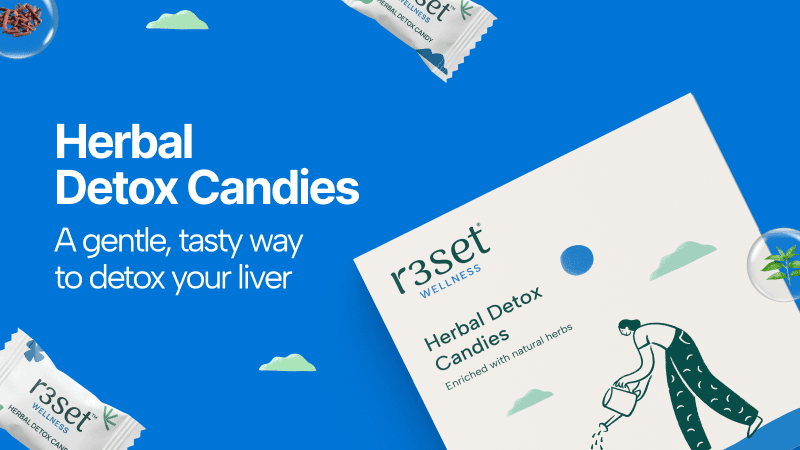
●Consider Ayurvedic daily support. Reset Detox Candy brings five classical herbs — Kalmegh, Daru Haldi, Manjishta, Guduchi, and Punarnava — into a no-preparation after-meal ritual. A patented formula with zero glycemic index sweetener. No powders, no bitter shots, no disruption to your diet. Just a small, consistent daily habit that lets your liver do what it already knows how to do, a little better, every day. Read more about how it supports liver health.
Also worth reading: Is a detox cleanse actually effective for weight loss? Find out at
Detox Cleanse for Weight Loss | Best Herbs for Blood Purification | Detox Candy Benefits for Breathing
🍬 Support Your Liver the Gentle Way
Reset Detox Candy combines Kalmegh, Daru Haldi, Manjishta, Guduchi & Punarnava in a patented sugar-free Ayurvedic formula.
No preparation. No powder. No bitter aftertaste. Just 2–3 candies after meals.
●Your liver and kidneys are detoxifying your body continuously — no juice cleanse, fast, or supplement activates this process. It is already running.
●Viral detox diets are built on the premise that your body's natural systems are failing. For most healthy individuals, they are not.
●Both the NHS and the British Dietetic Association have formally described commercial detox diets as a marketing myth, not a medical intervention.
●Weight lost during a cleanse is almost entirely water and stored glycogen — it returns within days. No toxins are removed in the process.
●What genuinely supports detoxification is hydration, micronutrient-rich food, adequate sleep, daily movement, and reducing alcohol and processed food intake.
●Ayurvedic herbs like Kalmegh, Guduchi, and Punarnava have documented traditional use for liver and kidney care — not as crisis cleanses, but as consistent daily support.
●The right question is not "should I do a detox?" but "am I consistently supporting the organs that already detox for me every single day?"
Are detox diets effective for weight loss?
Detox diets often produce rapid initial weight reduction, but research consistently shows this comes from water and glycogen loss rather than fat. Once normal eating resumes, the weight returns quickly. For sustainable results, a balanced diet with adequate protein and fibre is far more effective than any short-term cleanse.
What does a detox diet actually do to your body?
Most detox regimens eliminate alcohol, processed food, and refined sugar while adding more water and vegetables. The short-term improvements people experience come from removing harmful inputs — not from any specific "cleansing" mechanism. The body was already handling the rest.
How does the liver filter toxins naturally?
The liver processes toxins through two enzymatic phases. Phase I uses cytochrome P450 enzymes to chemically alter fat-soluble toxins. Phase II attaches those altered molecules to carrier compounds through methylation, glutathione conjugation, and other pathways — making them water-soluble and safe for excretion via bile or urine. This runs 24 hours a day and requires a steady supply of B vitamins, amino acids, magnesium, and antioxidants.
What is the kidney detoxification process?
Your kidneys filter your blood 40–60 times daily using nephrons — microscopic filtration units each containing a glomerular sieve that sorts molecules by size and charge. Waste products like urea, creatinine, and water-soluble toxins pass through into urine; blood cells and proteins are retained. Consistent hydration is the single most important factor in keeping this process running efficiently.
Do juice cleanses actually work?
Not for detoxification as marketed. The liver and kidneys manage toxin removal regardless of whether you are juicing. Juice cleanses often deliver concentrated fruit sugars that spike blood glucose, lack the protein and fat that the liver's Phase II pathways depend on, and can worsen the very conditions they promise to correct.
How can I support liver and kidney health at home?
Drink adequate water, eat a diet rich in fibre and micronutrients (especially cruciferous vegetables and leafy greens), limit alcohol, sleep consistently, move daily, and consider evidence-based Ayurvedic herbal support. Read about detox candy benefits for breathing and how Kalmegh and Punarnava work alongside your body's natural systems.
Is it safe to do a detox diet regularly?
Repeated strict cleanses carry risks: nutrient deficiencies, disrupted blood sugar regulation, and — per NHS guidance — potentially harmful elevations of ketone levels. They are particularly risky for individuals with diabetes, kidney disease, or existing liver conditions. Consistent daily lifestyle habits that support natural detoxification are both safer and more effective long-term.
What does Google Trends tell us about our wellness obsession?
Google Trends data shows that searches for "detox," "cleanse," and "viral diets" peak predictably every January and following periods of indulgent eating. This pattern reflects something honest about human behaviour: we feel motivated to take action after excess. The opportunity is to channel that motivation toward habits that actually work — rather than short-lived purchases that feel productive but change nothing at the biological level.
NHS (UK) — "The NHS advises that there is no evidence that detox diets remove toxins from the body, and that the liver and kidneys handle this process naturally." nhs.uk
British Dietetic Association (BDA) — "Detox diets are a marketing myth rather than nutritional reality. The claims made by detox diet promoters are exaggerated and not based on robust science." bda.uk.com/resource/detox-diets
National Institute of Environmental Health Sciences (NIEHS) — Research highlights how the body's innate detoxification processes are vital for reducing toxic burden and maintaining systemic health. niehs.nih.gov
NCBI / StatPearls — The liver performs detoxification through Phase I (cytochrome P450 enzymes) and Phase II (conjugation pathways including glutathione synthesis). ncbi.nlm.nih.gov
American Kidney Fund — The kidneys filter blood continuously, removing excess waste and toxins through urine while maintaining electrolyte and fluid balance. kidneyfund.org
ScienceBasedMedicine.org, January 2026 — "In 2026, the organs responsible for detoxification — liver, kidneys, skin, and GI tract — continue to do their jobs efficiently in the vast majority of people, without products or services to help them."
Share this article:
| Viral Detox Trend | What It Claims | What Science Shows | Verdict |
|---|---|---|---|
| Juice Cleanse (3–7 days) | Flushes toxins, resets digestion | Short-term water loss; no evidence of toxin removal; can disrupt blood sugar | Not effective for detox |
| Celery Juice Fasting | Detoxifies liver, clears skin | Lacks protein and fat; no clinical evidence for liver detox benefits | Trendy, not evidenced |
| Microplastics Detox Kits | Removes microplastics from body | No supplement proven to remove microplastics; kidneys handle filtration naturally | Marketing, not medicine |
| Raw Fruit Breakfast (Mono-Meals) | Detoxifies the body, boosts energy | Rich in vitamins but lacks protein; causes blood sugar spikes without fat or fibre | Partial benefit, overhyped |
| Herbal Cleanse Teas | Purges toxins through digestive tract | May cause a laxative-type effect; no proven toxin removal mechanism | Mild at best, risky at worst |
| Process | Phase I | Phase II |
|---|---|---|
| What Happens | Toxins are chemically altered through oxidation, reduction, or hydrolysis | Altered toxins are bound to carrier molecules, becoming water-soluble and excretable |
| Key Enzymes / Pathways | Cytochrome P450 enzyme family | Methylation, sulfation, glucuronidation, glutathione conjugation |
| Output | Reactive intermediates (temporarily more chemically active) | Water-soluble compounds ready for excretion via bile or urine |
| Nutrients Needed | B vitamins (B2, B3, B6), antioxidants like vitamin C and E | Amino acids (glycine, taurine, cysteine), magnesium, sulfur-rich foods |
| Disrupted By | Alcohol, ultra-processed food, certain medications | Protein deficiency, calorie restriction, crash diets, nutrient depletion |
Rejuvenating blend of herbal ingredients for your liver detox.

₹559.00
₹449.00
Dose of goodness for a healthy gut and weight management

₹529.00
₹499.00
| Healthy Daily Habit | Why It Actually Works | What Detox Products Claim | The Reality |
|---|---|---|---|
| Drink 2.5–3L of water daily | Supports kidney glomerular filtration and toxin excretion through urine | "Flushes toxins from the body" | Water does this. The product does not. |
| Eat fibre-rich foods (vegetables, flaxseed, legumes) | Binds waste and metabolic byproducts in the gut for elimination via stool | "Cleanses the intestinal tract" | Dietary fibre does this. Most cleanses add very little. |
| Limit alcohol and processed food | Reduces the liver's Phase I burden and prevents enzyme overload | "Gives your liver a rest" | Removing the stressor does this. The cleanse does not. |
| Regular physical activity | Improves circulation, supports lymphatic drainage, reduces inflammation | "Boosts lymph flow and detox" | Exercise achieves this naturally — no product needed. |
| Sleep 7–8 hours consistently | The liver performs critical repair and metabolic processing during deep sleep | "Resets your system overnight" | Sleep is the actual overnight reset. A tea is not. |
| Herbal support (Kalmegh, Guduchi, Punarnava) | Traditionally documented to support liver enzyme balance and kidney function | "Herbal detox formula" | Evidence-backed herbs work as daily support, not crisis interventions. |
| Parameter | Crash Detox / Juice Cleanse | Ayurvedic Daily Support (e.g., Reset Detox Candy) |
|---|---|---|
| Duration | 3–7 days (short-term, unsustainable) | Ongoing daily ritual — 4+ weeks for visible liver and digestion support |
| Mechanism | Restricts intake; claims to "flush" unnamed toxins | Supports liver's natural Phase I & II with five classical Ayurvedic herbs |
| Nutritional Impact | Often calorie- and protein-deficient; may impair Phase II liver detox | Zero dietary disruption — taken after regular meals |
| Convenience | Demanding; requires preparation, strict routine, willpower | Pocket-sized candy format; no mixing, no powders, no preparation |
| Blood Sugar Impact | Juice cleanses spike glucose; fasting can trigger hypoglycaemia | Formulated with zero glycemic index sweetener — safe for daily use |
| Evidence Base | No peer-reviewed backing for specific toxin removal claims | Herbs like Kalmegh, Guduchi, Punarnava have documented traditional use for liver and kidney care |
| Sustainability | Most users revert to baseline habits within days of completing a cleanse | Builds a simple, consistent habit that supports long-term daily wellness |

