Emulsion Pain relief roll on
An easy to apply potent formula with roll-on massager

₹549.00
₹449.00
4.6

2026-03-26 • 5 min
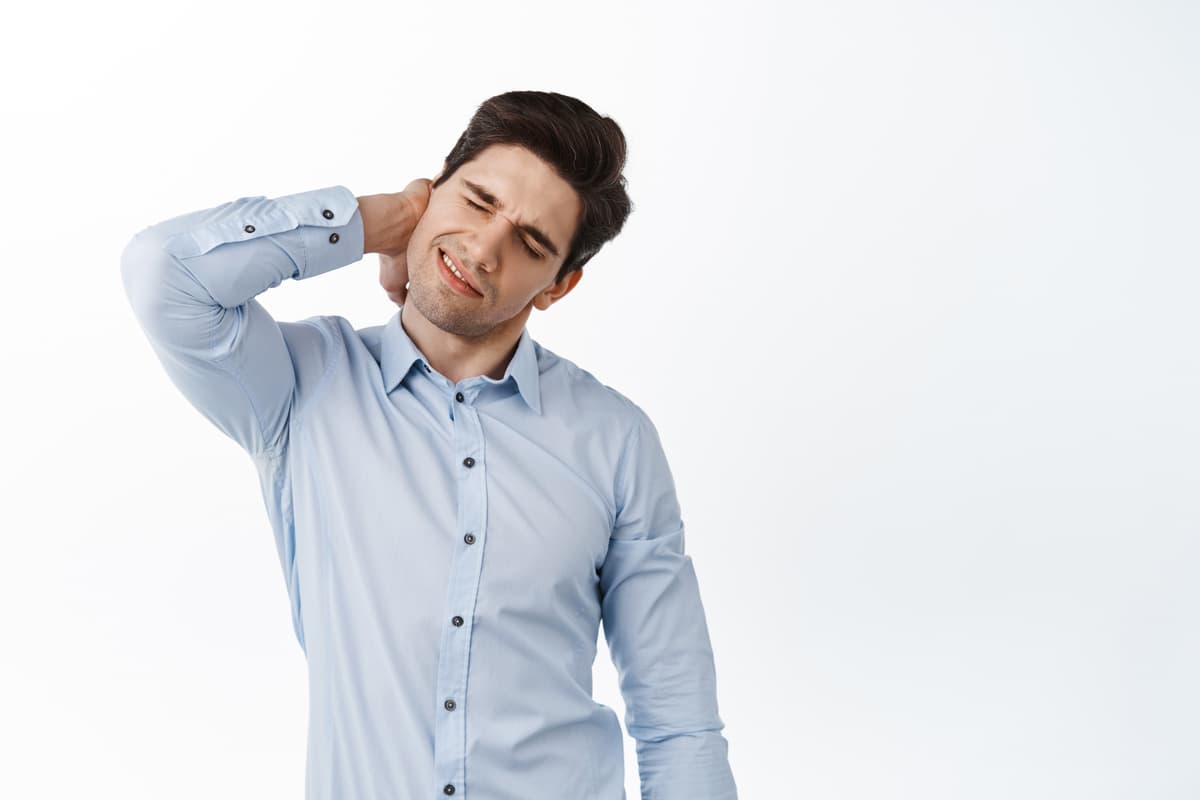
It is specific, localised, and hard to ignore — a pain or tenderness concentrated in the space just beneath and behind the ear, often radiating toward the jaw, the base of the skull, or down the side of the neck. It does not feel like ordinary neck stiffness. And because it is so precisely located, most people know something in that region is the problem — they just do not know what.
Neck pain under ear is one of the more diagnostically complex forms of cervical pain because the anatomy of that specific region is unusually dense. The mastoid process of the skull, the upper cervical vertebrae, the sternocleidomastoid and digastric muscles, the parotid gland, lymph nodes, the styloid process, and multiple cranial nerve branches all converge within a few centimetres of the area just below and behind the ear. Pain in this zone can originate from any of them — and reading the character and context of the pain carefully is what points toward the correct cause and the right response.
This guide gives you a clear, structured breakdown of the most common causes of neck pain under ear, the symptoms that distinguish each, the home care approaches that work best, and the fastest relief methods — including when this particular type of neck pain requires professional evaluation rather than home management.
To understand why pain under the ear can arise from so many different sources, it helps to know what occupies that region of the anatomy. Directly below and behind the earlobe sits the mastoid process — a bony projection of the skull that serves as a muscle attachment site. The sternocleidomastoid (SCM) muscle attaches here, running from this point down to the collarbone and sternum — one of the most powerful neck muscles and one of the most common trigger point generators in the entire cervical region.
Behind the mastoid process, the suboccipital muscles connect the base of the skull to the first and second cervical vertebrae. The upper cervical facet joints — C1-C2 and C2-C3 — sit just medially and inferiorly to this region, and their referred pain patterns can project directly into the area below the ear. Anteriorly, the parotid gland and the angle of the jaw with its associated TMJ structures sit within centimetres. Lymph nodes cluster along the posterior and lateral margins of this region.
This anatomical density means that pain felt under the ear can originate from: a muscle, a joint, a nerve, a gland, or a lymph node. Distinguishing between them is the key to effective treatment.
Sharp or aching pain directly behind the earlobe that worsens when turning the head — suggests SCM muscle trigger point or upper cervical joint involvement
Tenderness to touch just below the mastoid process, with pain radiating toward the base of the skull — classic sternocleidomastoid trigger point pattern
Pain that travels from below the ear into the jaw, temple, or behind the eye — may indicate TMJ dysfunction, referred upper cervical pain, or SCM trigger point referral
Pain under the ear that worsens with chewing, yawning, or opening the mouth wide — strong indicator of TMJ contribution
A tender lump or swelling beneath the ear that is warm or accompanied by sore throat, fever, or fatigue — suggests lymph node enlargement requiring medical assessment
Neck pain under ear accompanied by a sharp, shooting, or electric sensation — possible involvement of the greater occipital or lesser occipital nerves
Dull, persistent pain below the ear that worsens with prolonged one-sided phone use, carrying, or sleeping on that side — musculoskeletal and postural origin
Pain under the ear with jaw clicking, difficulty opening the mouth, or ear fullness without hearing change — temporomandibular joint dysfunction
Neck pain under the ear is usually musculoskeletal, but certain presentations require prompt medical evaluation:
A lump, swelling, or lymph node enlargement under the ear that is persistent, growing, or accompanied by fever, weight loss, or fatigue
Pain that is severe, constant, and unresponsive to any position change or home care
Shooting or electric pain from under the ear down into the neck or up into the scalp — possible occipital neuralgia requiring medical assessment
Ear pain, hearing changes, or discharge accompanying the neck pain
Jaw locking or severe restriction of mouth opening alongside neck pain under the ear
Neck pain under ear following a trauma, fall, or sudden forceful head movement
The SCM is a long, powerful muscle that runs from just behind the earlobe — at the mastoid process — down to the sternum and clavicle. It rotates the head to the opposite side and assists in flexion. When overloaded — by sustained head turning during work, phone use pressed to the shoulder, prolonged driving, sleep position, or physical strain — it develops trigger points near its mastoid attachment that produce pain directly under the ear.
The SCM's trigger point referral pattern is unusually wide: points near the mastoid refer pain to the cheek, temple, around the eye, and into the forehead. Points along the belly of the muscle refer to the throat, ear, and back of the skull. This wide referral is why SCM trigger points are sometimes mistaken for headaches, sinus pain, or ear problems — they are producing pain at a distance from the actual trigger. Recognising the SCM as the source changes everything about the treatment approach.
The C1-C2 joint is the most mobile segment in the entire spine — responsible for approximately 50% of the neck's rotational range. C2-C3 is just below it. Both joints refer pain to the upper cervical region, the suboccipital area, and the lateral neck below the ear when they are restricted, compressed, or irritated. This is a facet-mediated pain referral pattern — the joints themselves do not have obvious tenderness to touch, but cervical rotation and extension reproduce the pain under the ear.
Upper cervical joint dysfunction commonly arises from sustained rotational postures (looking to one side for extended periods), whiplash-type mechanisms, and poor sleeping positions that keep the head in lateral rotation for hours. It responds well to mobilisation — either through specific cervical stretching or professional manual therapy.
The TMJ — the jaw joint — sits directly in front of the ear canal, but its referred pain pattern frequently extends below and behind the ear, overlapping significantly with cervical pain territory. TMJ dysfunction arises from jaw clenching (bruxism), teeth grinding, malocclusion, or direct trauma to the jaw. The muscles of mastication — particularly the masseter and medial pterygoid — develop trigger points that refer pain into the ear region, the angle of the jaw, and the lateral neck below the ear.
The clinical sign that distinguishes TMJ-driven neck pain under ear from purely cervical causes is pain reproduction or worsening with jaw movements — chewing, yawning, wide mouth opening, or clenching. TMJ-driven pain under the ear often coexists with cervical muscle dysfunction, as the two regions share neurological pathways and frequently co-sensitise each other.
Occipital neuralgia is an irritation or compression of the greater or lesser occipital nerves — the nerves that run from the upper cervical spine through the suboccipital muscles and up over the scalp. When these nerves are compressed — by tight suboccipital muscles, upper cervical joint dysfunction, or direct trauma — the result is a sharp, shooting, or electric pain that travels from the back of the neck, around the side of the head, and into the region behind and below the ear. The pain is often described as a stabbing or burning sensation rather than the dull aching of muscular pain.
Occipital neuralgia is more common than most people realise and is frequently misdiagnosed as migraine or cluster headache. The distinguishing feature is a trigger point of tenderness at the base of the skull where the nerves emerge from the suboccipital muscles — pressing here reproduces the pain.
The posterior auricular and upper cervical lymph nodes cluster in the region just below and behind the ear. Enlargement from a local infection — ear infection, throat infection, scalp infection, or dental abscess — or from a systemic viral illness produces a tender lump in this area that can be mistaken for musculoskeletal neck pain. Lymph node pain is typically accompanied by other signs of infection: warmth, swelling, fever, fatigue, or a primary infection site. It does not respond to stretching or massage and requires medical treatment of the underlying infection.
The parotid gland — the largest salivary gland — sits directly below and in front of the ear, with its lower portion extending toward the angle of the jaw. Parotitis (inflammation of the parotid) from infection, blocked duct, or autoimmune conditions produces swelling and pain in the preauricular region that can radiate toward the area below the ear. It is typically accompanied by facial swelling, pain when chewing or swallowing, and a distinctive swelling pattern at the angle of the jaw. It requires medical diagnosis.
Mastoiditis — infection of the mastoid bone behind the ear — is uncommon but serious. It typically follows an untreated or inadequately treated middle ear infection. Pain is located directly behind the ear over the mastoid process, often with redness, swelling, and fever. This is a medical emergency that requires antibiotic treatment. It is mentioned here because of its anatomical proximity to the musculoskeletal pain patterns described above — the presence of fever, systemic illness, and skin changes over the mastoid distinguishes it from all other causes in this guide.
For musculoskeletal causes — SCM trigger points, upper cervical joint dysfunction, and stress-driven cervical tension — the following protocol is effective and safe to begin at home.
The region beneath the ear requires precise, targeted topical treatment — not broad application across the full neck. Apply the Reset Emulsion specifically to the area below and behind the earlobe, along the lateral neck, and over the SCM muscle from mastoid to collarbone. Its nanotechnology delivery system carries active botanical anti-inflammatory and analgesic compounds deep into the muscle and joint tissue — reaching the SCM trigger points and upper cervical joint structures that sit immediately beneath the skin of this region.
The SCM muscle is relatively superficial along much of its course — making it highly accessible to topical treatment. Apply with gentle upward-sweeping strokes along the muscle length for 60–90 seconds, then small circular movements over the mastoid attachment site. Use morning and evening as the foundation of your daily care, and apply directly before the self-massage techniques below.
For occipital neuralgia involvement — when the pain has a shooting quality from the base of the skull — also apply Reset Emulsion across the suboccipital region at the back of the skull, where the occipital nerve trigger points are located.
Apply a warm compress or heat pack to the lateral neck and the area behind the ear for 10–15 minutes before any stretching or massage. Heat relaxes the SCM and the surrounding cervical musculature, making subsequent manual therapy and stretching significantly more effective. A warm shower with water directed at the lateral neck and base of skull provides the ideal broad coverage for this pain location.
This is the most important specific technique for neck pain under ear from musculoskeletal causes:
Locate the SCM: Turn your head gently to the right — the large rope-like muscle that becomes prominent on the left side of the neck, running from behind the left ear down to the collarbone, is the left SCM. Gently grasp it between your thumb and first two fingers.
Pinch and roll: Working from the mastoid attachment downward, gently roll the muscle between your fingers with slow, deliberate pressure. Pause at any tender points for 20–30 seconds. Repeat upward and downward along the full length of the muscle — 2–3 passes each side.
Mastoid attachment release: Using the fingertip of your index or middle finger, apply slow circular pressure directly at the mastoid process — the bony point behind the earlobe. This is the highest-yield pressure point for pain felt directly below the ear. Hold any tenderness for 30 seconds.
Perform this massage after heat and Reset Emulsion application for maximum effectiveness. 3–4 minutes per side, daily.
SCM stretch: Sit tall. Rotate your head 45° to the right (away from the painful side). Then tilt your chin upward and to the right — extending slightly. You will feel a stretch in the SCM on the left side, from below the ear down to the collarbone. Hold 20–30 seconds. Repeat on the other side. This is the direct stretch for the muscle most commonly responsible for neck pain under the ear.
Suboccipital stretch: Perform a strong chin tuck. From this position, very slowly nod the head forward — chin toward the throat, not the chest. Hold 20–30 seconds. Releases the suboccipital muscles at the base of the skull that contribute to both upper cervical joint dysfunction and occipital nerve compression.
Lateral neck flexion: Tilt the right ear toward the right shoulder while the left shoulder is pressed gently downward. Hold 30 seconds. Repeat on the other side. Maintains lateral cervical mobility and addresses the secondary upper trapezius contribution to lateral neck pain.
If jaw movements worsen the pain under the ear, add these daily:
Resting jaw position awareness: The resting jaw position should have the teeth slightly apart and the tongue resting lightly on the roof of the mouth — not teeth clenched or lips pressed together. Check this position repeatedly through the day, particularly during concentration or stress
Jaw massage: Place fingertips on the masseter muscle (the large muscle at the angle of the jaw). Apply gentle circular pressure for 60–90 seconds each side. Releases the TMJ muscle tension that refers pain below the ear
Warm compress to the jaw: A warm facecloth applied over the TMJ region for 10 minutes before bed reduces overnight clenching-driven inflammation
For acute flares of pain directly below the ear, the Reset Emulsion applied to the specific mastoid attachment and lateral SCM provides the fastest localised relief available at home. Apply with firm fingertip pressure directly to the mastoid process and massage for 60 seconds, then sweep along the SCM toward the collarbone. The nanotechnology penetration reaches the trigger point clusters within the SCM's mastoid attachment — the primary pain source in most musculoskeletal neck pain under ear cases — within minutes of application.
For pain under the ear with a quality of pressure, tightness, or shooting discomfort toward the skull — suggesting upper cervical joint or occipital nerve involvement — apply firm bilateral fingertip pressure at the base of the skull (suboccipital ridge) and hold any tender points for 30–45 seconds. This direct manual pressure on the suboccipital muscles releases the compression on the greater occipital nerve and decompresses the C1-C2 joint region simultaneously. Relief is often felt within 60–90 seconds.
For neck pain under ear that has been present for several days and is slow to respond to heat alone, contrast therapy — alternating 3 minutes of heat and 1 minute of cold for 3 cycles — creates a vascular pumping effect that clears inflammatory byproducts from the lateral cervical tissue more effectively than sustained heat. Apply the cold pack wrapped in cloth — never directly on the skin — to the lateral neck and mastoid region. Always finish on heat.
Most neck pain under the ear from musculoskeletal causes responds well to the home care protocol above within 1–2 weeks. Seek professional evaluation if:
A palpable lump or swelling is present below or behind the ear, especially with fever or fatigue
Pain is shooting, electric, or scalp-radiating — possible occipital neuralgia requiring medical diagnosis
Jaw locking, severe restricted mouth opening, or ear fullness accompanies the neck pain
Pain is worsening rather than improving after 1–2 weeks of consistent home care
You have ear pain, hearing changes, facial swelling, or skin changes over the mastoid
A physiotherapist with cervical manual therapy training can assess and treat SCM trigger points, upper cervical joint dysfunction, and occipital nerve irritation through targeted techniques that significantly accelerate recovery beyond what home care achieves alone. A dentist or oral maxillofacial specialist is the appropriate referral for confirmed or suspected TMJ dysfunction.
Neck pain under ear is anatomically complex — the region contains muscle, joint, nerve, gland, and lymph node structures that can each produce pain in the same location.
The sternocleidomastoid trigger point is the single most common musculoskeletal cause — it refers pain to the area below and behind the ear and is highly responsive to targeted self-massage and topical treatment.
Upper cervical joint dysfunction, TMJ involvement, and occipital neuralgia are the next most common causes — each with distinct symptomatic features that guide the correct home care approach.
Apply Reset Emulsion precisely to the mastoid attachment and along the SCM — targeted application to the specific anatomical region is more effective than broad neck coverage for this pain location.
SCM self-massage — the pinch-and-roll technique — is the single highest-yield manual therapy for neck pain under the ear from musculoskeletal causes.
Lump, swelling, fever, shooting pain, ear symptoms, or jaw locking alongside neck pain under the ear require medical assessment rather than home care.
Because the anatomy at that specific location is so dense with pain-generating structures. The mastoid process is a muscle attachment site for the SCM, which is one of the most trigger-point-prone muscles in the body. The upper cervical joints C1-C2 and C2-C3 refer pain directly to this region. The occipital nerves pass through the suboccipital muscles just medially. And lymph nodes and salivary gland tissue sit in close proximity. Pain in this precise location is almost always originating from one of these structures — the character and associated symptoms are what distinguish which one.
Yes — and it is one of the most underappreciated causes. Holding a phone pressed between the shoulder and the ear for extended periods forces sustained lateral cervical flexion and SCM contraction on the holding side, directly overloading the mastoid attachment of the SCM and generating the trigger points that produce pain below the ear. Even without shoulder cradling, prolonged phone use with the head turned to one side creates the same pattern. Switching to hands-free, headphones, or speakerphone during long calls is the single most targeted preventive correction for this cause.
Ear infections (otitis media or externa) produce pain inside the ear canal and typically accompany hearing changes, discharge, blocked sensation, and fever. Neck pain under the ear from musculoskeletal causes is felt externally — below and behind the earlobe, in the lateral neck, or along the SCM muscle — without internal ear symptoms. Pressing on the mastoid process or rotating the head reproduces musculoskeletal pain but does not affect ear infection pain. If there is any doubt, particularly with fever or hearing changes, medical assessment is the appropriate step.
Pain under the ear from musculoskeletal causes primarily originates in the SCM muscle's mastoid attachment and in the upper cervical joint and suboccipital structures — all of which sit in a relatively superficial, anatomically accessible location on the lateral neck. The Reset Emulsion's nanotechnology delivery system is well-matched to this anatomy: it penetrates through the lateral cervical skin into the SCM muscle belly and the periosteal tissue around the mastoid process, delivering active botanical anti-inflammatory and analgesic compounds directly to the trigger point-dense regions responsible for the pain. Applied specifically to the area below and behind the ear — not generically across the full neck — with targeted massage, it addresses the pain at its precise anatomical source.
Yes — and this connection is more common than most people realise. The TMJ sits directly in front of the ear canal, but its associated muscle dysfunction (particularly in the masseter and medial pterygoid muscles) refers pain consistently into the preauricular region and the area below the ear. People with TMJ dysfunction frequently present describing neck pain under the ear that is worsened by chewing, yawning, or jaw clenching — and who have been unsuccessfully treating a purely cervical diagnosis. If jaw movements consistently aggravate or reproduce pain below the ear, TMJ assessment alongside cervical treatment is warranted.
Neck pain under the ear is specific — and it responds best to treatment that matches that specificity. Understanding which structure is the source, applying targeted manual therapy and topical care directly to that region, and correcting the postural or mechanical trigger driving the pain is what separates lasting relief from the cycle of temporary improvement and return.
The SCM trigger point responds to massage. The upper cervical joints respond to mobility work. The occipital nerve responds to suboccipital release. And all of them respond better when the tissue has been prepared and supported with the right topical foundation.
Apply the Reset Emulsion precisely to the mastoid region and along the SCM — morning and evening, as the foundation of your targeted relief routine. Nanotechnology-powered botanical compounds that reach exactly where this particular neck pain lives. Because precise pain deserves a precise reset.
Share this article:
An easy to apply potent formula with roll-on massager
₹549.00
₹449.00
Uniquely formulated gel with wintergreen oil containing natural methyl salicylate.

₹349.00
₹299.00
For instant action and faster absorption

₹369.00
₹349.00
Infused with 6 powerful essential oils

₹1,299.00
₹999.00