
Who is Vozinha? The 40-Year-Old Goalkeeper Who Shocked Spain at the 2026 World Cup
2026-06-19 • 4 min read
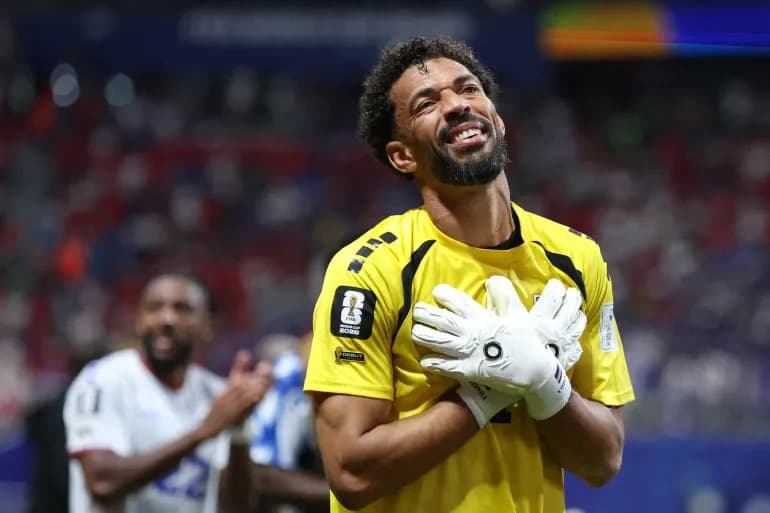
On a sticky Monday afternoon in Atlanta, a 40-year-old goalkeeper most fans could not have picked out of a line-up walked off the pitch in tears — and within hours the whole planet knew his name. The Cape Verde goalkeeper Vozinha had just done something the data said was almost impossible: seven saves to hold Spain, the reigning European champions and one of the favourites for the 2026 World Cup, to a breathless 0-0 draw. It was Cape Verde’s first match at a World Cup. It was also, quietly, a masterclass in something Reset cares deeply about — performing at your physical peak long after the calendar says you should have slowed down.
This is the full story of the man behind the moment: who he is, the saves that broke the internet, and the part nobody is talking about — what it actually takes for a body to deliver elite work at 40, and how you can borrow a little of that resilience for your own life.
The Night Cape Verde Stopped Spain
What actually happened in Atlanta
Cape Verde spent most of the Group H opener pinned inside their own half. Spain dominated possession, strung together passes, and piled up an extraordinary 27 shots. On paper, it should have been a comfortable European win. Then there was Vozinha. Time after time he came to the rescue — smothering, parrying, and reading the danger early. A burst of saves at the end of the first half denied Ferran Torres, Pedri and Aymeric Laporte in quick succession. Even the second-half arrival of teenage sensation Lamine Yamal could not solve him.
When the final whistle went, Vozinha sank to his knees near his goal and wept before his teammates mobbed him. He was named the official Player of the Match, an honour he promptly handed back to the whole squad. It was the kind of underdog story the World Cup is built on.
Why this was such a shock
Cape Verde is an archipelago of roughly half a million people scattered off the West African coast — making it one of the smallest nations ever to reach a World Cup. The team booked its place with a 3-0 win over Eswatini in October 2025, turning a footballing afterthought into history-makers. Set against Spain’s squad of global superstars, the gulf in resources, pedigree and expectation could hardly have been wider. Which is exactly why the result travelled so far, so fast.
Table 1 — Spain vs Cape Verde: the match in numbers
Who Is Vozinha? From Mindelo to the World Cup
The name behind the legend
Vozinha is a nickname, not a name. His full name is Josimar José Évora Dias, and he was born in Mindelo, on the island of São Vicente. The story goes that his father had wanted to name him Valdano, after the Argentine striker Jorge Valdano — but the authorities would not allow it. Instead he became “Vozinha,” which means “little granny” in Portuguese, a tag picked up in childhood because he was raised largely by his grandparents while his father served in the military and his mother worked. He has worn that name on his shirt throughout his career, refusing to be “Josimar II” when he met another Josimar abroad.
A journeyman’s eighteen-year road
There may be no clearer example of the long way round. Vozinha turned professional at 25 — already late — making his debut for local side Batuque FC in 2007, the very year Lamine Yamal was born. From there he wandered: a move to CS Mindelense at home, then Progresso in Angola, Zimbru Chișinău in Moldova, AEL Limassol in Cyprus, AS Trenčín in Slovakia, and Gil Vicente in Portugal, before settling at Chaves in the Portuguese second tier, where he plays today. The World Cup was, by a distance, the biggest stage he had ever set foot on. After the match he spoke through tears about the grandparents who raised him and had passed away, and about his mother, who could not be there because the visa money did not come together in time.
Table 2 — Vozinha’s nomadic club career
The Real Headline: Peak Performance at 40 (the “why”)
What science says about the ageing athlete
Strip away the fairytale and a serious question remains: how does a 40-year-old out-perform opponents half his age? The honest answer is that ageing does change the body — muscle mass and explosive power tend to decline gradually from the mid-thirties, tendons lose some elasticity, and recovery between hard efforts takes longer. But the picture is far from hopeless. Health authorities are clear that much of what we lose is driven by inactivity rather than age itself, and that strength and stamina remain trainable for decades. UK National Health Service guidance recommends that adults do muscle-strengthening activity on at least two days a week alongside regular aerobic exercise to protect strength, mobility and independence as they get older.[1]
In other words, Vozinha’s reflexes are not a magic trick. They are the dividend of decades of consistent training, accumulated game-reading, and a body that has been kept match-ready rather than allowed to drift.
Why recovery is the real differentiator after 35
If you talk to athletes who last, the theme is almost always the same: the training is not the hard part — recovering well enough to train again tomorrow is. After 35, sleep quality, stress load, and how you treat everyday aches start to matter as much as the workout itself. Chronic stress and broken sleep blunt repair and leave the body stiff and reactive. This is where simple, sustainable habits earn their keep, and why managing stress and sleep is a performance tool, not a luxury. (Reset explores this in depth in Ashwagandha for Stress and Sleep.)
Table 3 — What changes after 35, and what stays in your control
How to Train Like You Plan to Play at 40 (the “how”)
Habits you can start today
You do not need a national team’s support staff to borrow the principles that keep veterans sharp. Protect your sleep first — it is the single biggest lever for repair. Add strength work twice a week so muscle has a reason to stay. Warm up properly and spend a few minutes on mobility before and after activity, because stiff tissue is where small injuries begin. Manage your overall load by alternating hard days with genuinely easy ones, and treat stress as part of your training balance rather than something separate from it. None of this is glamorous. All of it compounds.
Smarter pain management
The other shift among people who stay active for the long haul is how they handle the aches that come with it. Reaching for oral painkillers at every twinge carries trade-offs worth understanding — a topic worth reading up on in Painkiller Tablets Explained: Types, Uses and Hidden Risks. Increasingly, active people are turning to targeted, topical relief for localised soreness, whether that is a stiff lower back, a niggling sore finger joint, or the kind of radiating discomfort discussed in How Long Does Sciatica Pain Last. The logic is simple: apply relief where it hurts, and keep moving.
Where Reset fits in
For deep, stubborn soreness — the kind that sits in the lower back or settles into the knees after a long day — Reset’s Ultra Potent Gel is built to reach further than a surface cooling gel. It is a patented, herbal formula offering 2X the potency of standard pain gels and 54% improved analgesic activity, using advanced nanotechnology so the actives penetrate into the deeper muscle layers. The seven Ayurvedic herbs at its core are Wintergreen, Boswellia serrata, Nirgundi, Menthol, Neelgiri (Eucalyptus), Camphor and Ajmoda (Celery seed) — a blend of natural analgesics and anti-inflammatory botanicals. It is a recovery aid for everyday muscular and joint discomfort, not a cure or a substitute for medical care, and it pairs naturally with the sleep, strength and mobility habits above.
Table 4 — An everyday recovery toolkit
Key Takeaways
•Vozinha (Josimar José Évora Dias), Cape Verde’s 40-year-old goalkeeper, made seven saves to hold favourites Spain to a 0-0 draw in Cape Verde’s first-ever World Cup match.
•His nickname means “little granny” in Portuguese; he plays club football for Chaves in Portugal’s second tier after a long, nomadic career.
•His Instagram following exploded past 8 million within roughly a day of the match, and he was named Player of the Match.
•Elite performance at 40 is less about defying age and more about consistency, recovery, and smart load management.
•Strength twice a week, good sleep, mobility, and targeted relief are habits anyone can adopt to stay active for longer.
Frequently Asked Questions
Who is Vozinha?
Vozinha is the Cape Verde national team goalkeeper who became a global sensation after holding Spain to a 0-0 draw at the 2026 World Cup with seven saves.
What does the name “Vozinha” mean?
It means “little granny” in Portuguese — a childhood nickname linked to the grandparents who largely raised him.
How old is Vozinha?
He is 40 years old, one of the older outfield-or-keeper figures at the 2026 tournament.
Which country does Vozinha play for?
He plays for Cape Verde, an island nation off the West African coast.
What clubs has Vozinha played for in his career?
Among others: Batuque FC and CS Mindelense in Cape Verde, Progresso in Angola, Zimbru Chișinău in Moldova, AEL Limassol in Cyprus, AS Trenčín in Slovakia, and Gil Vicente and Chaves in Portugal.
What did Vozinha do at the 2026 FIFA World Cup?
He produced a man-of-the-match goalkeeping display to keep a clean sheet against Spain in Cape Verde’s World Cup debut.
How many saves did Vozinha make against Spain?
He made seven saves as Spain piled on the pressure with 27 shots.
Did Cape Verde beat Spain at the 2026 World Cup?
No — the match finished 0-0, but the draw was widely seen as a shock result and a historic point for Cape Verde.
What award did Vozinha win after the Spain match?
He was named the official Player of the Match, an honor he credited to his whole team.
How many Instagram followers did Vozinha gain after the World Cup?
His following surged from a modest base into the millions within hours, reportedly climbing past 8 million within about a day.
Is Cape Verde playing in their first-ever World Cup?
Yes. The 2026 tournament is Cape Verde’s World Cup debut, making them one of the smallest nations ever to qualify.
What is Vozinha’s real full name?
His full name is Josimar José Évora Dias.
Where was Vozinha born?
He was born in Mindelo, on the island of São Vicente in Cape Verde.
Who does Vozinha currently play for at club level?
He currently plays for Chaves in the Portuguese second division.
What is the story behind Vozinha’s mother at the 2026 World Cup?
Vozinha said his mother could not attend the match because the money for her visa did not come together in time — part of why he broke down in tears at full-time.
Disclaimer
This article is for general informational and motivational purposes only and is not medical advice. Reset Ultra Potent Gel is intended to support comfort from everyday muscular and joint discomfort and is not a treatment or cure for any medical condition. Always consult a qualified healthcare professional before starting a new exercise, supplement or pain-management routine, especially if you have a pre-existing condition, are pregnant, or are managing persistent pain.
Share this article: