Emulsion Pain relief roll on
An easy to apply potent formula with roll-on massager

₹549.00
₹449.00
4.6

2025-10-23 • 5 min
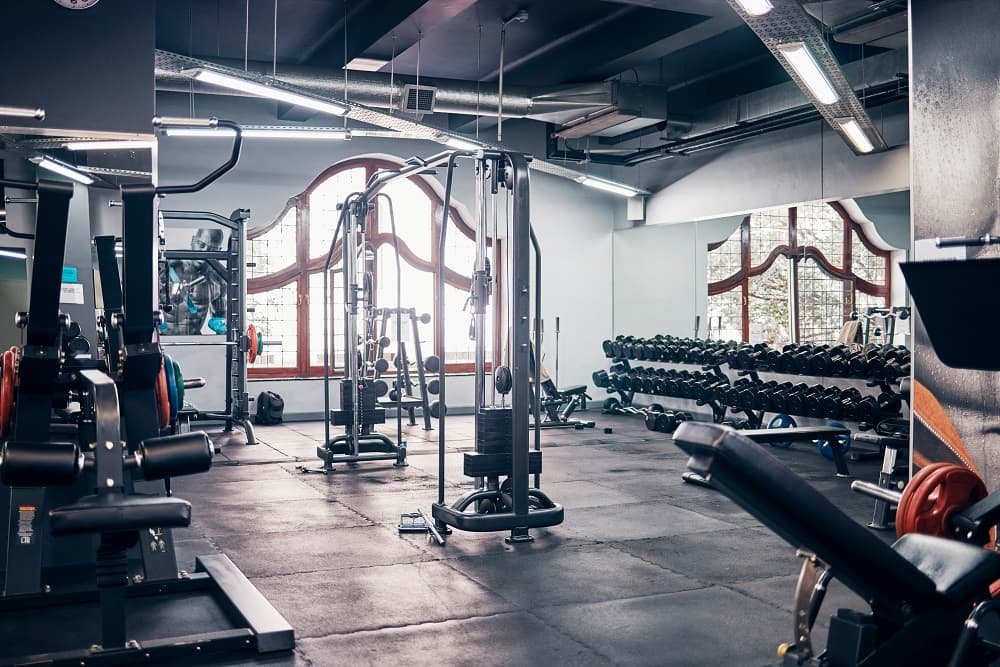
Many people wonder about the right age to start going to the gym. Is there a minimum age for gym workouts? Is 15 years old a good time to begin strength training? What about the gym age limit for boys versus girls, or even older adults? In this comprehensive guide, we’ll delve into these questions in depth. We'll bust some myths (like whether working out young stunts growth) and explore guidelines for different ages – from children and teens to adults and seniors. By the end, you’ll understand that the ideal age for gym largely depends on the individual, and how exercise can be a lifelong activity for everyone.
One of the biggest concerns about youth hitting the gym is the fear that weight training will stunt a child’s growth. This idea has been around for decades, but modern science has debunked it. There is no scientific evidence that a well-designed, supervised strength training program will harm a child’s growth plates or skeletal development. In fact, youth strength training can increase bone density and strength rather than damage it. The myth likely arose because serious injuries to growth plates (for example, from improper heavy lifting) can indeed affect growth, but proper training with good form and appropriate weights is safe. As the American College of Sports Medicine notes, childhood is actually an ideal time to build strength and bone health – with qualified supervision and sensible workouts.
Another myth is that there’s a strict “gym age limit” for boys or girls, or that one shouldn’t lift weights until a certain age. In reality, there is no universal age cutoff beyond which exercise suddenly becomes safe. It’s more about maturity and supervision. Children need to be able to follow instructions and use proper form to start resistance training safely. This can happen at different ages for different kids. Meanwhile, on the other end of the spectrum, some wonder if there’s a point when you’re “too old” for the gym. Here again, research shows you are never too old to start exercising – even people in their 80s and 90s can gain muscle strength and see health improvements from weight training. In short, age is not a barrier as long as the exercise program is appropriate for the person’s development stage and health status.
So, how young is too young to hit the gym? The answer depends on what we mean by “gym.” If we’re talking about formal strength training (like using weights or machines), experts suggest that children can start light strength exercises as early as 7 or 8 years old, provided they are interested and can handle instructions with maturity. At this young age, workouts should not be about heavy lifting or “bodybuilding”. Instead, it’s about learning movement skills and building a fitness foundation. Strength training for kids should focus on body-weight exercises (push-ups, squats, pull-ups, etc.), light resistance like elastic bands, and fun activities that develop agility and coordination. For example, a 8-10 year-old might do playground-style exercises or simple supervised routines emphasizing form.
It’s important to note that strength training is different from competitive weightlifting or powerlifting. Young children should avoid heavy loads that strain developing muscles and bones. Instead of trying to see “how much you can lift,” the focus is on proper technique and safe movements. The minimum age for gym in terms of just being physically active is essentially infancy – even toddlers and young kids benefit from active play and age-appropriate exercise. But for structured gym routines, around 7-8 is a reasonable minimum if done under professional supervision.
Many gyms themselves set their own age limits for membership, often for insurance and safety reasons. In many countries, it’s common for gyms to allow teenagers around 14 or 15 years old to join, sometimes requiring parental consent for minors. For instance, Fitness First gyms in India require members to be at least 16 years old, unless a younger teen is given medical clearance and personal training. Some gym franchises allow 13-15 year-olds to work out with a parent or trainer present, but not alone. These policies are in place to ensure young members exercise safely. They don’t mean younger teens or kids cannot exercise at all – it just means formal gym settings want a certain maturity level.
In India, there has historically been a cautious approach about kids in gyms. Official guidelines from sports authorities have recommended that children under 14 should not lift heavy weights. Many Indian gyms and trainers echo this, suggesting that before mid-teens, kids stick to cardio and light fitness work. One Delhi gym manager noted, “We don’t allow children below 17 years of age to do weights,” focusing younger clients on cardio, stretching, and bodyweight exercises instead. This cautious stance is largely to prevent injury, given that unsupervised weight training or improper technique could harm a child. However, it’s worth emphasizing that with proper supervision and appropriate routines, early strength training is not harmful and can even be beneficial for children. The minimum age for gym in India might unofficially be considered ~14 at many facilities, but younger teens can engage in exercise in youth programs or school sports well before that.
Not every 8-year-old is ready to start a gym routine. Here are a few factors to consider in determining if a child is at the right age for gym-style exercise:
· Ability to Follow Instructions: The child should be mature enough to listen to a coach or trainer and follow safety rules. If a child can’t maintain focus or take guidance, they may need to wait until they’re a bit older.
· Basic Coordination and Balance: Around the ages of 7-8, children develop better balance and motor skills. This is why pediatricians often say to wait until at least around second grade for any formal training. If the child can perform basic movements (like a squat or jumping jack) with good form, they might be ready to learn more.
· Interest and Enjoyment: Importantly, the child should want to do it. Forcing young kids into gym workouts can backfire. If they enjoy climbing, swinging, and other play that can be translated into exercise, that’s a good sign. At young ages, exercise should feel like play.
· Qualified Supervision Available: A child or young teen should never train alone in a gym. Ensure there’s a knowledgeable trainer or coach (ideally with youth training experience) who can design an age-appropriate program and watch their form. Parental oversight is important too.
If these conditions are met, the age for gym becomes less about a number and more about readiness. Some 10-year-olds might be ready for supervised strength sessions, while some 14-year-olds might still need to focus on basics – it’s individual.
While kids can start light training early, many experts feel the best age to join a gym in a more traditional sense is during the teenage years. Puberty brings a surge in hormones (like testosterone and growth hormone) that help the body build muscle and bone. By mid-adolescence (around 14-18 years old), most teens are physically and mentally ready to handle structured weight training and see significant benefits from it.
In fact, around age 14 is a common turning point. Sports medicine specialists note that by the time a teen is in late middle school or starting high school (approximately 14 years old), they can shift from just learning technique to building strength with more vigorous weight training. So if you ask, “Which age is suitable for gym?”, a strong answer is mid-teens. At this age, teens have developed basic coordination, their growth plates are maturing, and they can safely improve strength and endurance with proper guidance.
Is 15 a good age for gym? Absolutely. Many boys and girls are actively growing at 15, and it can be an excellent time to start a gym routine. At 15, a teen is typically in high school – which often coincides with school sports, PE class, or just a natural interest in fitness and physique. Starting at this age can help build healthy habits, improve self-confidence, and channel youthful energy positively. By 15, a teen can handle exercises like light to moderate weightlifting, machine workouts, and organized fitness classes, as long as they start with manageable weights and focus on form. In fact, routines designed for teens often emphasize higher repetitions with lighter weights to master the movements before increasing intensity.
It’s important that teens don’t approach the gym with an “all or nothing” mentality. A 15-year-old shouldn’t try to lift like a 25-year-old bodybuilder. As one Healthline article notes, any stunting of growth comes from improper training – not from the age itself. So the key for teens is gradual progression. Start with foundational exercises and gradually increase the challenge. Many high schoolers successfully train under coaches (for example, in football or wrestling strength programs) and see great improvements by the time they’re 17-18.
Boys vs. Girls: Is There a Difference in Best Age for Gym?
Often people ask questions like, “Which age is best for gym for a girl?” or “What is the best age to join gym for boys?” From a physiological standpoint, the basic principles of training are similar for both boys and girls. There isn’t a separate “gym age limit for boys” versus “gym age limit for girls” – both can begin training when they are ready, and both should follow age-appropriate routines.
That said, there are some developmental differences to consider:
· Girls tend to enter puberty earlier than boys. A girl might have her major growth spurt around age 10-12 (though it varies), and by 13 or 14 many girls have the height and coordination to start doing more in the gym. If a teen girl is asking “which age is best for gym for a girl?”, the answer could be early to mid-teens, around 13-15, depending on her development. Many girls at that age enjoy group classes (like dance-based fitness, yoga, etc.) in addition to or instead of weight training, which is perfectly fine – strength training can be beneficial for girls, but it’s key to find an activity she’s comfortable with so she stays active.
· Boys generally hit their growth spurts a bit later (often around 12-14 they start, and peak growth might be around 14-16). Boys also tend to build muscle mass more rapidly once puberty is underway due to higher testosterone levels. For boys wondering “which age is best for gym”, many will find that mid-teens to late teens (15-18) is when they can really ramp up training. Before that, a 12-14-year-old boy can certainly start learning lifts and doing bodyweight exercises. By 16 or 17, many boys are nearing their adult height and have enough muscular development to lift heavier (with proper form). This is why the best age for gym for boys is often cited as mid-teenage – they can gain strength and muscle faster at that stage than they would have a few years earlier.
Importantly, girls and boys both benefit from exercise at all ages. In younger childhood, girls and boys should both focus on free play, sports, and light strength work. In the teen years, societal norms sometimes encourage boys more toward weightlifting and girls toward cardio, but there’s no reason girls can’t lift weights or boys can’t do Zumba or yoga. By adulthood, the training is essentially the same for men and women – tailored to personal goals rather than any strict age-related rule.
Bottom line: The best age for gym – for boys or girls – is when they have entered or are entering puberty, have the desire to train, and can do so safely. Many experts consider the ideal age for gym training to really take off is around 15-18 years old, when the body is primed to respond to exercise. But starting a bit earlier (with lighter routines) or later is also completely fine.
Gym Age Limit in India and Gym Policies
We’ve touched on how many gyms set minimum age policies. Let’s look a bit closer, especially in the Indian context, since questions like “gym age limit for boy in India” and “age for gym in India” are common.
Firstly, there is no nationwide law in India specifying a strict age limit for gym admission, but practices are influenced by guidelines and caution. The Delhi Development Authority (DDA), for example, in its fitness center by-laws, explicitly states that “Children less than 14 years of age are strictly forbidden to lift weights. This aligns with the general notion of waiting until around high-school age for weight training. Many gyms in India take such guidance seriously. It’s common for gyms to require members to be at least 14, 15, or 16 years old. Some high-end gym chains in India have a minimum age of 16 for membership (as we saw with Fitness First) and will only accept younger teens under special conditions (such as a doctor’s note and supervised training).
For boys in India, oftentimes the question about age limit is tied to concerns about height. There is a popular belief in India that if boys start gym too early (especially weightlifting), it might stop them from growing taller. As discussed earlier, this is a myth – lifting weights does not stunt height growth when done properly.However, the persistence of this belief means many parents and coaches prefer boys to finish most of their growing (late teens) before heavy training. Thus, the gym age limit for boys is often informally set around 18 by cautious parents, even though physically boys can start much earlier with light training. In truth, boys can start gym training in their early teens safely, but in India you might find gyms requiring a boy to be 14+ or 16+ to walk in the door.
For girls in India, the cultural scenario can be a bit different. Fewer teen girls historically joined gyms compared to boys, though this is changing now. Parents might worry about over-exertion or have misconceptions like “gym exercise will make girls too muscular”. These are unfounded worries – girls can benefit from strength training just as much as boys, gaining tone, strength, and confidence (and it doesn’t make them overly muscular without extreme training due to hormonal differences). The gym age limit for a girl is not officially different than for a boy; if a gym says 16+ for entry, that applies to all. But practically, some girls may start a bit later because of those social factors or personal comfort. Nowadays, with more awareness, you’ll find plenty of girls in India taking up gym training or functional fitness classes in their mid-teens or even earlier (like sports academies for badminton, tennis, etc., incorporate strength training for girls in early teens).
To summarize the India perspective: generally, 14-15 is considered the minimum age to join a gym for unsupervised workouts, and many facilities enforce 16+ for membership. There is no maximum age limit for gym in India beyond one’s personal health considerations – you’ll find even senior citizens walking on treadmills or doing yoga in Indian gyms. The key is that younger than 14 usually requires specialized kids’ fitness programs or sports coaching rather than standard gym floor access. If you’re in India (or anywhere) and your 13-year-old wants to hit the gym, look for a supervised youth program or wait a year or two for standard membership, or consider setting up some basic equipment at home with guidance.
Thus far we’ve talked about young people, but what about older adults? Is there a maximum age limit for gym participation? The resounding answer from health experts: No. There is no age limit on who can benefit from exercise and strength training. You can start (or continue) working out well into your 60s, 70s, 80s and beyond. In fact, maintaining muscle and fitness is especially important as we age, to preserve mobility and health.
Scientific studies have demonstrated that even people in their 80s and 90s can gain muscle strength and size from weight training. In one study, a group of 85+ year-olds followed a supervised weightlifting routine for 3 months – and they actually gained more relative strength and muscle mass than some 65-75 year-old participants who did the same program. This shows the incredible plasticity of our muscles at any age. The researchers concluded that there seems to be no hard stop on our body’s ability to adapt, and “You are never too old to start exercising.”.
Of course, older individuals should take sensible precautions: consult with a doctor if you have health conditions, start slow, and possibly work with trainers who understand senior fitness. But the notion that exercise is only for the young is outdated. The best age for starting gym might have been yesterday – but the second best is today, whatever age you are now. For older adults, strength training can help counteract age-related muscle loss (sarcopenia), strengthen bones (warding off osteoporosis), improve balance (reducing fall risk), and boost overall quality of life. Even light workouts or resistance band exercises can make a big difference when done regularly.
So if you’re 50, 60, or beyond and wondering “what is the age limit for gym?”, rest assured that the limit does not exist in absolute terms. The gym is open to you too, with appropriate adjustments. Many gyms have special senior fitness programs or trainers specializing in older clientele. The NHS recommends older adults do activities that improve strength, balance, and flexibility at least twice a week, in addition to regular aerobic exercise – a clear endorsement that exercise is vital at every age. Whether it’s lifting light weights, doing water aerobics, or just using the gym’s treadmill, older adults can and should stay active.
What About “Play Gyms” for Babies?
Before we conclude, let’s address a completely different use of the word “gym” – the play gyms for babies. Some readers might be curious about those colorful baby play mats with hanging toys (often called “baby gyms” or “play gyms”) and wonder “Play gym for babies: what age is that for?” This is a different context than a fitness gym, but it’s worth clarifying.
Infant play gyms are essentially soft mats with toy bars designed to encourage babies to move, reach, and develop motor skills. You can introduce a baby to a play gym from a very young age – even the first few weeks of life. Typically, these play gyms are used from 0 to 6-12 months old. For example, one popular manufacturer notes their baby play gym is designed for ages 0–12 months. In the first months, babies will mostly lie on their back and gaze at or bat at the dangling toys, which helps develop their vision and coordination. By around 3-5 months, as they gain strength, they might do “tummy time” on the mat and try to push up or reach for objects, which strengthens their neck and arms. Once babies start rolling and crawling (usually around 6-8+ months), they may lose interest in staying on the mat, and that’s often when the use of a play gym naturally phases out.
So, to answer “what is the age for a baby play gym” – you can start right away in infancy, and it’s most useful through the first year. It’s a safe space for babies to get the physical activity they need at that stage, which is basically free movement and exploration. Just as older kids have recess, a baby’s “gym time” is that daily floor play that lets them wiggle and build muscles needed for milestones like crawling and sitting. (And no, we’re not trying to get babies to do bicep curls – their exercise is simply moving their little limbs freely!)
After exploring all these angles, you might notice a pattern: there is no single “perfect age for gym” that applies to everyone. The right age for gym depends on the context:
· For kids: The minimum age to start gym-like training is around 7-8 for light strength work, but only if the child is ready and interested. Before that, free play is their gym.
· For teens: The best age to join the gym in earnest is often the mid-teens (around 14-18). This is when the body is primed for building strength, and learning good exercise habits at this age sets one up for a lifetime of fitness. Starting at 15 or so is great for most – but starting a bit earlier with supervision, or a bit later, also works. There’s nothing magical that happens at one exact age; it’s a range, not a deadline.
· Boys vs Girls: There’s no major difference in the “correct age for gym” between boys and girls. Both can start training when physically and mentally ready. Girls may mature slightly sooner, boys may gain muscle faster in later teens, but these are general trends. The ideal age for gym training is flexible for both, centered around the teen years when growth supports it.
· Adults: If you missed the teen window, don’t worry – your 20s, 30s, or any time in adulthood is still an excellent time to start going to the gym. In your adult years, you have fully developed strength and can make rapid fitness gains with a solid program.
· Older Adults: It bears repeating – exercise has no upper age limit. The right age to join the gym is any age, as long as the workouts are adapted to your abilities. Whether you’re 65 or 85, if you have clearance from a doctor and the desire to improve your health, you belong in the gym or any exercise setting. In fact, staying active is crucial for healthy aging.
In conclusion, the question “What is the right age for gym?” doesn’t have a one-size-fits-all answer. A better question might be: “How can I safely start exercising at my age?” If you’re a parent, focus on introducing exercise in a fun, appropriate way for your child’s age. If you’re a teen, know that you have a great opportunity to build a strong foundation now – just do it smart and don’t rush into ego lifting. If you’re an adult who’s new to the gym, remember it’s never too late to start a healthy habit. And if you’re a senior, embrace the fact that the gym (or any form of physical activity) can keep you feeling younger and more independent.
The correct age for gym is truly a personal decision, guided by safety and readiness rather than an arbitrary number. Whenever you do start, keep in mind the core principles: proper technique, progressive training, and listening to your body. With those in place, the gym can be a positive, even life-changing, experience at any age. So, whether you’re 15 or 50, instead of asking if your age is right for the gym, lace up your shoes, start at your own pace, and make the gym right for your age. Fitness is a lifelong journey – and you can begin (or continue) it now.
Share this article:
An easy to apply potent formula with roll-on massager
₹549.00
₹449.00
An eco-conscious and powerful solution designed for sustainable living and effective pain management

₹999.00
₹899.00
Infused with 6 powerful essential oils

₹1,299.00
₹999.00
A dose of immunity and goodness with a tangy twist

₹439.00
₹419.00
Your eco-friendly foundation for every flow

₹3,999.00
₹3,499.00
A herbal dose of complete wellness

₹439.00
18/8 stainless steel, BPA free sipper.

₹1,499.00
₹1,299.00
For instant action and faster absorption

₹369.00
₹349.00