
Pain Relief
Nirgundi Oil for Joint Pain
2026-05-05
5 min read

2026-05-08 • 5 min read
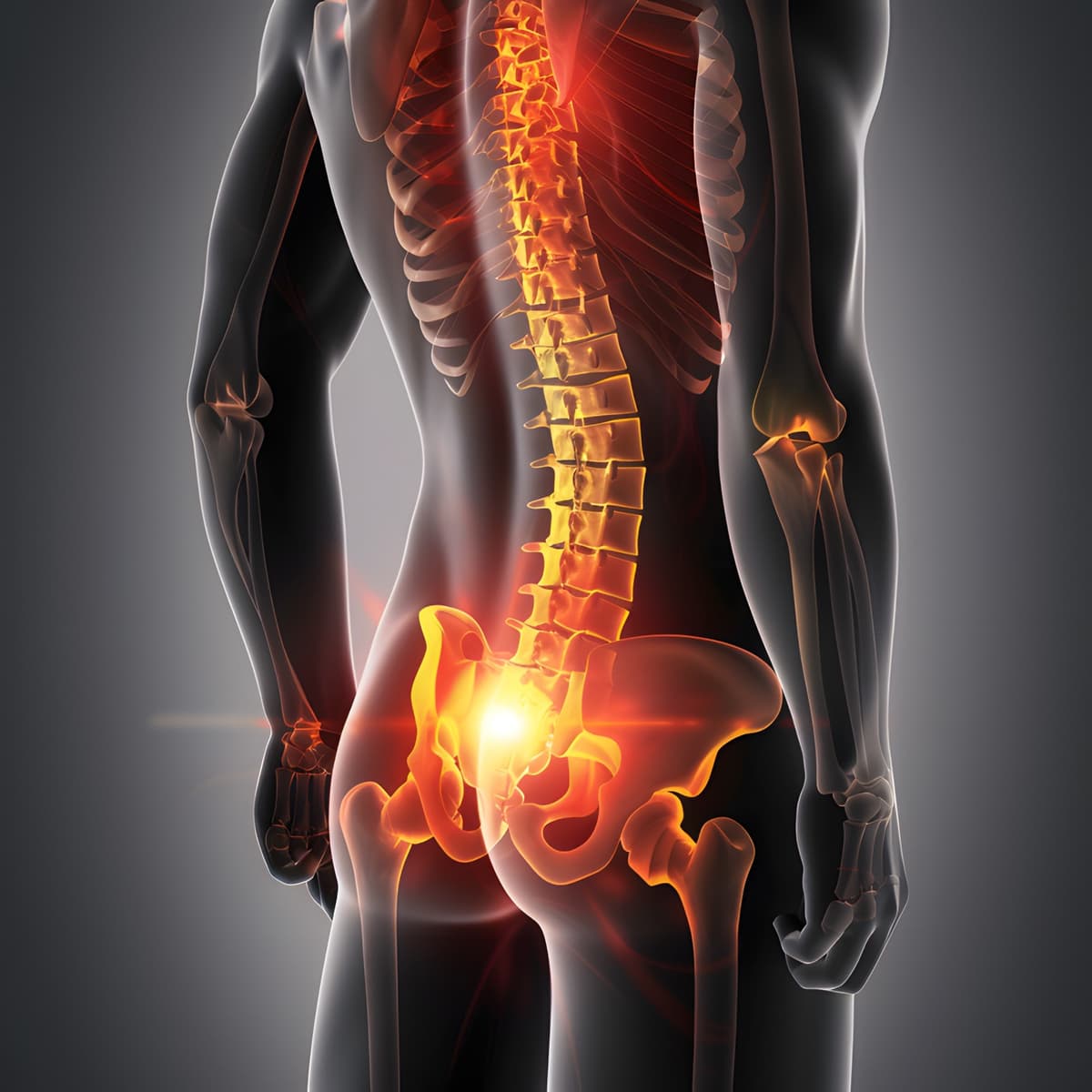
The tailbone (coccyx) is the small triangular bone at the very base of your spine. Tailbone pain (coccydynia) is most commonly caused by:
• Trauma — a fall backward onto a hard surface
• Prolonged sitting on hard or unsupportive surfaces
• Pregnancy, childbirth, or postpartum hormonal changes
• Repetitive motion sports such as cycling or rowing
Most cases resolve with targeted tailbone pain exercises, postural adjustments, and the right topical pain relief — without surgery or long-term medication.
You stand up after an hour at your desk and a dull, aching pressure grips the base of your spine. You wince getting out of the car after a long drive. Sitting through a meeting has become something you dread. If any of this sounds familiar, you may be dealing with tailbone pain — a remarkably common but persistently misunderstood condition that affects millions of people across India and the world. Medically known as coccydynia, tailbone pain ranges from a nagging background discomfort to an acute, sharp pain that genuinely limits your ability to function. The good news: in the vast majority of cases, the right combination of tailbone pain exercises, postural awareness, and targeted relief strategies can resolve the problem — completely — without surgery or long-term medication.
This guide gives you everything you need: a clear understanding of where the tailbone is located and why it hurts, a breakdown of every significant tailbone pain reason, a practical recovery protocol including specific exercises, and the best evidence-based treatment approaches — including Ayurvedic topical support. Whether your pain is days old or has been with you for years, the path forward begins here.
The tailbone is one of those body parts most people never think about — until it hurts. Then it is suddenly impossible to ignore. Pain at the base of the spine can radiate into the buttocks, down the back of the thighs, and even into the lower abdomen. It worsens with sitting, standing from a seated position, leaning back, and sometimes with bowel movements or sexual intercourse. Understanding exactly what the tailbone is and what role it plays in your body is the first step toward understanding why it hurts — and how to fix it.
The tailbone — or coccyx, from the Greek word for 'cuckoo' because its curved shape resembles the bird's beak — is the final segment of the human spinal column. It sits directly below the sacrum, at the very bottom of the spine, at the top of the crease between the buttocks. The coccyx is made up of three to five small bony segments that are fused together in adulthood, forming a single triangular bone. Despite its small size, the coccyx plays a meaningful structural role: it serves as an anchor point for multiple pelvic floor muscles and ligaments (including the levator ani group, which supports the pelvic organs), helps distribute body weight when sitting, and contributes to postural balance. When any of these functions are disrupted — by injury, inflammation, or structural change — the result is coccydynia: tailbone pain.
Women are five times more likely than men to develop tailbone pain. The reason is anatomical: the female pelvis is broader and more posteriorly tilted than the male pelvis, which means the coccyx is more exposed to direct pressure when sitting. Pregnancy and childbirth add significant additional risk, which we will explore in detail below. If you are also experiencing knee pain alongside lower spinal issues, reset.in/blog/what-causes-knee-pain-in-females offers a comprehensive look at why these co-occurring conditions are more common in women than most people realize.
Coccydynia is the clinical term for pain originating specifically at the coccyx. It can be acute — triggered by a sudden injury or event — or chronic, developing gradually over weeks or months without a clear precipitating incident. Chronic coccydynia is particularly common in people who sit for long hours on hard surfaces, and in those with underlying anatomical factors such as an unusually curved or hypermobile coccyx. The pain is typically worst during prolonged sitting, during the transition from sitting to standing, and when pressure is applied directly to the lower spine. Diagnosis is primarily clinical, supported by X-ray to rule out fractures, and sometimes by dynamic imaging (X-rays taken both sitting and standing) to assess abnormal coccygeal mobility.
Tailbone pain does not arise randomly. Every case has an underlying cause — and understanding that cause is the single most important factor in choosing the right treatment approach. Here are the five most significant tailbone pain reasons, explained in detail.
The most common acute cause of tailbone pain is a direct impact injury. Falling backward onto a hard surface — a slippery floor, a staircase, a sports field — can bruise, dislocate, or fracture the coccyx. Because of its exposed position at the base of the spine, the tailbone is highly vulnerable to this type of injury. Even seemingly minor falls can cause significant pain if they displace the coccygeal segments from their normal alignment. A fractured or dislocated tailbone does not require surgery in most cases — but it does require rest, cushioning, pain management, and time. Healing typically takes 8 to 12 weeks for a fracture and somewhat less for a bruise or contusion.
This is the tailbone pain reason most relevant to modern life. When you sit, your body weight is meant to be distributed across the two ischial tuberosities — the bony prominences at the base of the pelvis. On unsupportive or hard surfaces, this distribution fails, and the coccyx ends up bearing a disproportionate share of the load. Over hours, days, and months of this pattern, the surrounding bursa, ligaments, and soft tissue become chronically inflamed. This is precisely why desk workers, drivers, students, and anyone who sits for extended periods are particularly vulnerable. The solution is not simply to sit less — though that helps — but to sit better, with postural support and regular breaks. Our guide at reset.in/blog/what-causes-back-pain explains how posture and prolonged sitting create a cascade of spinal problems that extend well beyond the tailbone alone.
Pregnancy is a significant and often underappreciated cause of tailbone pain. During pregnancy, the body releases the hormone relaxin, which deliberately loosens pelvic ligaments to allow the pelvis to expand and accommodate the growing foetus. This ligament laxity, while essential for delivery, also destabilizes the sacrococcygeal joint and can allow the tailbone to shift position. The weight and pressure of the advancing pregnancy adds further stress to the coccyx directly. During childbirth itself — particularly in prolonged or difficult labours — the coccyx can be pushed backward or even fractured by the passage of the baby through the birth canal. Postpartum pelvic floor weakness then perpetuates the problem by removing the muscular support the coccyx depends on for stability. Pelvic floor physiotherapy is particularly effective for pregnancy-related coccydynia. For other postpartum pain conditions that commonly co-occur, see reset.in/blog/best-ayurvedic-remedies-for-period-pain.
Cycling, rowing, horse riding, and similar activities that require sustained forward-leaning posture place repetitive mechanical stress on the sacrococcygeal joint. The coccyx flexes slightly with every stroke or pedal cycle; over hundreds of repetitions, this microtrauma accumulates. The surrounding gluteal and piriformis muscles, working overtime to stabilize the pelvis during these activities, can develop tightness that directly pulls on the coccyx and exacerbates pain. Athletes in these disciplines who experience tailbone pain should temporarily modify their training, address hip and gluteal tightness with targeted stretching, and use cushioned saddles or seats to reduce direct coccygeal pressure. Cervical issues from sustained forward-lean cycling posture are a related concern — see reset.in/blog/best-ayurvedic-treatment-for-cervical-spondylosis for parallel guidance.
At both extremes of body weight, the tailbone is at elevated risk. Excess body weight increases the pressure transmitted to the coccyx when sitting, while very low body weight means reduced subcutaneous fat — the natural cushioning that protects the coccyx from external pressure. With age, the cartilage between coccygeal segments degrades and subcutaneous fat decreases, both of which reduce the coccyx's ability to absorb load. Some people also have anatomical variations — an unusually curved, angulated, or hypermobile coccyx — that create chronic friction against surrounding tissues regardless of weight or lifestyle. These structural factors cannot be changed, but their impact can be effectively managed with the right seating support, postural strategies, and pain relief approaches.
When tailbone pain is acute or flaring, the priority is reducing direct pressure on the coccyx and calming the surrounding inflammation. These steps provide immediate relief while the deeper recovery work begins:
Use a coccyx cutout cushion (a donut-shaped or wedge cushion with a rear cutout) whenever you must sit — it redistributes weight to the ischial tuberosities and eliminates direct coccygeal pressure
Avoid sitting on soft, sinking surfaces like deep sofas or bean bags — they cause you to slump and transfer more weight to the tailbone, not less
Apply a covered ice pack to the tailbone area for 15 to 20 minutes several times daily in the first 48 to 72 hours after acute injury to reduce swelling
After the first 3 days, switch to heat therapy — a warm compress or heat pad relaxes the surrounding musculature and improves blood flow to the area
When sleeping, lie on your stomach or on your side to completely remove pressure from the coccyx
When rising from a seated position, lean forward and use your arms to push up — never push straight up through the spine
Movement is medicine — even for tailbone pain. The right tailbone pain exercises work by releasing tension in the muscles that attach to the coccyx (particularly the piriformis, gluteals, and pelvic floor), improving sacrococcygeal joint mobility, and building the core and pelvic strength needed to support proper alignment. Avoid high-impact exercises — running, jumping, heavy squats — until pain has significantly resolved. The following exercises are safe, effective, and specifically targeted for coccydynia recovery.
Kneel on a comfortable surface and sit back toward your heels, extending both arms forward along the floor with your forehead resting down. This position gently elongates the entire spine, creates traction at the sacrococcygeal joint, and allows the surrounding ligaments and musculature to release passively. Hold for 30 to 60 seconds, breathing slowly and deeply. This is one of the most effective immediate-relief exercises for tailbone pain and is safe to perform daily throughout recovery.
Lie on your back with knees bent and feet flat on the floor. Gently flatten your lower back against the floor by tightening your abdominal muscles, hold for 5 seconds, then release. The pelvic tilt reactivates the deep core stabilisers — particularly the transversus abdominis — that support the pelvis and reduce mechanical load on the coccyx. It is a foundational exercise for any pelvic or lower back recovery program and should be mastered before progressing to more demanding movements.
The piriformis muscle runs from the sacrum to the hip and is a frequent contributor to tailbone pain through its direct attachment to the sacral structures. To stretch it, lie on your back, cross your right ankle over your left knee (figure-four position), and gently pull both legs toward your chest until you feel a stretch in the right buttock. Hold for 30 seconds and repeat on the other side. Tight piriformis muscles are extremely common in desk workers, cyclists, and anyone who sits extensively — releasing them consistently produces meaningful relief for coccydynia.
Begin on hands and knees with a neutral spine. On an inhale, let your belly drop toward the floor, lift your head and tailbone upward (Cow). On an exhale, round your spine toward the ceiling, tucking your tailbone under (Cat). Move slowly and rhythmically through 10 full cycles. This exercise restores normal mobility to the sacrococcygeal joint, prevents the stiffening that accumulates from prolonged immobility, and gently mobilizes the entire lumbar and pelvic region. It is particularly effective when performed first thing in the morning to address the stiffness that often peaks after a night of rest.
Lie on your back with knees bent and feet flat, hip-width apart. Press through your heels to lift your hips until your body forms a straight line from knees to shoulders. Squeeze your glutes at the top, hold for 5 seconds, and lower slowly. The glute bridge reactivates the gluteus maximus — the primary muscular support for the pelvis — and builds the posterior chain strength that reduces chronic stress on the tailbone. During the acute phase of an injury, wait two to three weeks before introducing this exercise. Once pain has reduced and basic mobility is restored, it becomes a cornerstone of long-term coccydynia prevention.
In Ayurvedic medicine, pain in the lower back and pelvic region — encompassing the sacrum, coccyx, and surrounding structures — falls under the broad category of Kati Shoola (lower back pain) and Vata-related musculoskeletal disorders. Ayurveda attributes these conditions primarily to an aggravated Vata dosha, which governs movement, nerve function, and the structural integrity of bones and joints. When Vata becomes imbalanced — through excessive sitting, cold exposure, erratic lifestyle, emotional stress, or physical trauma — it manifests as dryness, stiffness, pain, and loss of normal mobility in the affected region. Treatment focuses on pacifying Vata through warmth, oleation, and movement. Medicated oils are central to this approach: applied topically, they deliver warming, anti-inflammatory, and analgesic compounds directly to the affected tissues, penetrating the periosteum and surrounding musculature in a way that oral medications simply cannot replicate for localized conditions.
For a condition as anatomically specific as tailbone pain, topical application of pain-relieving botanicals offers a delivery advantage that oral supplementation cannot match. When an anti-inflammatory or analgesic compound is applied directly over the sacrococcygeal region, it bypasses the digestive system entirely, reaches peak concentration at the exact site of pain, and begins acting within minutes. This makes topical relief not just a comfort measure but a clinically meaningful component of recovery — particularly for the daily management of chronic coccydynia or for post-activity flare control. The key is choosing a topical formulation whose botanical actives are proven, whose base allows genuine dermal penetration, and whose texture allows targeted application without mess or residue. For abdominal pain that sometimes accompanies pelvic floor dysfunction and coccydynia, see reset.in/blog/abdominal-and-stomach-pain-guide-causes-quadrants-left-and-right-side-pain-relief for additional guidance. Similarly, frozen shoulder and other inflammatory joint conditions that may co-occur with postural imbalances are covered at reset.in/blog/what-causes-frozen-shoulder-signs-stages-and-recovery-guide.
The RESET Easy-to-Rub Emulsion is formulated with Nirgundi (Vitex negundo) and Wintergreen (Gaultheria procumbens) — two botanicals with deeply complementary analgesic mechanisms. Nirgundi's flavonoid complex, particularly vitexin and luteolin, suppresses COX-2 and neuroinflammatory pathways that drive chronic joint and soft tissue pain. Wintergreen contributes methyl salicylate, a natural counter-irritant that increases local blood circulation, accelerates the clearance of inflammatory mediators, and amplifies analgesic relief. Delivered in a lightweight roll-on emulsion with no grease, no artificial fragrance, and no harsh preservatives, the RESET Emulsion can be applied directly over the sacrococcygeal region — roll gently in a circular motion over the base of the spine and upper buttocks, 2 to 3 times daily — as part of your daily recovery protocol. It pairs naturally with the exercises above to provide both the structural rehabilitation the coccyx needs and the topical relief that makes performing those exercises more comfortable.
•Tailbone pain (coccydynia) is caused by trauma, prolonged sitting, pregnancy, repetitive sport, age-related degeneration, or structural anatomical variation — and each cause has a specific management strategy.
•Women are five times more likely than men to experience coccydynia due to pelvic anatomy and the physical demands of pregnancy and childbirth.
•A coccyx cutout cushion, improved sitting posture, and regular position changes are the most impactful immediate steps — do not wait to implement them.
•Targeted tailbone pain exercises — Child's Pose, Piriformis Stretch, Pelvic Tilt, Cat-Cow, and Glute Bridge — address the root muscular imbalances that perpetuate pain and should be performed daily.
•Ice for the first 48–72 hours after acute injury; switch to heat thereafter. Apply both to the sacrococcygeal region for 15 to 20 minutes per session.
•Topical analgesic support — particularly herbal emulsions with Nirgundi and Wintergreen — provides fast, targeted, localized relief without GI side effects and is safe for daily sustained use.
•Most cases of tailbone pain resolve fully within 8 to 12 weeks with conservative management. Persistent pain beyond 3 months warrants specialist evaluation to rule out fracture, hypermobility, or secondary causes.
Tailbone pain (coccydynia) is most commonly a sign of direct trauma or injury to the coccyx, chronic pressure from prolonged sitting, or pregnancy-related pelvic changes. In less common cases, it can indicate a coccygeal fracture, pilonidal cyst, sacrococcygeal joint instability, or — rarely — a tumor or infection in the region. If tailbone pain is accompanied by fever, unexplained weight loss, bowel or bladder changes, or does not respond to conservative treatment within 6 to 8 weeks, medical evaluation is recommended.
The duration of tailbone pain depends on its cause and how actively it is managed. A bruised tailbone typically resolves within 4 to 6 weeks with rest and conservative care. A fractured coccyx may take 8 to 12 weeks. Chronic coccydynia stemming from prolonged sitting habits, anatomical factors, or pregnancy can persist for months if the underlying cause is not addressed. With consistent application of the exercises and relief strategies outlined in this guide, most people experience meaningful improvement within 4 to 8 weeks.
Both fractures and bruising of the coccyx produce very similar symptoms — pain, tenderness to touch, difficulty sitting, and pain during bowel movements. The key clinical difference is that a fracture often involves more intense and persistent pain and may produce an audible crack at the time of injury. An X-ray is the standard way to confirm a fracture; in some cases, a dynamic X-ray (taken sitting and standing) is needed. Importantly, the treatment for both conditions is almost identical in the initial phase — rest, cushioning, ice, and avoiding direct pressure — so imaging primarily matters for prognosis and for ruling out displacement.
The fastest combination for immediate tailbone pain relief is: a coccyx cutout cushion to eliminate direct sitting pressure, an ice pack applied for 15 to 20 minutes to reduce acute inflammation, and a topical analgesic emulsion with Nirgundi and Wintergreen applied to the sacrococcygeal region for rapid localized relief. Position changes — avoiding prolonged sitting, lying on your stomach when possible — compound these effects. For ongoing management, the tailbone pain exercises described in this guide (particularly Child's Pose and the Piriformis Stretch) provide the fastest route to durable improvement.
Yes — in many cases, particularly those caused by minor trauma or temporary overuse, tailbone pain does resolve on its own within a few weeks. However, 'on its own' rarely means 'without any intervention.' Passive recovery is significantly accelerated by cushioning, postural adjustments, targeted stretching, and topical pain management. Without these, chronic patterns can develop — particularly in desk workers who continue the same sitting habits that caused the problem. The exercises in this guide are not just treatment; they are also prevention, addressing the muscular imbalances that, if left unaddressed, allow tailbone pain to recur.
During the acute phase of tailbone pain, avoid high-impact activities — running, jumping rope, burpees — and exercises that require you to sit directly on a hard surface or put direct spinal loading through the coccyx, such as heavy squats and deadlifts. Forward cycling on a hard saddle should be paused until pain resolves. Boat pose and seated yoga poses that place the coccyx in direct contact with the floor should also be avoided initially. Focus on the gentle, decompressive exercises described in this guide until pain and inflammation have meaningfully reduced — typically 2 to 4 weeks — before reintroducing more demanding movement.
Explore these related guides for deeper insight into pain, recovery, and Ayurvedic wellness:
→ What Causes Back Pain — A Complete Guide
→ What Causes Knee Pain in Females
→ Best Ayurvedic Treatment for Cervical Spondylosis
→ What Causes Frozen Shoulder: Signs, Stages & Recovery
→ Abdominal and Stomach Pain Guide
→ Best Ayurvedic Remedies for Period Pain
Share this article:
An easy to apply potent formula with roll-on massager

₹549.00
₹449.00
A 2X more powerful formula for enhanced relief.

₹799.00
₹649.00
Get your glow from within.

₹1,499.00
₹849.00
For instant action and faster absorption

₹369.00
₹349.00
| Feature | Detail |
|---|---|
| Medical Name | Coccyx (from Greek word for 'cuckoo' — its curved shape resembles a cuckoo's beak) |
| Location | The very base of the spinal column, below the sacrum, at the top of the buttocks crease |
| Structure | 3 to 5 small fused bony segments (vertebrae) — the final remnant of the evolutionary tail |
| Function | Acts as an anchor for pelvic floor muscles and ligaments; supports body weight when sitting; helps maintain postural balance |
| Connected Structures | Sacrum (above), pelvic floor muscles, gluteal muscles, coccygeal ligaments, levator ani muscle group |
| Pain Condition Name | Coccydynia — chronic or acute pain at the coccyx; pronounced 'cock-si-DIN-ee-a' |
| Who Is Most Affected | Women (5x more likely than men due to wider pelvis and childbirth exposure), desk workers, cyclists, those who have experienced a fall |
| Cause | What Happens | Mechanism | Who Is at Risk |
|---|---|---|---|
| Trauma / Fall | Direct impact to the coccyx displaces or fractures bone segments | Physical force causes acute injury; bone moves out of alignment | Anyone — especially athletes, elderly, icy-climate populations |
| Prolonged Sitting | Continuous pressure on the coccyx strains surrounding ligaments and bursae | Ischial tuberosities fail to bear full load; coccyx takes excess weight | Desk workers, drivers, students, sedentary individuals |
| Pregnancy & Childbirth | Relaxin hormone loosens pelvic ligaments; delivery trauma can shift coccyx | Ligament laxity causes instability; foetal passage can bruise or fracture coccyx | Pregnant women and new mothers |
| Repetitive Motion Sports | Forward-leaning posture in cycling/rowing strains sacrococcygeal joint repeatedly | Microtrauma accumulates; surrounding muscles tighten and pull on coccyx | Cyclists, rowers, horse riders |
| Body Weight Extremes | Excess weight increases sitting pressure; low body weight reduces natural fat cushioning | Both ends of the weight spectrum reduce the coccyx's ability to absorb load | Obese and very lean individuals alike |
| Degeneration / Age | Cartilage between coccygeal segments degrades; subcutaneous fat diminishes | Reduced cushioning and increased bone-on-tissue friction | Adults over 40; post-menopausal women |
| Hypermobility / Anatomy | Unusually angulated or curved coccyx creates chronic friction | Structural variation means normal sitting applies abnormal force vectors | People with naturally curved or hypermobile coccyx |
| Exercise | How to Do It | Muscles / Structures Targeted | Frequency | Avoid If |
|---|---|---|---|---|
| Child's Pose | Kneel, sit back on heels, extend arms forward, forehead on mat, hold 30–60 sec | Sacrococcygeal ligaments, lumbar extensors, pelvic floor (passive stretch) | Daily — 3 x 60 sec | Knee pain or acute coccyx fracture |
| Pelvic Tilt | Lie on back, knees bent, flatten lower back into floor, hold 5 sec, release | Transversus abdominis, pelvic floor, lumbar multifidus | 2x daily — 3 sets of 10 | Acute injury phase |
| Piriformis Stretch | Lie on back, cross ankle over opposite knee, pull both toward chest, hold 30 sec | Piriformis, external hip rotators, glutes — indirectly relieves coccygeal tension | Daily — 2 x 30 sec each side | Hip replacement patients |
| Cat-Cow Stretch | On hands and knees, alternate arching and rounding spine through full range | Sacrococcygeal joint mobility, spinal extensors, core stabilisers | Daily — 2 sets of 10 cycles | Wrist pain — use fists instead |
| Knee-to-Chest Stretch | Lie on back, draw one or both knees to chest, hold 20–30 sec | Sacroiliac ligaments, glutes, lumbar decompression | 2x daily — 3 x 30 sec | Severe disc herniation |
| Supine Glute Bridge | Lie on back, feet flat, lift hips to form straight line from knees to shoulders, hold 5 sec | Gluteus maximus and medius, hamstrings, pelvic floor activation | Daily — 3 sets of 12 | Acute post-fall phase — wait 2–3 weeks |
| Method | Ice / Heat | NSAIDs | Physiotherapy | Topical Herbal Emulsion | Surgery |
|---|---|---|---|---|---|
| Best For | Acute flares, post-injury swelling, immediate relief | Short-term moderate-to-severe pain | Pelvic floor dysfunction, chronic coccydynia | Daily maintenance, localized relief, anti-inflammatory support | Rare refractory cases — less than 10% of patients |
| Onset | Minutes | 30–60 minutes | Gradual — weeks to months | 15–30 minutes topically | Weeks post-surgery |
| Side Effects | Skin burn if not covered; vasodilation rebound with heat | GI irritation, cardiovascular risk with long-term use | Temporary soreness during rehab phase | Minimal — avoid broken skin | Surgical risks: infection, nerve damage, incomplete relief |
| Long-Term Suitability | No — short-term adjunct only | No — risks accumulate | Yes — primary treatment for chronic cases | Yes — safe for daily, sustained use | Last resort only |
| Cost | Negligible | Low to moderate | Moderate to high | Low to moderate | High |
| Combines Well With | Exercises, rest | Rest, ice | Topical relief, exercise | Physiotherapy, exercise | Physiotherapy post-op |


