
Rosemary Oil for Hair Growth: Does It Really Work?
2026-03-22 • 5 min read
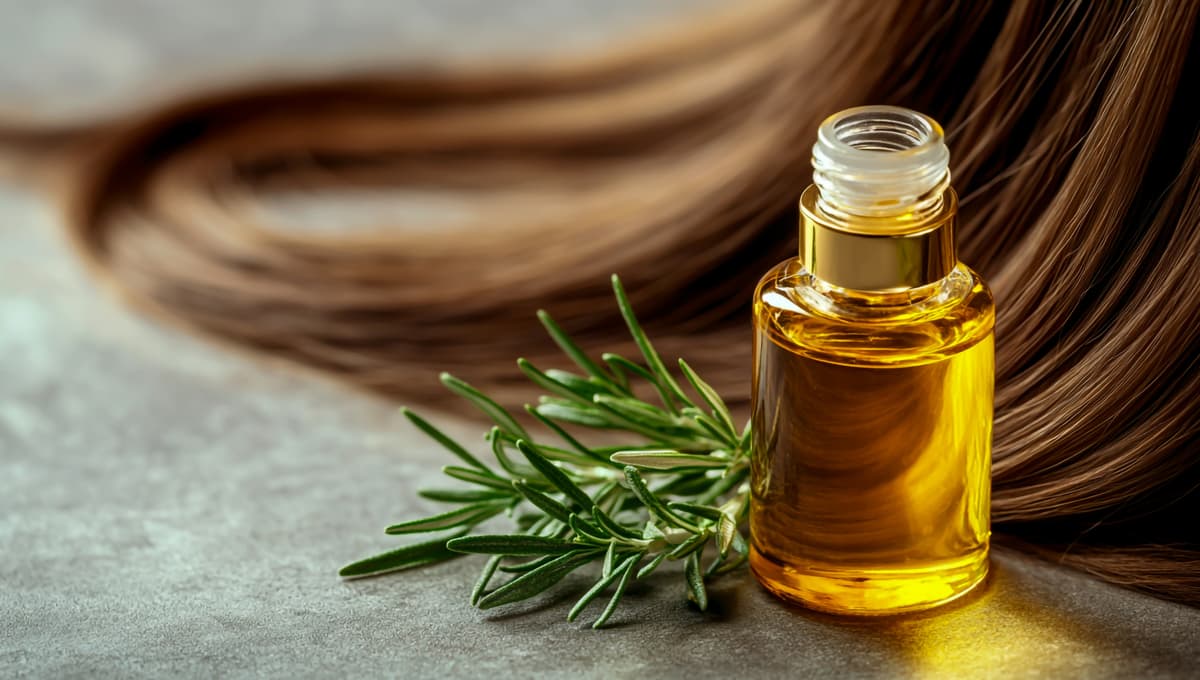
Yes — rosemary oil genuinely promotes hair growth by improving scalp microcirculation, inhibiting the DHT-producing enzyme 5-alpha reductase, and reducing follicular inflammation via rosmarinic acid and carnosic acid. Clinical evidence shows results comparable to 2% minoxidil, with significantly fewer side effects.
Apply diluted rosemary oil directly to the scalp 2–3 times a week, massage for five minutes, and leave it on for at least thirty minutes before washing. Consistent use over twelve weeks delivers measurable improvement in hair density and reduced fall.
What Is Rosemary Oil and Why Does It Work for Hair?
Rosemary oil is a steam-distilled essential oil extracted from Rosmarinus officinalis — a Mediterranean herb with thousands of years of use in both Ayurvedic and European folk medicine. What makes it stand apart in modern hair care isn't tradition alone — it's the growing body of peer-reviewed clinical evidence confirming its efficacy at the cellular level.
The oil is dense with bioactive molecules: rosmarinic acid, carnosic acid, ursolic acid, camphor, and 1,8-cineole (eucalyptol). Each compound contributes to a different biological function — from expanding scalp blood vessels to blocking the hormone responsible for follicle miniaturisation.
Unlike silicone-heavy commercial serums that coat the hair shaft without addressing the root, rosemary oil works on the follicle itself, making it a genuinely therapeutic choice rather than a cosmetic cover-up.
The Science: How Rosemary Oil Stimulates Hair Growth
Rosemary oil operates through three well-documented biological pathways. Understanding these mechanisms clarifies why the results are real and why consistency matters.
The Three Pathways
5-Alpha Reductase Inhibition: DHT (dihydrotestosterone) is the primary hormonal driver of androgenetic alopecia. Ursolic acid in rosemary oil inhibits the enzyme that converts testosterone into DHT, protecting follicles from miniaturisation — the same target as prescription finasteride, without systemic exposure.
Scalp Microcirculation Enhancement: Carnosic acid and 1,8-cineole stimulate local blood flow to the dermal papilla — the structure at the base of each follicle that supplies oxygen and nutrients. A 2015 study published in SKINmed showed rosemary oil matched 2% minoxidil in increasing hair count after six months, with less scalp irritation. Better circulation means follicles receive more of what they need to produce strong, dense hair.
NF-κB Suppression and Anti-Inflammatory Action: Chronic scalp inflammation silently shortens the anagen (growth) phase of each follicle. Rosmarinic acid suppresses NF-κB — a master inflammatory switch — calming the immune microenvironment around follicles and allowing the growth cycle to run its full course.
Why Does Hair Fall Happen? Root Causes Explained
Hair fall is rarely a single-cause problem. The most common triggers fall into four categories, and rosemary oil addresses at least three of them directly:
Hormonal imbalance (excess DHT → follicle miniaturisation)
Poor scalp microcirculation → oxygen-deprived follicles
Chronic scalp inflammation (seborrheic dermatitis, dandruff, oxidative stress)
Nutritional deficiencies and physical stress (addressed with carrier oils and topical nutrition)
Addressing only one factor — as most commercial products do — yields partial results. An oil-based approach that targets the scalp environment holistically is why plant-based formulations with rosemary are outperforming single-molecule synthetics in long-term studies.
Key Bioactive Compounds in Rosemary Oil
Categorised Botanicals: What's Working and How
Group 1 — Primary Actives
Rosemary essential oil (Rosmarinus officinalis) is the anchor ingredient — concentrated source of carnosic acid, ursolic acid, and rosmarinic acid responsible for DHT inhibition and follicle regeneration.
Group 2 — Analgesic and Scalp-Soothing Agents
Camphor and eucalyptol provide a cooling, antimicrobial environment that reduces sebum build-up and flaking without stripping the scalp's natural lipid barrier.
Group 3 — Carrier and Nutritive Oils
Rosemary oil must always be diluted before scalp application. Ideal carriers include castor oil (rich in ricinoleic acid, which improves follicle hydration), jojoba (structurally similar to sebum — balances oiliness), and argan oil (vitamin E source for shaft strength). Reset's
Rosemary oil must always be diluted before scalp application. Ideal carriers include castor oil (rich in ricinoleic acid, which improves follicle hydration), jojoba (structurally similar to sebum — balances oiliness), and argan oil (vitamin E source for shaft strength). Stretch Easy Oil uses a similarly intelligent multi-oil base, making it a useful companion product for overall skin and scalp nourishment.
Group 4 — Supportive / Neuro-Supportive Ayurvedic Herbs
Bhringraj (Eclipta alba) — the Ayurvedic 'king of hair herbs' — inhibits 5-alpha reductase by a complementary pathway to ursolic acid. Amla (Phyllanthus emblica) provides vitamin C-driven collagen support for the dermal papilla. Brahmi (Bacopa monnieri) calms the scalp's neural stress response, reducing cortisol-driven shedding.
Rosemary Oil vs. Conventional Hair Treatments — The Evidence Table
How Do I Apply Rosemary Oil for Maximum Results?
Application method directly determines how much of the active compounds reach the follicle. Follow this five-step protocol for best results:
Dilute: Mix 4–5 drops of rosemary essential oil per tablespoon of carrier oil (castor, jojoba, or argan). Never apply undiluted essential oil directly to the scalp.
Warm: Gently heat the blended oil for 10–15 seconds. Warmth opens the scalp pores and improves dermal absorption.
Section and Apply: Part your hair in sections and apply the oil directly onto the scalp — not the hair shaft — using fingertips or a dropper.
Massage: Massage in circular motions for five full minutes. This mechanical stimulation independently boosts blood flow and amplifies the vasodilatory effect of 1,8-cineole.
Absorb: Leave on for a minimum of thirty minutes. Overnight application two to three times a week produces the best results for chronic hair fall.
Usage Frequency Guide by Hair Condition
Symptom-to-Ingredient Matrix
Does Rosemary Oil Reduce Hair Fall Specifically?
Yes — but the mechanism differs from generic 'nourishing' oils. Hair fall has two primary culprits: premature follicle miniaturisation (driven by DHT) and a shortened anagen phase (driven by inflammation and poor circulation). Rosemary oil addresses both. Its ursolic acid content competes with DHT at the follicle receptor, while rosmarinic acid extends the growth phase by calming the inflammatory microenvironment that forces follicles into premature telogen (shedding).
In practical terms: users typically notice a reduction in shower and comb shedding within four to six weeks, and improved hair texture within eight weeks. Density changes — new baby hairs along the hairline — become visible between ten and sixteen weeks with consistent use.
Can Rosemary Oil Be Combined with Other Oils?
Absolutely — and combination is often more effective than using rosemary alone. The most research-backed pairings are rosemary with castor oil (additive effect on follicle stimulation via ricinoleic acid), rosemary with peppermint oil (synergistic vasodilation — keep peppermint under 1% of total blend to avoid irritation), and rosemary with amla oil (antioxidant protection stacked with DHT inhibition).
If you want a ready-formulated multi-oil blend, Reset's Stretch Easy Oil demonstrates the brand's philosophy of combining botanically active carrier oils — a similar logic that scales well to scalp care when paired with rosemary essential oil as a topical booster.
Who Should Avoid Rosemary Oil?
Rosemary oil is safe for most adults when correctly diluted, but there are important exceptions. Pregnant and breastfeeding individuals should avoid concentrated rosemary oil as high doses of camphor and 1,8-cineole are contraindicated during pregnancy. Those with epilepsy should consult a physician, as camphor can lower seizure threshold. Individuals with sensitive or broken skin should patch-test a diluted solution on the inner wrist before scalp application.
How Long Does It Take to See Results?
The hair growth cycle operates on a ninety-day rhythm — patience is non-negotiable. Here is a realistic timeline for consistent, three-times-weekly use:
Weeks 1–4: Reduced scalp inflammation, less itch and flaking, initial reduction in shower shedding
Weeks 5–8: Noticeably less hair fall on brush and pillow; improved scalp texture and shine
Weeks 9–12: New hair growth visible along hairline and crown; measurable increase in strand thickness
Weeks 13–24: Significant density improvement in previously thinning areas — comparable to six-month minoxidil results per the 2015 SKINmed trial
Frequently Asked Questions
Does rosemary oil really promote hair growth?
Yes. A 2015 randomised controlled trial published in SKINmed compared rosemary oil directly with 2% minoxidil over six months and found equivalent improvement in hair count — with rosemary producing significantly less scalp itching and irritation. The primary mechanisms are DHT inhibition via ursolic acid, improved follicle circulation via carnosic acid, and NF-κB suppression via rosmarinic acid.
How should I apply rosemary oil on the scalp?
Always dilute first — four to five drops of rosemary essential oil per tablespoon of a carrier such as castor, jojoba, or argan oil. Warm the blend slightly, apply directly to the scalp in sections, and massage in circular motions for five minutes. Leave on for at least thirty minutes, or overnight for best results.
How long does it take to see results from rosemary oil?
Most users notice reduced shedding within four to six weeks. New growth and improved density become visible between ten and sixteen weeks of consistent use. Like minoxidil, rosemary oil works best with uninterrupted, regular application.
Can rosemary oil reduce hair fall?
Yes — and it targets the root cause rather than masking symptoms. By inhibiting 5-alpha reductase (the enzyme that produces DHT), rosemary oil protects follicles from the hormonal driver of patterned hair loss. Simultaneously, its anti-inflammatory compounds prevent the premature follicle shedding that causes diffuse fall.
Can I apply rosemary oil directly without diluting it?
No. Undiluted essential oils can cause scalp burns, contact dermatitis, and worsen inflammation — the opposite of what you want. Always mix with a carrier oil at a ratio of roughly 2–3% rosemary oil to 97–98% carrier.
Is rosemary oil safe for daily use?
For most people, yes — when diluted. However, daily leave-on application should be kept to very small quantities (two to three drops in carrier oil). Three-times-weekly thirty-minute treatments produce better results with less risk of build-up on the scalp.
Does rosemary oil work for androgenetic alopecia (pattern baldness)?
It is the most well-evidenced natural option for this condition. Ursolic acid inhibits 5-alpha reductase — the same enzyme targeted by finasteride — reducing DHT levels at the follicle without systemic hormonal disruption.
Can women use rosemary oil for hair loss?
Yes. Female pattern hair loss is also partially driven by DHT sensitivity at the follicle, making rosemary oil equally relevant. It is also effective for postpartum hair fall, where inflammation and circulation issues are the dominant mechanisms.
Should I wash out rosemary oil after applying it?
For maximum absorption, leave the oil on for at least thirty minutes. Overnight application is ideal — shampoo out gently in the morning. Use a mild, sulphate-free shampoo to avoid stripping the scalp microbiome you're working to restore.
Can I mix rosemary oil with other oils for hair?
Yes — and combination often enhances results. Rosemary with castor oil provides additive follicle stimulation. Rosemary with peppermint oil (below 1% concentration) amplifies vasodilation. Rosemary with amla oil stacks antioxidant protection with DHT inhibition.
Is rosemary oil better than minoxidil for hair growth?
Clinical evidence suggests comparable efficacy at six months, with rosemary producing fewer side effects. Unlike minoxidil, rosemary oil also addresses DHT — so it targets a broader range of hair loss causes. Minoxidil works primarily through vasodilation alone and ceases to work if discontinued.
Does rosemary oil help with dandruff and scalp irritation?
Yes. Camphor and rosmarinic acid in rosemary oil have direct antimicrobial and anti-inflammatory effects on the scalp. Regular application reduces Malassezia fungal overgrowth (the primary driver of dandruff) and calms seborrheic dermatitis flares.
Golden Rules for Rosemary Oil Hair Care
Always dilute: 4–5 drops rosemary oil per tablespoon of carrier. Never apply neat.
Commit to twelve weeks: the hair cycle takes three months. Consistency is the variable that separates results from disappointment.
Massage for five minutes every time: mechanical stimulation doubles the circulation benefit of the oil compounds.
Target the scalp, not the shaft: rosemary oil is a follicular treatment — apply it where the hair grows.
Use the right carrier: castor for growth, jojoba for scalp balance, argan for shaft repair — choose based on your primary concern.
Night-time is peak absorption time: overnight applications allow the bioactives to work undisturbed through the scalp's natural regeneration window.
Combine with Ayurvedic allies: bhringraj and amla amplify rosemary oil's DHT-blocking and antioxidant action — true holistic hair care.
Related Reading
Share this article: