
Right Side Chest Pain: What It Can Mean, Why It Happens, and When to Worry
2026-01-28 • 3 min
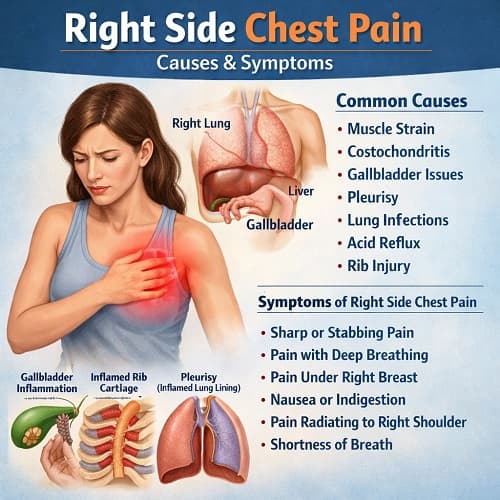
Right side chest pain can be confusing because we’re trained to associate chest pain with the heart, and most people immediately think “heart attack.” Here’s the thing: pain in right side of chest is often not from the heart at all. The right side of the chest contains ribs, muscles, cartilage, lungs and pleura (lung lining), parts of the digestive tract nearby (esophagus, stomach), and the gallbladder and liver just below the diaphragm. Any of these can trigger right side chest pain.
This guide breaks down the most common right side chest pain reasons, the red flags you should never ignore, and the patterns that help you tell “probably harmless” from “get checked now.” We’ll also cover female chest pain right side and why symptoms can feel different in women, including scenarios like sharp pain right side of chest woman experiences during hormonal changes, stress, and inflammatory conditions.
First: How to Describe Right Side Chest Pain Clearly
When a clinician evaluates right side chest pain, the description matters more than most people realize. These details quickly narrow down causes:
Type of pain: sharp, stabbing, dull, pressure-like, burning, tightness
Timing: sudden vs gradual, minutes vs hours vs days
Triggers: deep breathing, coughing, twisting, eating, lying down, exertion, stress
Location: near breastbone, under right breast, along ribs, toward shoulder/arm, upper abdomen
Associated symptoms: fever, breathlessness, dizziness, nausea, sweating, palpitations, cough, swelling in legs
Even if your pain in right side of chest feels mild, patterns still matter.
Common Right Side Chest Pain Reasons (Most Frequent Causes)
1) Muscle Strain and Chest Wall Pain
This is one of the top right side chest pain reasons, especially if you:
lifted something heavy
did pushups, weight training, or intense stretching
had a lot of coughing
slept in an awkward posture
carried a heavy bag on one shoulder
What it feels like
localized tenderness you can point to with one finger
worse with twisting, reaching, or pressing on the area
sometimes a “pulling” or sore feeling
Why it happens
The chest wall is packed with intercostal muscles (between ribs) and connective tissue. Inflammation or micro-tears cause pain signals that feel “inside” the chest even though the issue is muscular.
What helps
Rest, gentle heat, avoiding the trigger movement, and posture correction. If you’re unsure, a simple test: if pressing the spot reproduces the pain, chest wall involvement becomes more likely (not guaranteed, but useful).
2) Costochondritis (Inflamed Rib Cartilage)
Costochondritis is inflammation where the ribs meet cartilage near the breastbone. It can cause pain in right side of chest or left, and it often scares people because it mimics cardiac pain.
What it feels like
sharp or aching pain near the front of the chest
worse with deep breaths, coughing, or certain movements
tender when you press the rib joints
Who gets it
Anyone, but it’s common after respiratory infections, repetitive strain, or sometimes without a clear trigger.
Typical course
Often improves over days to weeks. Persistent cases may need a clinician evaluation to rule out other inflammatory conditions.
3) Rib Bruise or Minor Rib Injury
A simple bump, fall, or hard sports contact can lead to rib bruising or micro-fractures.
Clues
pain that spikes when laughing, coughing, or deep breathing
tenderness along a rib line
pain may linger for weeks
If breathing feels restricted because the pain is intense, don’t just “wait it out.” Shallow breathing can increase infection risk.
4) Pleurisy (Inflammation of the Lung Lining)
Pleurisy is a classic cause of sharp chest pain because the pleura has pain-sensitive nerves. When inflamed, the pleura rubs during breathing.
What it feels like
sharp pain right side of chest that worsens with deep breaths
pain may lessen when you hold your breath
sometimes associated with viral illness symptoms
Possible causes
Viral infection, pneumonia, autoimmune conditions, or pulmonary embolism (rare but serious). Because serious causes exist, pleuritic pain with breathlessness needs attention.
5) Lung Infection (Pneumonia) or Bronchitis
Infections can irritate lung tissue and pleura, producing right side chest pain.
Clues
fever, chills
cough (dry or productive)
fatigue
breathlessness
pain may worsen with breathing or coughing
Pneumonia can sometimes occur without dramatic fever, especially in older adults or people with weaker immune response.
6) Acid Reflux and Esophageal Spasm
Yes, reflux can cause pain in right side of chest. The esophagus sits behind the breastbone and discomfort can “travel” or feel one-sided.
What it feels like
burning sensation, often after meals
sour taste, burping, throat irritation
worse lying down or bending
can mimic pressure-like chest pain
Esophageal spasm can feel like sudden squeezing pain and may be intense. If this is new and severe, it still deserves medical evaluation because it can resemble cardiac pain.
7) Gallbladder Pain (Biliary Colic or Gallstones)
Gallbladder issues commonly cause pain in the right upper abdomen, but many people feel it as right side chest pain, especially under the right breast or radiating to the right shoulder/back.
Classic pattern
pain starts after a fatty or heavy meal
steady, intense pain lasting 30 minutes to a few hours
nausea or vomiting
may radiate to right shoulder blade
If fever appears or the pain becomes prolonged with yellowing of eyes/skin, it can indicate infection or blockage and needs urgent care.
8) Liver or Diaphragm Irritation
The liver sits under the right diaphragm. Inflammation, congestion, or diaphragm irritation can be perceived as pain in right side of chest.
Possible hints
discomfort under right ribs
fullness, nausea, reduced appetite
sometimes worsened by deep breaths (diaphragm movement)
This is not something to self-diagnose. Persistent right upper quadrant pain needs evaluation.
9) Anxiety, Panic Attacks, and Hyperventilation
Anxiety can cause real physical symptoms, including chest tightness, stabbing sensations, and numbness or tingling. It can absolutely present as right side chest pain.
Clues
episodes during stress
racing heart, sweating, trembling
breathlessness that feels like “can’t get enough air”
dizziness, tingling in hands/lips
Important: anxiety-related pain is common, but it’s a diagnosis you land on after ruling out more serious causes when appropriate.
Female Chest Pain Right Side: Causes That Are More Common or Feel Different
Female chest pain right side can overlap with all the causes above, but a few patterns show up more often in women:
1) Breast-Related Pain (Hormonal Cycles, Cysts, Mastitis)
Breast tissue can create pain that feels like pain in right side of chest, especially under the breast or toward the outer side.
Cyclical breast pain
worsens before periods
feels heavy, sore, or tender
often affects both breasts but can be one-sided
Cysts/fibroadenoma
may feel like a lump or localized tenderness
pain can be sharp or achy
Mastitis (infection, more common with breastfeeding)
warmth, redness, swelling
fever and fatigue
significant tenderness
If you notice a new lump, nipple discharge, skin dimpling, or persistent one-sided pain, don’t ignore it.
2) Sharp Pain Right Side of Chest Woman: Common Non-Heart Patterns
Many women describe sudden, stabbing episodes: sharp pain right side of chest woman experiences that come with breathing or movement. Common culprits:
costochondritis
pleurisy after viral infection
muscle strain from posture or workouts
reflux-related spasm
anxiety with hyperventilation
The key is the pattern: pain linked to breathing or pressing on the area leans musculoskeletal/pleural, while pain after meals leans reflux/gallbladder.
3) Heart Symptoms Can Be “Atypical” in Women
This matters: women can have heart-related issues with less “classic” crushing central pain. Symptoms may include:
unusual fatigue
nausea
jaw or back discomfort
shortness of breath
vague chest pressure
That doesn’t mean every right side chest pain is cardiac, but it’s why red flags matter more than guessing the cause.
When Right Side Chest Pain Is an Emergency
Seek urgent medical help if right side chest pain comes with any of the following:
sudden severe pain with shortness of breath
fainting, confusion, or severe dizziness
sweating, nausea, or a feeling of doom
pain spreading to arm, jaw, neck, or back
coughing blood
blue lips or severe breathing difficulty
fast heart rate with chest pain
high fever with breathing pain
one leg swelling/pain (possible clot risk)
pain after major trauma
These features can indicate heart problems, pulmonary embolism, serious infection, or lung collapse.
A Quick Self-Check: Patterns That Suggest Specific Causes
Use this as a practical map. It’s not a diagnosis, but it’s useful.
Pain worsens when you press a specific spot
Likely chest wall (muscle strain, costochondritis, rib injury).
Pain spikes with deep breathing or coughing
Possible pleurisy, pneumonia, rib injury, costochondritis. If breathlessness is present, get evaluated.
Pain after fatty meals, with nausea, radiates to right shoulder blade
Gallbladder becomes more likely.
Burning sensation, worse lying down, sour taste
Reflux becomes more likely.
Chest tightness + fast breathing + tingling fingers during stress
Anxiety/hyperventilation pattern.
Sudden sharp pain with severe shortness of breath
Emergency evaluation needed.
What Doctors May Do to Evaluate Pain in Right Side of Chest
If you visit a clinic or ER for pain in right side of chest, evaluation may include:
history and physical exam (including chest wall palpation)
vitals: oxygen saturation, pulse, blood pressure
ECG (to check heart electrical activity)
chest X-ray (lungs, ribs, pneumonia, collapse)
blood tests (infection markers, cardiac enzymes in some cases)
D-dimer or CT pulmonary angiography (if clot suspected)
ultrasound abdomen (gallbladder/liver)
sometimes endoscopy or reflux evaluation for persistent symptoms
The testing depends on risk factors, symptom pattern, and exam findings.
Home Care: What You Can Do If There Are No Red Flags
If symptoms are mild, improving, and you do not have emergency signs, these steps can help while you monitor:
For suspected muscle strain/costochondritis
rest the area (avoid heavy lifting and intense upper-body workouts)
warm compresses 15–20 minutes, 2–3 times daily
gentle stretching and posture correction
consider over-the-counter pain relief if safe for you (avoid if you have ulcers, kidney disease, or blood thinner use unless advised)
For reflux-like symptoms
smaller meals, avoid late-night heavy eating
reduce spicy/fatty foods, caffeine, alcohol (if applicable)
elevate head while sleeping
avoid lying down right after eating
For anxiety-related episodes
slow breathing: inhale 4 seconds, exhale 6–8 seconds, repeat for 3–5 minutes
reduce hyperventilation by focusing on longer exhales
hydration and grounding techniques
If pain persists beyond a few days, recurs frequently, or escalates, get evaluated.
Risk Factors That Raise the Stakes
Even if the pain seems “not too bad,” these factors make medical evaluation more important:
age over 40 with new chest pain
diabetes, high blood pressure, high cholesterol
smoking history
recent long travel, surgery, immobilization (clot risk)
pregnancy or postpartum period (clot risk changes)
family history of early heart disease
known lung disease (asthma, COPD) or clotting disorders
FAQs
Is right side chest pain usually heart-related?
Usually not. Most heart pain is central or left-sided, but heart-related symptoms can still be variable. The safest approach is to look for red flags and risk factors, not only the side.
Why do I get sharp pain right side of chest when I breathe in?
That pattern often points toward pleural irritation, rib injury, costochondritis, or muscle strain. If it’s paired with breathlessness, fever, or sudden onset, get checked.
Can female chest pain right side be from breast issues?
Yes. Hormonal breast pain, cysts, mastitis, and other breast conditions can feel like chest pain. Persistent one-sided pain or a new lump needs evaluation.
When should I stop self-treating and see a doctor?
If symptoms last more than 48–72 hours without clear improvement, keep recurring, disrupt sleep, or come with any warning symptoms (breathlessness, dizziness, fever, radiating pain), it’s time.
Right side chest pain has many causes, and most are not life-threatening. But some serious conditions can start with subtle symptoms, so the smart move is pattern recognition plus caution. If the pain in right side of chest is sharp, sudden, or linked with shortness of breath, dizziness, sweating, fever, or radiating pain, don’t gamble with it. Get evaluated.
Share this article: