
Piles Tablets: Do They Really Work? Treatment Guide
2026-03-23 • 5 min read
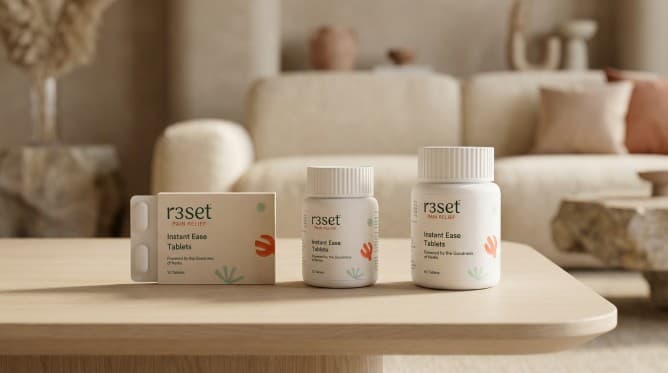
Yes, piles tablets genuinely work — but only when they target the right biological mechanisms. Effective treatment requires reducing venous engorgement, suppressing rectal inflammation via COX and NF-κB pathways, and restoring vascular tone in the haemorrhoidal plexus. Reset’s Instant Pain Relief Tablet incorporates Ayurvedic botanicals including Triphala, Haritaki, and Nagkesar that address all three drivers, easing pain, reducing swelling, and supporting tissue healing without the systemic side effects of synthetic alternatives.
What Are Piles and Why Do They Develop?
Piles, clinically known as haemorrhoids, are swollen and inflamed veins in the rectum and anus that cause discomfort, bleeding, and in severe cases, prolapse. They are classified as internal (inside the rectum) or external (under the skin around the anus) and graded on a scale of one to four based on severity. Piles develop when chronic pressure on the rectal veins exceeds the structural tolerance of the haemorrhoidal cushion — a network of vascular tissue designed to assist with bowel control. Prolonged straining during defecation, chronic constipation, low dietary fibre, sedentary habits, and pregnancy are the most consistent contributing factors. Understanding what causes the venous congestion is the foundation of understanding how piles tablets work and how to cure piles effectively.
What Biological Pathways Drive Piles Pain and Swelling?
Piles are not simply varicose veins of the rectum. Their symptoms result from a convergence of three distinct biological processes that effective tablets must address:
Venous Congestion and Vascular Tone Loss — Chronic pressure causes the haemorrhoidal venous plexus to lose its structural elasticity. Blood pools in the cushion tissue, causing engorgement, protrusion, and the characteristic feeling of fullness or a lump. Herbs that strengthen venous walls and restore vascular tone (such as Nagkesar and Diosmin-rich plants) directly counteract this mechanism.
COX-2 Mediated Inflammation — Tissue distension and microtrauma during defecation trigger cyclooxygenase-2 activity in the rectal mucosa, producing prostaglandins that drive local pain, warmth, and swelling. COX-2 inhibition is therefore central to any effective anti-inflammatory piles tablet.
NF-κB Inflammatory Cascade — Repeated trauma and bacterial irritation at the anal margin activate Nuclear Factor-kappa B, upregulating pro-inflammatory cytokines (TNF-α, IL-6, IL-1β) that sustain chronic tissue inflammation and delay mucosal healing. Suppressing NF-κB is what separates a symptom-masking tablet from one that actually supports tissue recovery.
Impaired Mucosal Healing — The rectal mucosa has a high regenerative capacity, but chronic inflammation, poor bowel hygiene, and constipation impair this process. Herbal astringents and mucosal-repair actives accelerate re-epithelialisation, reducing bleeding and tissue vulnerability with each subsequent bowel movement.
How Do Piles Tablets Help in Treatment?
Piles tablets work through a combination of systemic and local mechanisms that address the vascular, inflammatory, and digestive dimensions of the condition. At the systemic level, anti-inflammatory actives reduce prostaglandin output and cytokine load in the haemorrhoidal tissue. Vascular-toning compounds restore elasticity to the venous walls, reducing engorgement between bowel movements. Digestive regulators soften stool consistency and reduce straining pressure — the single most important mechanical factor in piles progression. A well-formulated piles tablet addresses all three dimensions simultaneously, which is why Ayurvedic multi-herb formulations consistently outperform single-ingredient synthetic options in long-term piles management.
What Are the Different Types of Piles Treatment Tablets?
Venotonics (Diosmin, Hesperidin) — Flavonoid-based tablets that strengthen venous walls and reduce haemorrhoidal engorgement. Evidence-supported for bleeding and swelling reduction but limited anti-inflammatory action beyond the vascular layer.
NSAIDs (Ibuprofen, Diclofenac) — Reduce acute rectal pain via COX inhibition but do not address venous tone, mucosal healing, or bowel regularity. Carry GI side effects that can worsen constipation-driven piles.
Laxatives and Stool Softeners — Reduce straining pressure but are not true treatment; overuse causes dependency and electrolyte imbalance.
Corticosteroid Tablets — Reduce severe inflammation in acute flares but contraindicated for extended use due to systemic immunosuppression and mucosal atrophy.
Herbal Ayurvedic Piles Tablets — Combine venous toning (Nagkesar), anti-inflammatory action (Haritaki, Triphala), mucosal healing, and bowel regulation in a single formulation. The most holistic approach to understanding piles how to cure without synthetic side-effect burden.
Categorised Botanicals in Herbal Piles Tablets
How Do I Choose the Right Piles Tablet?
Match your primary symptom to the best-fit herbal active using the matrix below to select the most targeted formulation for your condition.
Ayurvedic vs. Allopathic Piles Treatment: A Comparison
How to Use Piles Tablets: Step-by-Step Guide
Take with a full glass of warm water — warmth aids absorption of botanical actives and supports bowel motility.
Always take with or immediately after a light meal to prevent any gastric sensitivity.
Take at consistent times each day to maintain stable plasma-level concentrations of anti-inflammatory and vascular-toning compounds.
Pair with a high-fibre diet (twenty-five to thirty grams daily) to maximise bowel-regulation support and reduce straining pressure.
Increase fluid intake to at least two litres of water daily — herbal fibre actives like Isabgol require hydration to function effectively.
Avoid straining on the toilet; use a footstool to achieve a squatting posture which reduces haemorrhoidal pressure by up to thirty percent.
Assess at two weeks; for persistent bleeding, prolapse, or pain unresponsive to tablets, seek surgical or interventional evaluation.
Usage Guide: Frequency and Best Time to Take
Are Over-the-Counter Piles Medicines Effective?
Over-the-counter piles medicines range from topical creams (local anaesthetics and corticosteroids) to oral venotonics and stool softeners. Their effectiveness depends entirely on piles grade and the mechanism they target. OTC topical preparations offer temporary symptom relief but do not address venous wall weakness or mucosal inflammation systemically. OTC venotonic tablets (Diosmin, Hesperidin) have moderate evidence for reducing bleeding and swelling in grade one and two piles. Herbal Ayurvedic OTC tablets that combine venous toning, anti-inflammatory action, and bowel regulation offer the broadest therapeutic coverage without prescription requirements. For grade three or four piles, or when bleeding is significant, OTC options should be used alongside professional medical evaluation rather than as a standalone cure.
What Lifestyle Changes Support Piles Recovery?
Tablets address the pathology; lifestyle changes determine whether piles recur. The following changes are not optional add-ons but are clinically essential for durable recovery:
High-fibre diet — Increase vegetables, legumes, whole grains, and fruits to achieve twenty-five to thirty grams of dietary fibre daily. Fibre softens stool, reduces straining, and cuts rectal pressure — the primary mechanical driver of haemorrhoidal engorgement.
Hydration — Two litres of water minimum daily. Dehydration is one of the most consistently overlooked contributors to constipation and piles recurrence.
Avoid prolonged sitting on the toilet — Reading or phone use on the toilet increases haemorrhoidal pressure with every additional minute. Limit toilet time to five minutes maximum.
Regular physical activity — Even a thirty-minute daily walk reduces pelvic venous congestion significantly. Sedentary work is a major independent risk factor for piles.
Squatting posture — A footstool that raises the knees above hip level aligns the anorectal angle for easier defecation, reducing straining force by measurably.
Weight management — Excess abdominal weight chronically elevates intra-abdominal pressure on the haemorrhoidal plexus. Even modest weight reduction reduces the mechanical load on rectal veins.
When Should I See a Doctor for Piles?
Piles tablets and lifestyle changes manage most grade one and two cases successfully. Seek medical evaluation promptly if:
Rectal bleeding is heavy, bright red, or persists beyond two weeks of tablet treatment.
A prolapsed pile cannot be manually reduced, or pain is severe and constant rather than bowel-movement related.
You notice a painful hard lump at the anal margin, which may indicate thrombosed external haemorrhoids requiring immediate drainage.
Symptoms do not improve after four to six weeks of consistent herbal tablet use and lifestyle modification.
You are pregnant and experiencing worsening piles — certain botanical actives require physician clearance during pregnancy.
There is any change in bowel habit, unexplained weight loss, or bleeding that feels different from previous episodes, as these warrant colorectal cancer screening.
Why Reset’s Instant Pain Relief Tablet Supports Piles Recovery
When pain, swelling, and discomfort from piles disrupt daily life, the first priority is fast, targeted relief alongside genuine healing support. Reset’s Instant Pain Relief Tablet delivers multi-pathway anti-inflammatory action through clinically proportioned Ayurvedic botanicals that inhibit COX-2, suppress NF-κB inflammatory signalling, and ease the tissue inflammation that makes every bowel movement painful. Its analgesic and anti-inflammatory actives reduce rectal pain and swelling within thirty to sixty minutes, providing the immediate relief needed while the deeper healing mechanisms take effect over days and weeks. For anyone navigating the question of piles how to cure with something safer than repeated NSAID or steroid courses, this is a formulation designed for consistent, side-effect-free monthly use.
FAQ: Common Questions Answered
How do piles tablets help in treatment?
Piles tablets address the condition through three mechanisms: reducing venous engorgement in the haemorrhoidal plexus, suppressing COX-2 and NF-κB driven rectal inflammation, and (in herbal formulations) regulating bowel motility to reduce the straining that worsens piles with every episode.
Are over-the-counter piles medicines effective?
OTC venotonic and herbal piles tablets are effective for grade one and two haemorrhoids. Broad-spectrum herbal formulations such as Reset’s Instant Pain Relief Tablet deliver multi-pathway action beyond what single-ingredient OTC products provide. For grade three or four, OTC tablets should complement rather than replace medical review.
What lifestyle changes support piles recovery?
High-fibre diet, adequate hydration, limiting toilet sitting time, regular walking, squatting posture on the toilet, and weight management are the six evidence-based lifestyle changes that directly reduce haemorrhoidal pressure and recurrence. Tablets work significantly faster and last significantly longer when these changes are in place.
When should I see a doctor for piles?
See a doctor immediately if you experience heavy or persistent rectal bleeding, a prolapsed pile that will not reduce, a painful thrombosed lump at the anal margin, or no improvement after four to six weeks of treatment. Any change in bowel habit accompanying piles symptoms also warrants urgent colorectal evaluation.
Can piles be cured permanently without surgery?
Grade one and two piles frequently resolve completely with consistent herbal tablet use, dietary fibre, hydration, and bowel habit correction. Grade three and four piles may require minimally invasive procedures (rubber band ligation, sclerotherapy) or surgery. Early, consistent treatment with herbal tablets and lifestyle changes prevents most cases from progressing to surgical grades.
What foods should I avoid if I have piles?
Avoid refined and low-fibre foods (white bread, processed snacks), spicy foods that irritate the rectal mucosa, alcohol and caffeine that dehydrate and harden stool, and red meat that slows gut transit. These dietary choices directly worsen constipation and haemorrhoidal engorgement.
How long does it take for piles tablets to work?
Symptomatic relief (pain reduction, reduced burning) typically begins within the first one to three days of herbal tablet use. Visible reduction in swelling and bleeding usually occurs within one to two weeks of consistent dosing alongside dietary changes. Full mucosal healing of grade one and two piles may take four to eight weeks.
Can I take piles tablets during pregnancy?
Piles are extremely common during pregnancy due to increased intra-abdominal pressure. Some herbal actives require physician clearance during pregnancy. Always consult your obstetrician before starting any herbal supplement in the first trimester; dietary fibre and hydration remain the safest first-line approach.
Why do piles keep coming back after treatment?
Piles recur primarily because the root cause — chronic constipation, straining, low fibre, or sedentary habits — was not addressed alongside tablet treatment. Tablets that only suppress symptoms without correcting bowel regularity or vascular tone allow re-engorgement with each subsequent episode of constipation.
Is there a difference between internal and external piles treatment?
Internal piles respond well to systemic oral tablets targeting venous tone and mucosal healing. External piles often benefit from combined oral and topical treatment, as the external tissue is more sensitive and accessible. Both types share the same inflammatory and vascular root causes addressed by Ayurvedic herbal formulations.
Can stress worsen piles?
Yes. Chronic stress elevates cortisol, which worsens systemic inflammatory tone and disrupts gut motility, increasing constipation frequency. Stress also causes people to rush bowel movements, increasing straining. Adaptogenic herbs like Ashwagandha in quality herbal tablets provide both anti-inflammatory and stress-regulatory benefits relevant to piles.
Do herbal piles tablets interfere with other medications?
Triphala and Haritaki are generally well tolerated alongside standard medications. Guggul may interact with blood thinners and thyroid medications. Always disclose all supplements to your physician if you are on prescription treatment for cardiac, thyroid, or autoimmune conditions.
Key Takeaways
Piles tablets genuinely work when they target all three root mechanisms: venous congestion, COX-2 inflammation, and bowel irregularity — not just the pain signal.
Herbal Ayurvedic piles tablets outperform single-ingredient synthetic options because they address the vascular, inflammatory, and digestive dimensions of piles simultaneously.
Pre-loading with dietary fibre and increased hydration before starting tablets maximises their therapeutic effect and reduces bowel-movement-related pain faster.
Lifestyle changes — high-fibre diet, hydration, squatting posture, and regular walking — are not optional; without them, piles recur regardless of which tablet you take.
OTC herbal piles tablets effectively manage grade one and two haemorrhoids; grades three and four require medical review alongside tablet-based supportive care.
Seek prompt medical evaluation for heavy bleeding, thrombosed external haemorrhoids, grade three prolapse, or symptoms that persist beyond six weeks.
Reset’s Instant Pain Relief Tablet provides fast multi-pathway anti-inflammatory relief that directly supports piles recovery without the systemic risks of NSAIDs or steroids.
Related Reading
→ Pain Killer Tablet Name: Types, Uses & Hidden Risks
→ Menstrual Pain Relief: Best Tablets for Quick & Safe Relief
Share this article: