
Period Pain Relief Without Side Effects: Best Tablets & Natural Options
2026-03-17 • 4 min read
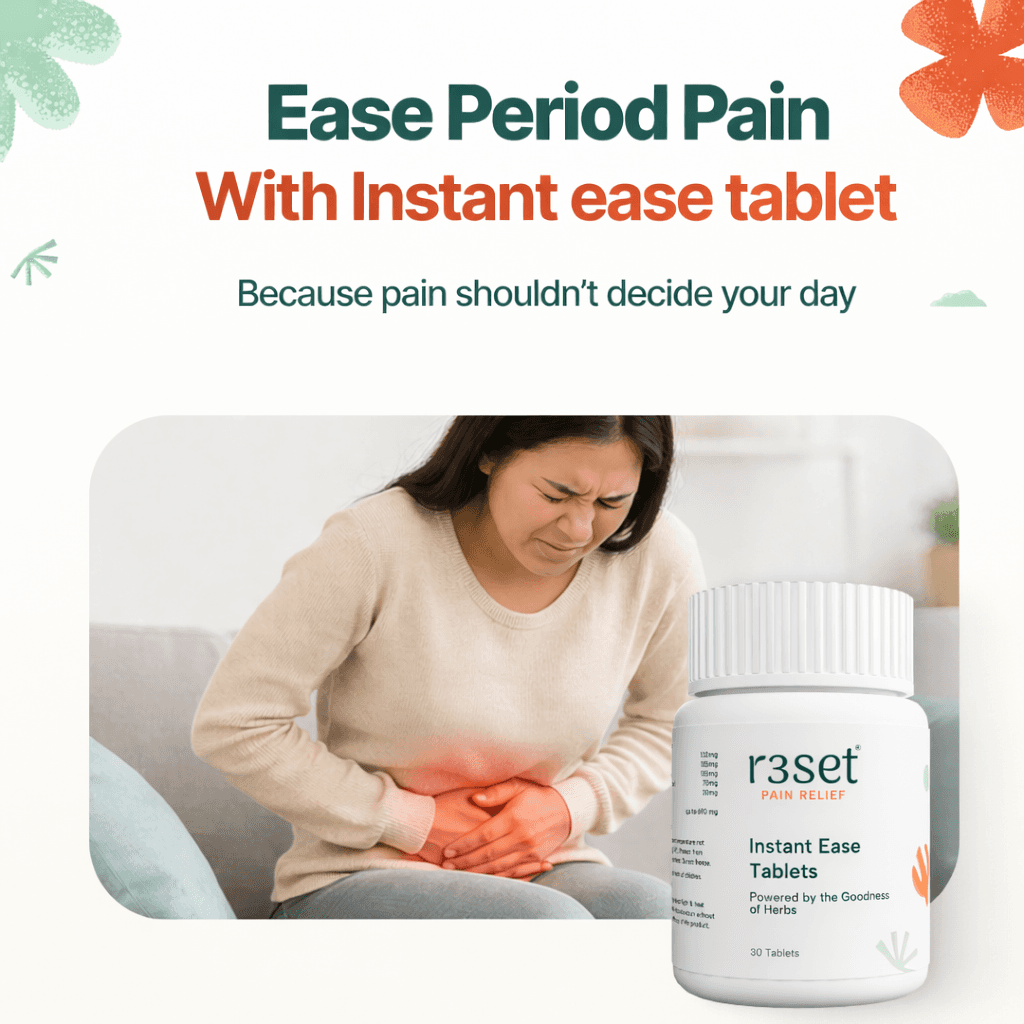
Menstrual cramps are caused by a surge of prostaglandins that trigger uterine contractions and COX-2 enzyme overactivation. Most conventional period pain tablets block this COX pathway but carry risks of gastric damage, hormonal disruption, and liver stress with regular monthly use.
Reset's Instant Pain Relief Tablet targets the same inflammatory enzymes through plant-based actives like Shallaki and Turmeric — delivering clinically informed menstrual relief without the systemic side effects of NSAIDs, making it one of the safest periods pain relief tablet options for monthly use.
What Causes Period Pain? The Biological Root
Dysmenorrhoea — the clinical term for period pain — affects up to eighty percent of menstruating individuals at some point in their reproductive lives. The pain is not random; it follows a precise biological cascade that begins twenty-four to forty-eight hours before menstruation and intensifies during the first two days of the cycle.
Three primary biological processes drive menstrual cramp intensity:
Prostaglandin Surge: As the uterine lining sheds, cells release prostaglandins — particularly PGF2α and PGE2 — in high concentrations. These lipid compounds trigger intense uterine muscle contractions, temporarily cutting blood flow and producing ischaemic pain identical in mechanism to a severe muscle cramp.
COX-2 Enzyme Overactivation: Cyclooxygenase-2 enzymes drive prostaglandin synthesis. Elevated COX-2 activity is the central biochemical driver of inflammatory menstrual pain and the primary target of both conventional and Ayurvedic treatments.
Vasopressin Release: Hormonal vasopressin causes uterine hyperactivity and further reduces uterine blood flow, amplifying pain signals transmitted through lumbar and pelvic nerve pathways — explaining why period pain often radiates to the lower back and thighs.
How Do Period Pain Tablets Work Inside the Body?
Understanding the mechanism of period pain tablets helps you choose the right option and take it at the right time. Most oral period pain tablets fall into one of two categories based on their biochemical target:
NSAIDs (Ibuprofen, Mefenamic Acid, Naproxen): These inhibit both COX-1 and COX-2 enzymes, reducing prostaglandin production and directly easing uterine contractions. They are fast-acting but suppress COX-1 in the stomach lining as a collateral effect, causing gastric irritation with regular monthly dosing.
Antispasmodics (Hyoscine, Drotaverine): These relax smooth muscle contractions rather than targeting the prostaglandin source. They relieve cramping but do not address the inflammatory cascade — making them a symptomatic fix rather than a root-cause intervention.
Ayurvedic Multi-Herb Tablets: These inhibit COX-2 selectively through phytochemical compounds while simultaneously modulating the NF-κB inflammatory pathway, supporting uterine tissue health and hormonal balance — addressing both the symptom and its biological source.
What Are the Safest Tablets for Period Pain Relief?
The safest period pain tablet is one that provides adequate COX-2 inhibition without damaging COX-1-dependent protective systems in the stomach, kidneys, and liver. Ranked by systemic safety profile:
Ayurvedic Plant-Based Formulations: Selective COX-2 phytoinhibitors with gut-protective co-herbs. Highest safety profile for monthly, cycle-long use without accumulating systemic risk.
Low-Dose Paracetamol (500 mg): Analgesic effect only; no anti-inflammatory action but minimal gastric risk. Suitable when pain is mild and inflammation is not the dominant driver.
Ibuprofen (400 mg with food): Most effective for prostaglandin-driven cramps but not recommended for consecutive monthly cycles without a physician's guidance.
Prescription Mefenamic Acid: Strong COX inhibitor reserved for severe dysmenorrhoea; requires medical supervision and is not appropriate for self-managed long-term use.
For monthly period pain that returns every cycle, Reset's Instant Pain Relief Tablet offers the most balanced option — targeting the prostaglandin and NF-κB pathways with plant actives rather than blanket enzyme suppression.
When Should You Take a Period Pain Tablet?
Timing is the single most impactful variable in period pain management that most people get wrong. Taking a tablet reactively — after cramps become severe — is both less effective and requires higher doses to achieve relief.
Pre-emptive Dosing (Recommended): Take your period pain tablet six to eight hours before the expected onset of cramps, ideally the evening before your period begins. This prevents prostaglandin levels from peaking before the medication takes effect.
At First Sensation: If pre-emptive dosing is missed, take the tablet at the very first sign of cramping — before pain reaches a three out of ten on the pain scale. Early intervention at a lower prostaglandin concentration is significantly more effective.
Always With Food: All oral tablets — both conventional and Ayurvedic — should be taken with a light meal. Food slows gastric transit, improves bioavailability of fat-soluble plant compounds, and protects the mucosal lining.
Avoid Taking on Consecutive Empty Stomachs: This is the most common cause of NSAID-induced gastric pain in women who take period tablets every month.
Why Do Conventional Period Pain Pills Cause Side Effects?
The side effects of conventional period pain pills are not incidental — they are a direct consequence of their mechanism. NSAIDs block COX-1 alongside COX-2. COX-1 is a protective enzyme that maintains the stomach's mucous lining, supports kidney perfusion, and regulates platelet function. Blocking it every month produces:
Gastric Irritation and Ulceration: Reduced mucosal protection makes the stomach lining vulnerable to acid damage, causing nausea, heartburn, and over time, erosive gastritis.
Renal Strain: Reduced prostaglandin-mediated blood flow to the kidneys is measurable after just two to three days of NSAID use — a concern for women with underlying kidney sensitivity.
Hormonal Interference: Some NSAIDs taken near ovulation can delay the LH surge. For women managing fertility, this timing effect is a clinically relevant consideration.
Liver Load: Monthly paracetamol use, especially when combined with any alcohol consumption, places cumulative stress on hepatic detoxification pathways over years of use.
Are There Side-Effect-Free Options for Menstrual Cramps?
No pharmacological treatment is entirely free of side effects — but the risk profile of Ayurvedic plant-based tablets is dramatically lower than that of conventional NSAIDs when taken as directed. The key advantage lies in selective targeting.
Plant phytochemicals like Boswellic acids (from Shallaki) and Curcuminoids (from Turmeric) inhibit COX-2 and the 5-LOX leukotriene pathway preferentially — leaving COX-1 largely intact. This means prostaglandin-driven uterine pain is addressed without stripping the stomach's protective enzyme layer.
Reset's Instant Pain Relief Tablet pairs these selective phytoinhibitors with Ashwagandha for hormonal and nervous system support and Licorice root as a natural mucosal protectant — making it one of the most thoughtfully formulated periods pain relief tablet options currently available.
How Does Ayurveda Treat Period Pain at the Root?
In Ayurvedic medicine, dysmenorrhoea is primarily classified as a Vata disorder — specifically Apana Vata imbalance, where the downward-moving energy governing the pelvic region becomes erratic or obstructed. Excess Vata causes dry, spasmodic contractions; excess Pitta adds inflammation and heat; excess Kapha contributes to heavy flow and bloating.
Ayurvedic treatment addresses all three dimensions simultaneously — reducing prostaglandin-driven spasm, calming pelvic nerve excitability, and supporting the uterine lining's regenerative capacity between cycles. This multi-axis approach explains why regular Ayurvedic supplementation tends to reduce period pain severity progressively over three to six cycles — not just during the symptomatic window.
Key Botanicals: What Goes Into an Effective Period Pain Tablet?
Ayurvedic vs. Allopathic: Side-by-Side Comparison
How Can I Reduce Period Pain Naturally?
Pharmaceutical intervention is one tool — but period pain responds exceptionally well to a layered natural management strategy. The most evidence-backed complementary approaches are:
Dietary Anti-Inflammatory Protocol: Reduce arachidonic acid precursors — red meat, processed oils, and refined sugar — during the five days before your period. This directly reduces the substrate available for prostaglandin synthesis.
Magnesium Supplementation: Magnesium acts as a natural calcium channel blocker in smooth muscle — relaxing uterine contractions. Studies show three hundred milligrams daily from day fifteen of the cycle significantly reduces cramp severity.
Heat Therapy: Applied heat to the lower abdomen for fifteen to twenty minutes increases local blood flow and reduces vasopressin-driven ischaemic pain — a direct, drug-free intervention at the third biological pathway identified in Section One.
Omega-3 Fatty Acids: EPA and DHA from fish oil or flaxseed compete with arachidonic acid at the COX enzyme level, reducing prostaglandin synthesis — the same pathway targeted by NSAIDs but through nutritional competition rather than enzyme blockade.
Consistent Tablet Timing: Taking Reset's Instant Pain Relief Tablet pre-emptively each cycle — rather than reactively — progressively reduces the prostaglandin peak over multiple cycles, meaning pain intensity typically decreases over three to six months of regular use.
Usage Guide: Frequency and Timing by Pain Pattern
Symptom-to-Ingredient Matrix: Choosing the Right Solution
Frequently Asked Questions
What are the safest tablets for period pain relief?
The safest period pain tablets are those that inhibit COX-2 selectively without suppressing COX-1, which protects the stomach and kidneys. Ayurvedic formulations using Boswellia, Turmeric, and Ginger achieve this selective inhibition naturally. Among conventional options, low-dose ibuprofen taken with food for one to two days is safer than extended NSAID use. Reset's Instant Pain Relief Tablet is formulated specifically to deliver effective period pain relief without the systemic risks of monthly NSAID use.
Are there side-effect-free options for menstrual cramps?
No treatment is entirely without risk, but Ayurvedic plant-based tablets have a dramatically lower side-effect profile than conventional NSAIDs for monthly period use. Selective COX-2 phytoinhibitors like Boswellic acids leave the stomach's protective COX-1 enzyme intact, avoiding gastric erosion. Paired with heat therapy, magnesium, and dietary adjustments, these options offer a near-complete side-effect-free management protocol for most people with primary dysmenorrhoea.
How can I reduce period pain naturally?
The most evidence-backed natural approaches are: pre-emptive Ayurvedic tablet dosing from the evening before your period; dietary reduction of arachidonic acid sources (red meat, refined oils) in the week before menstruation; magnesium supplementation from mid-cycle; Omega-3 fatty acids for competitive COX pathway modulation; and localised heat application for vasopressin-driven cramping. Combining these with Reset's Instant Pain Relief Tablet addresses all three biological pain pathways simultaneously.
When is period pain considered abnormal?
Period pain is considered clinically abnormal — secondary dysmenorrhoea — when it worsens progressively over cycles rather than remaining stable; when it is not relieved by standard tablets; when it begins outside the menstrual window; or when it is accompanied by heavy irregular bleeding, pain during intercourse, or fertility concerns. These patterns may indicate endometriosis, fibroids, or adenomyosis, requiring gynaecological investigation rather than self-managed pain relief.
Can I take a period pain tablet every month?
Conventional NSAIDs should not be taken every cycle indefinitely without periodic medical review due to cumulative gastric and renal risk. Ayurvedic tablets formulated with gut-protective co-herbs are designed specifically for monthly use without accumulating systemic risk. Always follow the dosage guidance on your product label and inform your physician of any supplements taken regularly.
What is the best time to take a period pain tablet?
The most effective time is pre-emptively — take your tablet six to eight hours before cramps are expected to begin, ideally the evening before your period starts. This prevents prostaglandin levels from peaking before the medication takes effect. If the period arrives unexpectedly, take the tablet at the very first sign of discomfort, always with food.
Does ibuprofen affect hormones or fertility?
Research indicates that ibuprofen taken around ovulation can temporarily delay the LH surge and impair follicular rupture. While the effect is reversible, women actively trying to conceive or monitoring ovulation should avoid mid-cycle NSAID use. For period pain management specifically, short-duration use during the menstrual phase has a lower fertility impact than periovulatory use.
Are period pain tablets safe during heavy flow?
NSAIDs have an antiplatelet effect that can modestly increase bleeding. For women with already heavy menstrual flow, this may be relevant. Ayurvedic formulations without antiplatelet action are a safer choice in this context, as they reduce prostaglandin-driven uterine contractions without affecting blood coagulation pathways.
Can teenagers use period pain tablets?
Low-dose ibuprofen is approved for menstrual pain in adolescents above twelve years of age when taken with food and not exceeding five days. For regular monthly use in teenagers, Ayurvedic plant-based options are preferred given their significantly lower systemic risk profile. A paediatrician or gynaecologist should be consulted before establishing any regular pain management protocol for adolescents.
Why does my period pain get worse every year?
Progressively worsening period pain is the clinical hallmark of secondary dysmenorrhoea, which may indicate an underlying gynaecological condition such as endometriosis, fibroids, or adenomyosis. It is distinct from primary dysmenorrhoea, which typically remains stable or improves with age. Worsening pain over multiple cycles warrants a gynaecological assessment rather than escalating over-the-counter tablet doses.
What foods make period cramps worse?
High-arachidonic acid foods — red meat, processed vegetable oils, and full-fat dairy — directly increase prostaglandin synthesis and worsen cramping. High-sodium foods promote water retention and bloating. Caffeine and alcohol increase uterine irritability and can worsen vasopressin-driven pain. Reducing these inputs in the five days before your period is one of the most impactful dietary interventions for natural period pain reduction.
Key Takeaways — Seven Golden Rules
Take your period pain tablet pre-emptively — the evening before your period — not reactively after cramps have peaked.
Always take any oral tablet with food to protect the stomach lining and improve absorption of plant-based actives.
Choose formulations that selectively inhibit COX-2 without suppressing COX-1 — this is the core difference between safe monthly use and accumulated gastric risk.
Reduce arachidonic acid foods in the week before your period to lower prostaglandin substrate at the source.
Boswellia, Turmeric, Shatavari, and Ashwagandha are the four best-evidenced plant actives for menstrual pain — look for all of them in your chosen tablet.
If period pain worsens progressively over cycles, consult a gynaecologist — escalating tablet doses is not the answer to secondary dysmenorrhoea.
For a safe, clinically informed monthly option, try Reset's Instant Pain Relief Tablet — a precision Ayurvedic formula targeting period pain through selective COX-2 inhibition, hormonal support, and gut-protective co-herbs.
Related Reading
Explore more Ayurvedic wellness and pain relief content at reset.in:
Shop: Reset Instant Pain Relief Tablet
Share this article: