Biotin Gummies
dose of radiance for skin and hair

₹439.00
4.5

2026-02-26 • 5 min
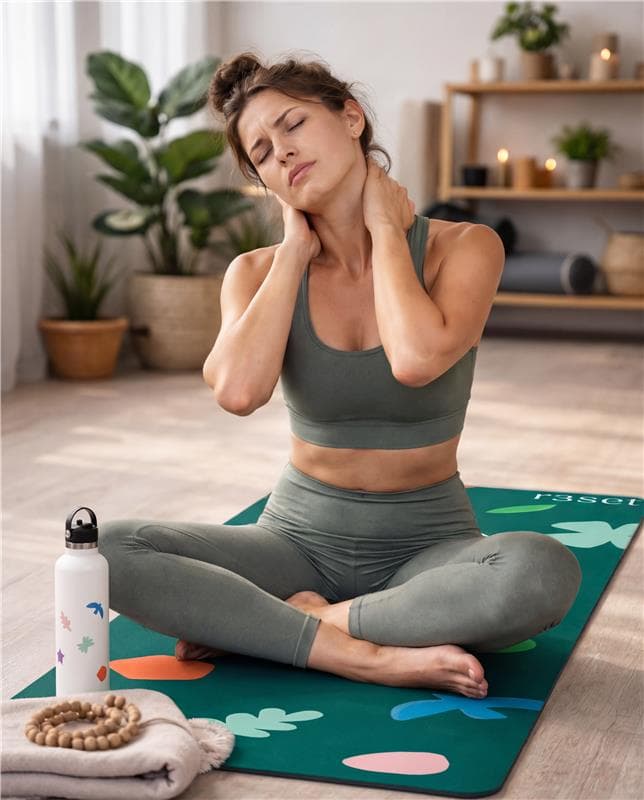
Your neck is tight. Your shoulders are locked up. And somewhere between your third meeting and your fifth hour at a screen, the idea of actually moving — intentionally, mindfully — feels both necessary and impossible.
Neck pain yoga is one of the most powerful and underused tools for cervical pain relief — not because it is trendy, but because it works on every level that neck pain operates. It releases tight muscles, restores joint mobility, corrects postural patterns, calms the nervous system, and builds the strength that keeps pain from returning. In clinical studies, yoga-based interventions consistently outperform passive treatments for chronic neck pain in both short-term relief and long-term outcomes.
But yoga for neck pain is not the same as a general yoga class. The wrong poses — or the right poses done incorrectly — can aggravate the cervical spine rather than relieve it. This guide gives you the full picture: the causes of neck pain that yoga addresses best, the symptoms to identify, a safe and effective step-by-step neck pain yoga sequence, and the fastest relief methods to support your practice from day one.
Yoga acts on neck pain through four distinct physiological mechanisms that most other treatments address only partially:
Muscle lengthening and trigger point release: Sustained holds in cervical and shoulder stretches create the mechanical and neurological conditions for chronically shortened muscles to release — deactivating the trigger points that generate most common neck pain.
Joint mobilisation: Gentle, controlled cervical range-of-motion within yoga practice maintains the health of the facet joints and intervertebral discs, reducing the stiffness accumulation that leads to degenerative changes over time.
Postural retraining: Yoga's emphasis on axial elongation — the active lengthening through the crown of the head — directly counteracts the forward head posture that is the root cause of most modern neck pain. Practised regularly, it creates new muscular holding patterns that replace the dysfunctional ones causing pain.
Nervous system regulation: Breath-led yoga activates the parasympathetic nervous system, reducing the sympathetic tone that sustains elevated cervical muscle tension in stress-driven neck pain. This is the mechanism that makes yoga uniquely effective for people whose neck pain has a significant emotional or psychological component.
Yoga is particularly effective for neck pain characterised by:
Chronic dull aching across the back or sides of the neck that worsens through the day
Morning stiffness that eases with movement — indicating muscle and joint tightness rather than structural damage
Tension headaches originating at the base of the skull
Restricted rotation or lateral tilt when turning the head
Shoulder and upper back tension that accompanies or drives neck pain
Stress-related neck tightening — where the neck and shoulders rise and lock under psychological load
Postural neck pain from prolonged screen, desk, or device use
Consult a doctor or physiotherapist before starting neck pain yoga if you have:
Radiating pain, numbness, or tingling that travels from the neck into the arm or hand
Neck pain following an accident, fall, or physical trauma
A diagnosed cervical disc herniation, spondylosis, or spinal stenosis
Neck pain that is severe, constant, and unresponsive to any position change
Any sudden loss of strength or coordination in the arms or legs
Yoga with these presentations is not contraindicated — but it must be adapted under professional guidance to ensure safety.
The defining postural dysfunction of the modern era. The head — weighing approximately 5–6 kg in neutral position — effectively doubles its load on the cervical spine for every inch it drifts forward. Office workers, students, and screen-heavy professionals accumulate hours of this forward-loaded posture daily, systematically shortening the anterior cervical muscles and overstretching the posterior ones. Yoga's axial elongation cues and thoracic extension poses directly reverse this pattern.
The levator scapulae, upper trapezius, sternocleidomastoid, and scalene muscles are the four primary culprits in most neck pain presentations. Chronic overuse and insufficient recovery create hyper-irritable trigger points within these muscles that generate both local aching and referred pain to the head and shoulder. The sustained, breath-supported holds of yoga stretches are among the most effective techniques available for deactivating these trigger points — more effective than quick stretches performed without breath awareness.
An underappreciated but critical contributor: when the thoracic spine (mid-back) becomes stiff and kyphotic — as it inevitably does with prolonged sitting — the cervical spine compensates by overextending at its junction with the thorax. This compensation creates chronic hyperextension stress at the base of the neck that no amount of cervical stretching alone resolves. Yoga's thoracic extension and rotation poses address this root cause in a way that neck-specific stretches cannot.
The deep neck flexors — the longus colli and longus capitis muscles — are the postural stabilisers of the cervical spine. In people with forward head posture and chronic neck pain, these muscles are consistently inhibited and weakened, allowing the larger, more superficial muscles to take over the stabilisation role they are not designed for. This overload of the surface muscles is a primary driver of the persistent tension and trigger points in common neck pain. Specific yoga poses activate and strengthen the deep neck flexors as a direct treatment effect.
Psychological stress chronically elevates cervical muscle tone — particularly in the upper trapezius and levator scapulae — by sustaining sympathetic nervous system activation. For a significant proportion of people with persistent neck pain, this neurological component is the primary driver, not a secondary one. Breathwork-led yoga is clinically the most accessible and effective intervention available for downregulating the sympathetic nervous system and breaking the stress-tension-pain cycle.
The single most effective preparation step for neck pain yoga is applying the Reset Emulsion to the neck and upper shoulders 5–10 minutes before you begin. Its nanotechnology delivery system carries active botanical anti-inflammatory and analgesic compounds deep into the cervical muscle tissue — reducing the baseline inflammation and spasm that make initial poses feel restricted and uncomfortable.
A pre-practice application of Reset Emulsion meaningfully increases tissue extensibility, allowing the muscles to respond to yoga stretches rather than guard against them. The warming effect also mimics the role of heat in pre-movement preparation — elevating local tissue temperature and reducing the viscosity of the fascia surrounding the cervical muscles. Apply to the back of the neck, both sides, and across the upper shoulders. Massage gently for 60–90 seconds before moving into your practice.
Always move within a pain-free range — yoga for neck pain is never about pushing through sharp or shooting pain
Prioritise breath: inhale to create length, exhale to deepen the stretch — never force a pose on a held breath
Move slowly and with control — fast, jerky cervical movements aggravate rather than relieve
Stop and rest if any pose produces radiating pain, tingling, or numbness in the arm
Consistency matters more than duration — 10 minutes daily delivers better outcomes than 60 minutes once a week
This 10–12 minute sequence is ordered from gentlest to most active — always safe to follow in this progression:
Begin seated — on a chair or cross-legged on the floor. Close your eyes. Inhale deeply through the nose for 4 counts, expanding the ribcage in all directions. Exhale slowly for 6 counts. With each exhale, consciously release the grip of the shoulders away from the ears. This activates the parasympathetic nervous system before physical movement begins, dramatically improving the quality of every subsequent pose.
Drop your chin to your chest. Slowly roll your right ear toward your right shoulder, continue to tilt the head back slightly (without full extension), then roll left ear to left shoulder, and return chin to chest. Trace a half-circle — never a full circle, which can compress the posterior cervical structures. 4–5 slow repetitions in each direction. This gently mobilises every cervical joint through its available range before deeper stretches are applied.
Sit tall. Inhale to lengthen the spine. On the exhale, tilt the right ear toward the right shoulder, reaching the left hand toward the floor to gently depress the left shoulder. Hold for 5 deep breaths — approximately 45–60 seconds. Inhale to return to centre. Repeat on the left. This directly stretches the upper trapezius and scalene muscles — the primary contributors to lateral neck stiffness and one-sided neck pain.
Begin on hands and knees (tabletop position). Inhale. On the exhale, slide your right arm under your left arm along the floor until your right shoulder and right cheek rest on the mat. Your left arm can extend overhead or rest behind the back. Hold for 5–8 breaths. This is one of the most effective yoga poses for releasing deep thoracic and cervical rotation restriction — simultaneously opening the posterior shoulder capsule and mobilising the cervical-thoracic junction. Repeat on the other side.
In tabletop, on the inhale: drop the belly, lift the tailbone and chest, and gently lift the gaze — Cow pose. On the exhale: round the entire spine from tailbone to crown, tucking chin to chest — Cat pose. 8–10 slow, breath-synchronised repetitions. This rhythmic thoracic mobilisation directly decompresses the cervical-thoracic junction, restores thoracic extension lost from prolonged sitting, and establishes the spinal wave movement that reduces load transfer into the neck.
Seated with legs extended, inhale to lengthen. Exhale and fold forward as far as comfortable, letting the head hang heavy. Allow gravity to create gentle traction through the cervical spine — completely unloading the posterior neck structures that bear sustained compression throughout the day. Hold for 5–8 breaths. This is particularly effective for tension headaches and upper neck aching.
Place a yoga block or a rolled blanket horizontally between the shoulder blades. Lie back over it so that the thoracic spine is supported in gentle extension and the head drops naturally backward in a slight cervical extension. Arms rest at sides or overhead. This is the most powerful counter-posture to forward head posture available in yoga — it opens the anterior cervical structures, restores thoracic extension, and decompresses the facet joints that forward flexion habitually compresses. Hold for 8–10 breaths. Come out slowly, supporting the head.
Lie on your back, legs resting up the wall. Let the arms rest at sides, palms up. Close your eyes. Breathe naturally. This restorative inversion gently reverses gravitational loading through the entire spine, encourages venous drainage from the legs, and activates the parasympathetic nervous system. For stress-driven neck pain, this final pose often produces a palpable release in the neck and shoulder tension that the preceding active poses prepared.
Within 10 minutes of completing your neck pain yoga sequence, apply the Reset Emulsion to the neck and upper shoulders for the second time. Post-practice application works differently from pre-practice: the yoga has increased local circulation and opened the tissue, making the skin's permeability temporarily higher and the muscle tissue more receptive to topical compounds. The active botanical ingredients penetrate more efficiently, reducing the residual inflammation in the structures you've been working, and supporting accelerated tissue recovery through the hours after practice.
Think of it as a two-part approach: Reset Emulsion before yoga prepares the tissue to move freely. Reset Emulsion after yoga helps the tissue recover and consolidate the gains made during the session. Together, they close the loop on a complete neck pain yoga protocol.
Not all yoga poses are safe for a compromised cervical spine. Avoid the following until neck pain has fully resolved:
Headstand (Sirsasana) and Shoulderstand (Sarvangasana): Both place the full weight of the body through the cervical spine and are contraindicated for any active neck pain or cervical disc issue
Full Wheel (Urdhva Dhanurasana): Extreme cervical extension that compresses the posterior facets — not appropriate during neck pain recovery
Deep neck extension without support: Any pose that drops the head fully backward without gradual preparation can acutely compress the posterior cervical structures
Fast, uncontrolled vinyasa transitions: Rapid weight-bearing transitions through the neck before adequate warm-up increase injury risk in an already sensitised cervical spine
Plow Pose (Halasana): Places extreme cervical flexion under significant spinal load — contraindicated for most neck pain presentations
Neck pain yoga works through four mechanisms — muscle release, joint mobilisation, postural retraining, and nervous system regulation — making it more comprehensive than most other home treatment approaches.
The most common causes of neck pain — forward head posture, trigger points, thoracic stiffness, weak deep neck flexors, and stress — all respond directly to a targeted yoga practice.
Applying Reset Emulsion before practice prepares the tissue for deeper release; applying it after practice accelerates recovery and consolidates the gains.
The eight-pose sequence in this guide — from Seated Breath Awareness to Legs-Up-the-Wall — can be completed in 10–12 minutes and practised safely every day.
Avoid headstands, shoulderstands, plow pose, and full neck extension during active neck pain — these poses load rather than relieve the cervical spine.
10 minutes of consistent daily neck pain yoga delivers measurably better and more durable outcomes than longer, sporadic sessions.
Most people notice meaningful reduction in stiffness and improved range of motion within 3–5 days of daily practice — particularly for tension-driven and postural neck pain. Significant and durable pain relief typically develops over 2–4 weeks of consistent daily practice. The nervous system and fascial changes that yoga produces are cumulative: each session builds on the last, which is why daily consistency at 10 minutes outperforms occasional 60-minute sessions.
Yes, but with modifications and ideally under the guidance of a physiotherapist or yoga therapist who understands your specific imaging findings. Many poses in this sequence — particularly Thread-the-Needle, Cat-Cow, and Legs-Up-the-Wall — are appropriate for most disc presentations. Avoid any pose that increases radiating arm pain or neurological symptoms. If symptoms worsen during or after practice, seek professional evaluation before continuing.
Both have distinct benefits. Morning practice mobilises the cervical joints that have stiffened overnight, sets a parasympathetic tone for the day, and corrects the postural patterns before they accumulate under daily load. Evening practice releases the tension accumulated through the workday and improves sleep quality by reducing the muscle tone that disturbs cervical alignment during sleep. If limited to one session, choose the time when your neck is consistently most symptomatic — that is when your body most needs the input.
Heat before yoga is beneficial — it increases tissue extensibility and allows muscles to respond to stretches rather than guard against them. A warm shower before practice, or 10 minutes with a heat pack on the neck, meaningfully improves the quality of every pose in the sequence. Combining pre-yoga heat with a Reset Emulsion application gives you the maximum tissue preparation — warmth from both the external heat source and the emulsion's warming active compounds working simultaneously.
Yoga works from the outside in — movement and breath changing tissue tone and structure progressively over time. The Reset Emulsion works from the inside out — active botanical compounds penetrating directly to the inflamed and spasmed tissue to reduce pain and stiffness at the cellular level. Applied before yoga, it reduces the baseline pain and muscle guarding that limits how effectively you can move into poses. Applied after yoga, it accelerates the tissue recovery that the stretching and mobilisation initiated. The two approaches are genuinely synergistic — each making the other more effective.
Neck pain yoga is not about flexibility or performance. It is about giving your cervical spine the intentional, breath-led movement it is designed for — and that modern life systematically denies it. Ten minutes on a mat, every day, is one of the most powerful investments you can make in a body that feels good to live in.
The sequence in this guide requires no equipment beyond a mat and ten minutes. The science behind it is solid. The results, for those who show up consistently, are real.
Prepare your practice and accelerate your recovery with the Reset Emulsion — applied before and after your daily neck pain yoga session for deep, nanotechnology-powered relief that makes every pose more effective and every recovery faster. Because wellness is a daily practice. And today is a great day to begin.
Share this article:
dose of radiance for skin and hair
₹439.00
An easy to apply potent formula with roll-on massager

₹549.00
₹449.00
A value pack for natural pain relief with a harmonious blend of natural herbs.

₹419.00
₹379.00
An optimal choice for safe and natural pain relief.

₹349.00
₹249.00
Your eco-friendly foundation for every flow

₹3,999.00
₹3,499.00
Infused with 6 powerful essential oils

₹1,299.00
₹999.00