Emulsion Pain relief roll on
An easy to apply potent formula with roll-on massager

₹549.00
₹449.00
4.6
2026-02-16 • 4 mins
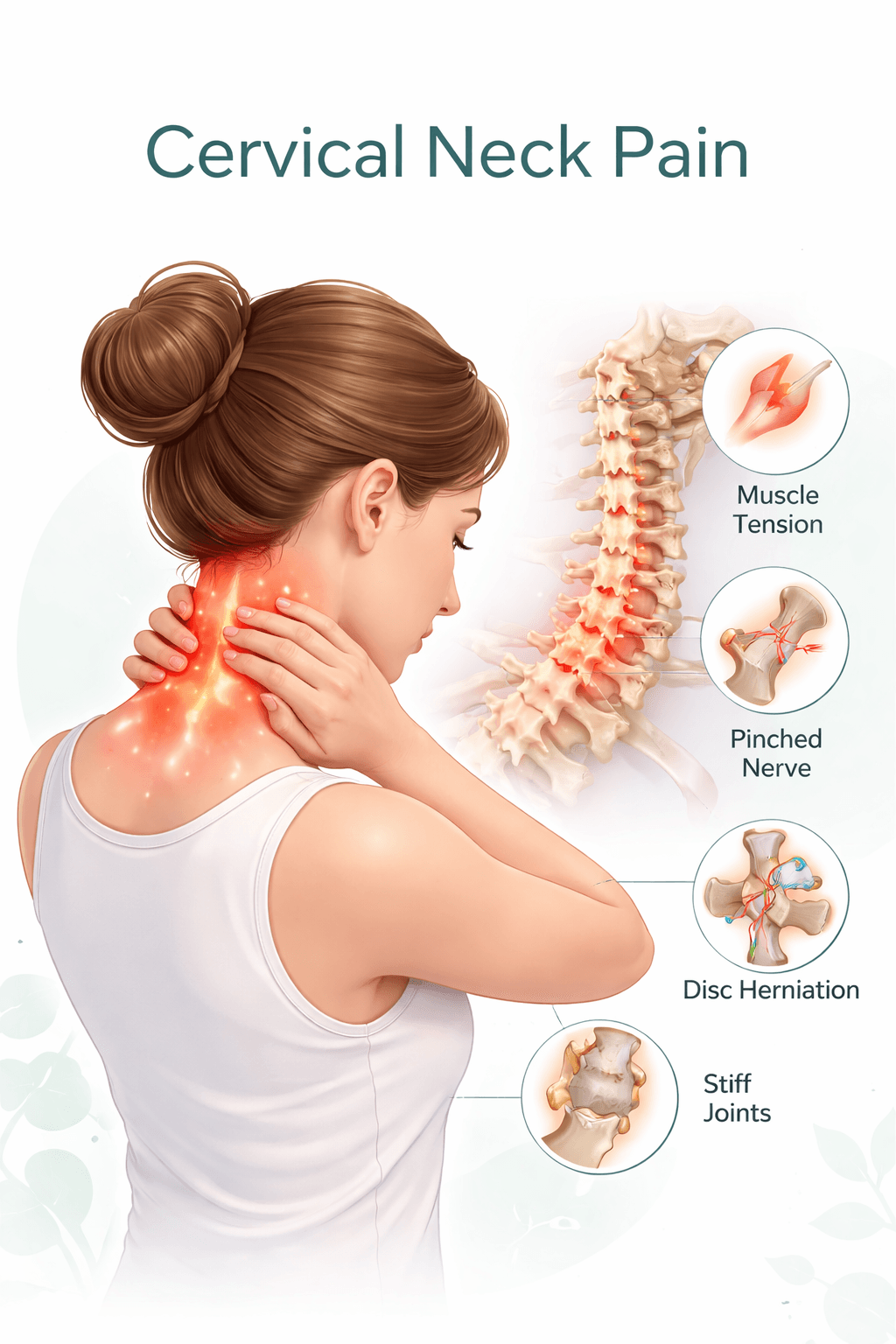
Neck pain Cervical is one of those health issues that looks manageable on the surface—just a stiff neck, a bit of soreness, maybe some tightness that'll go away on its own. But if you've ever spent days unable to turn your head without your entire torso following, you already know: what starts as 'just neck pain' can quickly become a daily obstacle affecting your work, sleep, mood, and ability to do simple things like check your blind spot while driving.
Some people blame their pillow. Others think it's stress, age, or posture. And then there's the advice—ice it, heat it, stretch it, don't move it, keep moving. If you're trying to actually fix this—not just mask it temporarily—the most important question is straightforward: What actually causes cervical pain, and what relief methods work fast without making things worse?
For immediate, localized relief that fits into your busy schedule, topical solutions like Reset's Emulsion offer a practical approach—working directly at the site of discomfort without the need for oral medication. But beyond quick relief, understanding the root causes and building sustainable habits is what truly makes the difference.
Cervical pain—also called neck pain—is one of the most common musculoskeletal complaints globally, and it's becoming more common as our lifestyles shift toward screens, sedentary work, and forward-head postures.
Your cervical spine consists of seven vertebrae (C1 through C7) that support your head and allow for an incredible range of motion. Your head weighs about 5–6 kg in a neutral position. But for every inch your head moves forward—like when you're looking down at your phone—the effective weight on your cervical spine increases dramatically. At a 15-degree tilt, your neck is already supporting about 12 kg. At 45 degrees, it's the equivalent of 20+ kg. That's not sustainable.
Over time, this forward-head posture creates muscle imbalances, ligament strain, reduced blood flow, nerve compression, and chronic tension. Add in poor sleep positions, stress-related muscle guarding, weak upper back muscles, and natural aging of spinal discs, and you've got persistent discomfort.
That's the key insight: cervical pain is rarely about one 'bad movement.' It's usually the result of repetitive strain, poor mechanics, and accumulated stress over weeks, months, or years. If you're dealing with neck pain right now, you're not fragile. You're dealing with a mechanical issue that has mechanical solutions.
What 'Cervical Pain' Really Means
When people say 'cervical pain' or 'neck pain,' they might be describing muscle strain from overuse, cervical strain injury to ligaments, facet joint irritation, disc-related pain from herniated or degenerative discs, nerve compression causing radiating pain or tingling, postural neck pain from forward-head posture, or cervical spondylisis from age-related wear and tear.
This guide focuses on non-traumatic neck pain—the kind that builds up over time from lifestyle, posture, stress, and daily habits. This is the most common type and responds well to smart home care and consistent habits.
If your neck pain is accompanied by severe headaches, loss of balance, fever, significant arm weakness, or bowel/bladder changes, see a healthcare professional immediately. These symptoms could indicate a more serious condition requiring medical evaluation.
Posture and desk work: Hours spent looking at screens create forward-head posture, rounded shoulders, and chronic tension. The muscles at the back of your neck are constantly working to hold your head up against gravity, leading to fatigue, trigger points, and stiffness. Working from home has amplified this issue, with many people using laptops on dining tables or couches without proper ergonomic support.
Stress and tension: Stress doesn't just live in your mind—it lives in your muscles. The upper trapezius, levator scapulae, and suboccipital muscles are common stress-holding areas. When you're stressed, these muscles unconsciously tighten, creating a self-perpetuating cycle. Chronic tension creates trigger points, restricts blood flow, and leads to persistent soreness. Many people don't realize they're holding tension in their neck until they consciously try to relax these muscles.
Sleep position: Sleeping on your stomach forces your neck into rotation for hours at a time, straining the cervical joints and muscles. Using pillows that are too high or too flat creates awkward angles that stress the cervical spine throughout the night. Waking up with neck pain is often a pillow problem, not a spine problem. Your pillow should support the natural curve of your neck while keeping your head aligned with your spine.
Age-related changes: Cervical spondylisis (arthritis of the neck) and disc degeneration are normal parts of aging, though they don't always cause pain. In your 30s and 40s, spinal discs begin losing hydration and height, muscle recovery slows, and postural habits from earlier years create cumulative damage. What used to be 'just a stiff neck' that resolved in a day or two now becomes a 2-week ordeal if you're not proactive. This is why prevention and consistent self-care become increasingly important as you age.
There is no single 'magic bullet,' but a multi-layered approach works best: movement, posture correction, stress reduction, and targeted relief. The key is addressing both the symptoms and the underlying causes simultaneously.
Ice vs Heat: Use ice in the first 48–72 hours after acute injury to reduce inflammation and numb sharp pain. Apply ice for 15-20 minutes at a time, with at least an hour between applications. Use heat for chronic stiffness to increase blood flow, relax tight muscles, and reduce stiffness. Heat is particularly effective before stretching or exercise. Some people find alternating ice and heat (contrast therapy) provides the best relief, especially for chronic conditions.
Topical Pain Relief: Products like Reset's Emulsion offer localized relief without oral medication. Topical formulations work directly at the site of discomfort, providing a cooling or warming sensation that helps ease muscle tension and reduce pain signals. For busy lifestyles, topical relief is practical: it's fast, mess-free, portable, and can be reapplied as needed throughout the day. Unlike oral pain relievers, topical solutions minimize systemic side effects while delivering targeted relief exactly where you need it.
Gentle Stretching: Simple neck stretches provide immediate relief—chin tucks (gently pulling chin back to lengthen the back of the neck), side neck stretches (bringing ear toward shoulder and holding for 20-30 seconds), neck rotations (slow, controlled turns without forcing), and shoulder rolls (releasing upper trapezius tension). The best time to stretch is after applying heat or during a warm shower when muscles are more pliable. Never force a stretch—work within a comfortable range and gradually increase as your flexibility improves.
Posture Correction: Sometimes the fastest relief comes from simply changing position. If you've been hunched over a laptop for hours, standing up, rolling your shoulders back, and taking a short walk can provide instant relief. Set reminders to check your posture throughout the day. Your ears should align with your shoulders, and your shoulders should be relaxed—not hunched forward or elevated. This simple awareness can prevent much of the tension that leads to cervical pain.
Is It Safe to Move Your Neck When It Hurts?
For most non-traumatic neck pain, gentle movement is better than complete rest. Complete immobilization can lead to muscle weakening, increased stiffness, reduced range of motion, delayed recovery, and even fear of movement that can prolong the problem.
Gentle movement promotes blood flow and healing, maintains mobility, reduces muscle guarding, and speeds recovery. The key is 'gentle.' You're not trying to force your neck through painful ranges or 'push through the pain.' You're exploring movement, maintaining what you can, and gradually expanding your range as pain decreases. Think of it as coaxing your neck back to normal function, not forcing it.
If movement causes sharp, shooting pain or radiating symptoms down your arm, stop and consult a healthcare professional. But if movement causes mild discomfort that doesn't worsen, continuing gentle mobility exercises is usually the best approach.
You don't need anything fancy to support neck recovery, but a few simple additions can accelerate healing and prevent recurrence:
Magnesium: Supports muscle relaxation and reduces tension. Can be taken as a supplement (200-400mg daily) or absorbed through Epsom salt baths. Magnesium deficiency is common and can contribute to muscle cramping and tension.
Hydration: Dehydrated muscles cramp more easily. Dehydrated spinal discs lose height and flexibility. Aim for 8-10 glasses of water daily, more if you're active or in a hot climate. Proper hydration is one of the simplest yet most overlooked factors in musculoskeletal health.
Quality sleep: This is when your body does most of its repair work. Prioritize 7–8 hours in a supportive sleep position. Consider a cervical pillow that supports the natural curve of your neck. Poor sleep not only prevents healing but also increases pain sensitivity and stress, creating a vicious cycle.
Stress management: Meditation, breath work, journaling, or even just walking in nature can reduce the muscular tension that perpetuates neck pain. When you're stressed, your body unconsciously tenses up—particularly in the neck and shoulders. Managing stress isn't just good for your mental health; it's essential for physical recovery.
If you want a practical, smart plan without confusion:
Start with gentle daily movement. Even 5 minutes of neck stretches and posture resets makes a difference. Consistency is more important than duration.
Address your workspace ergonomics. Raise your screen to eye level, use a supportive chair, take breaks every hour. Small adjustments can prevent hours of pain.
Use topical relief as needed. Products like Emulsion provide fast, localized comfort without pills. Keep it handy for flare-ups or preventive use before activities that typically trigger pain.
Strengthen your upper back and neck. Weak postural muscles are often the root cause of chronic pain. Exercises like rows, reverse flies, and isometric neck strengthening can prevent future episodes.
Prioritize sleep position and pillow support. You spend 7–8 hours in this position—make it count. Side or back sleeping with proper pillow support prevents overnight strain.
Stay consistent. Neck pain rewards daily habits, not occasional heroic efforts. Five minutes every day beats an hour once a week.
When cervical pain relief becomes a daily practice—not a desperate scramble when pain peaks—you stop asking 'Is this working?' and start noticing the quiet improvements: less morning stiffness, easier head turns, fewer tension headaches, and a body that moves with more freedom.
What's the fastest way to relieve cervical pain at home?
For most people, a combination of gentle movement, heat application, and topical relief works fastest. Apply a warm compress for 15–20 minutes, do slow neck stretches, and use a topical product like Emulsion for localized comfort. Avoid staying in one position too long.
Should I use ice or heat for neck pain?
Use ice in the first 48–72 hours after an acute injury to reduce inflammation. Use heat for chronic stiffness or muscle tension. If you're unsure, try both and see which provides more relief—there's no universal rule.
Can poor posture really cause chronic neck pain?
Yes. Forward-head posture increases the load on your cervical spine significantly. Over time, this creates muscle imbalances, joint stress, and chronic tension. Correcting posture—especially during screen time—is one of the most effective long-term solutions for cervical pain.
When should I see a doctor for neck pain?
See a healthcare professional if you experience severe pain that doesn't improve after 2 weeks, radiating pain or numbness in your arms, loss of coordination or balance, fever or unexplained weight loss, or pain after a significant injury or fall.
Is it safe to exercise with neck pain?
Gentle movement is usually safe and beneficial. Avoid high-impact activities, heavy overhead lifting, or movements that cause sharp pain. Focus on range-of-motion exercises, postural strengthening, and low-impact activities like walking. If you're unsure, consult a physical therapist.
How long does it take for cervical pain to heal?
Acute neck pain (from sleeping wrong or minor strain) often improves within 3–7 days with proper care. Chronic neck pain may take several weeks to months of consistent movement, posture correction, and lifestyle changes to resolve. The key is patience and consistency.
Remember—whether you're dealing with your first bout of neck pain or managing chronic stiffness, smart relief is about simplicity, consistency, and addressing root causes alongside symptom management. Your health and wellness routine should support your life, not complicate it.
Cervical pain is common and lifestyle-driven: Most neck pain develops gradually due to poor posture, prolonged screen time, stress, and improper sleep positions rather than a single injury.
Forward-head posture increases spinal load: Tilting your head forward significantly increases pressure on the cervical spine, leading to muscle strain, stiffness, and long-term discomfort.
It’s usually mechanical, not fragile: Non-traumatic cervical pain is often caused by repetitive strain and muscle imbalances — and it responds well to movement and habit correction.
Fast relief requires a layered approach: Gentle stretching, posture correction, heat or ice therapy, and topical relief can work together to ease discomfort quickly.
Consistency prevents recurrence: Daily mobility exercises, ergonomic adjustments, stress management, hydration, and proper sleep support long-term cervical spine health.
Share this article:
An easy to apply potent formula with roll-on massager
₹549.00
₹449.00
An eco-conscious and powerful solution designed for sustainable living and effective pain management

₹999.00
₹899.00
A 2X more powerful formula for enhanced relief.

₹799.00
₹649.00
A value pack for natural pain relief with a harmonious blend of natural herbs.

₹419.00
₹379.00