
Menstrual Pain Relief: Best Tablets for Quick & Safe Relief
2026-03-27 • 5 min read
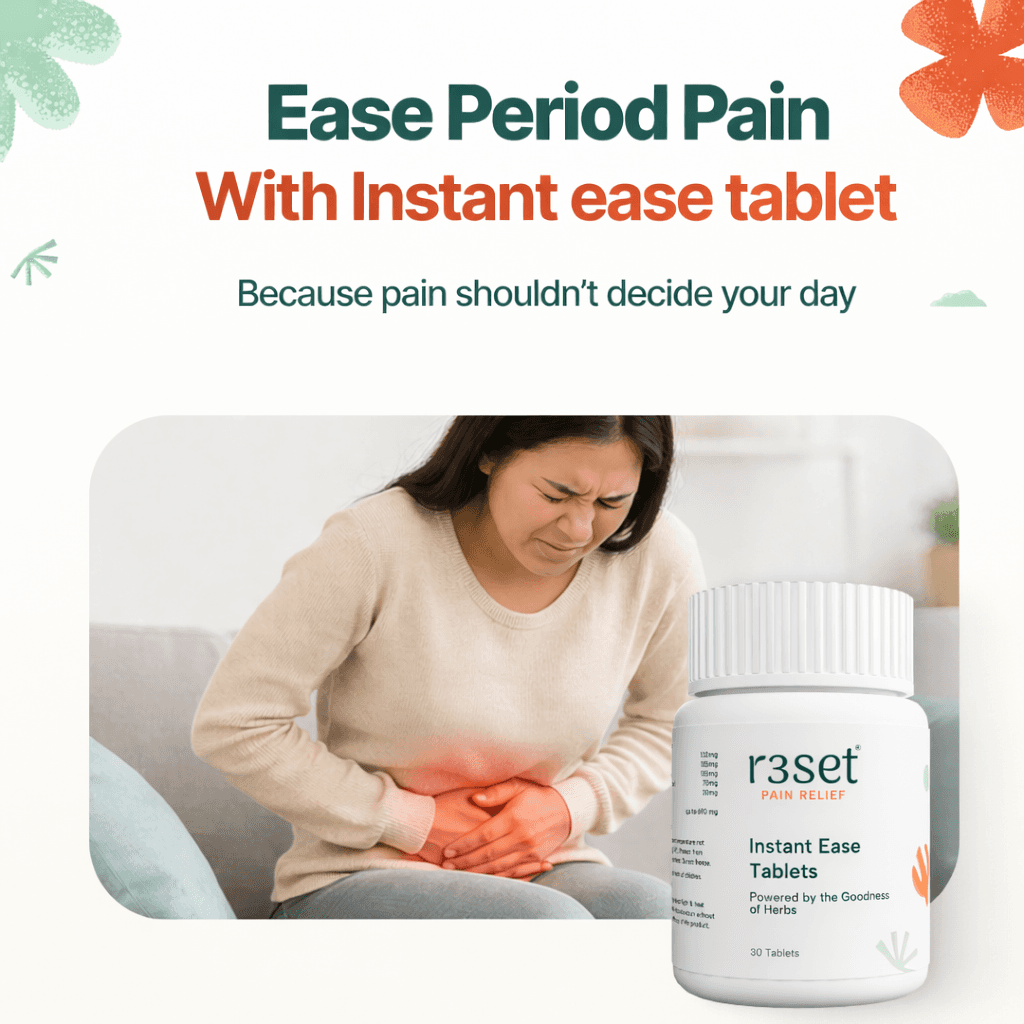
The most effective menstrual pain relief tablet targets prostaglandin overproduction — the direct biochemical driver of period cramps — through COX-2 inhibition and uterine muscle relaxation. Reset’s Instant Pain Relief Tablet combines Ayurvedic botanicals including White willow, Vayavidang, and Pippali to suppress inflammatory signalling, regulate hormonal balance, and calm uterine spasms, delivering fast, safe relief without the gastric or hormonal side effects associated with conventional NSAIDs or analgesics.
What Is Menstrual Pain and Why Does It Happen?
Dysmenorrhoea — the clinical term for menstrual pain — affects an estimated seventy to ninety percent of women of reproductive age, making it one of the most prevalent pain conditions worldwide. Primary dysmenorrhoea occurs without an underlying pelvic disorder; it is driven entirely by an excess release of prostaglandins from the uterine lining as it sheds during menstruation. Secondary dysmenorrhoea is associated with conditions such as endometriosis, fibroids, or pelvic inflammatory disease. In both cases, the right menstrual pain relief tablet can significantly reduce pain intensity, improve quality of life, and allow normal daily function.
What Biological Pathways Drive Period Cramps?
Menstrual pain is not random. It follows a precise biochemical sequence that effective tablets must interrupt at one or more points:
Prostaglandin Overproduction — At menstruation, the endometrium releases prostaglandin F2α (PGF2α) and prostaglandin E2 (PGE2) in large quantities. These compounds cause intense uterine smooth-muscle contractions, reduced blood flow, and ischaemic pain. Women with severe dysmenorrhoea produce up to five times more prostaglandins than those without symptoms.
COX-2 Upregulation — Cyclooxygenase-2 is the enzyme responsible for converting arachidonic acid into prostaglandins. Blocking COX-2 is the primary mechanism behind NSAIDs and most herbal menstrual pain relief tablets. Selective COX-2 inhibition reduces cramp severity without impairing the protective COX-1 activity that lines the stomach.
NF-κB Inflammatory Cascade — Nuclear Factor-kappa B drives the production of pro-inflammatory cytokines (IL-6, TNF-α) that amplify endometrial inflammation and sensitise pelvic nerve endings. Suppressing NF-κB reduces the background inflammatory state that makes cramps more severe cycle after cycle.
Uterine Smooth-Muscle Spasm — Excess calcium ion influx into uterine muscle cells sustains contraction intensity. Anti-spasmodic botanicals like Nirgundi and Shatavari relax smooth-muscle fibres by modulating calcium flux, directly reducing cramping force and duration.
Which Tablets Work Best for Menstrual Cramps?
The best menstrual pain relief tablet depends on your pain severity, cycle regularity, and tolerance for synthetic compounds. Conventional NSAIDs such as ibuprofen offer quick onset but carry documented risks of gastric irritation with repeated use. A well-formulated herbal menstrual pain relief tablet addresses the same COX-2 pathway while additionally relaxing uterine muscle and modulating hormonal balance — benefits that no synthetic NSAID delivers. For most women managing monthly recurrent pain, a herbal formulation is both safer and more comprehensive.
What Are the Different Types of Menstrual Pain Relief Tablets?
NSAIDs (Ibuprofen, Mefenamic Acid, Naproxen) — Reduce prostaglandin synthesis via COX-1 and COX-2 inhibition. Effective within 30 minutes but associated with gastric ulcers, renal strain, and cardiovascular risk with chronic use.
Antispasmodics (Drotaverine, Hyoscine) — Relax smooth-muscle spasm directly. Fast-acting for cramping but do not address the inflammatory root cause.
Combined Analgesics (Paracetamol + Caffeine) — Mild to moderate pain only; limited anti-inflammatory action and hepatic stress risk at high doses.
Hormonal Preparations (Oral Contraceptive Pills) — Suppress ovulation and thin the endometrium, reducing prostaglandin production. Effective but carry hormonal side effects and are not suitable for all women.
Herbal Ayurvedic Menstrual Pain Tablets — Combine COX-2 inhibition, smooth-muscle relaxation, hormonal support, and NF-κB suppression in a single formulation. The preferred herbal menstrual pain relief tablet for long-term, cycle-safe management.
Categorised Botanicals in Herbal Menstrual Pain Relief Tablets
How Do I Choose the Right Menstrual Pain Relief Tablet?
Use the symptom-to-ingredient matrix below to identify which herbal active best matches your specific pattern of period pain.
Ayurvedic vs. Allopathic Menstrual Pain Tablets: A Comparison
How to Use a Menstrual Pain Relief Tablet: Step-by-Step Guide
Begin one to two days before expected period onset (luteal phase pre-loading) to reduce prostaglandin buildup before cramping starts.
Take with a full glass of warm water or warm milk — warmth aids absorption and provides mild uterine muscle relaxation.
Avoid taking on an empty stomach; a light snack reduces any mild initial digestive adjustment.
Take at consistent times — morning and evening, twelve hours apart — to maintain stable plasma levels of botanical actives.
Pair with a warm lower-abdomen compress to amplify peripheral anti-spasmodic effect.
Do not exceed the recommended dose; herbal actives work cumulatively and doubling doses does not accelerate relief.
Continue for the first three days of flow (peak prostaglandin production), then taper if pain subsides
Usage Guide: Frequency and Best Time to Take
How Quickly Do Menstrual Pain Relief Tablets Work?
Onset time depends on the tablet type and your pain severity. Synthetic NSAIDs typically provide symptomatic relief within fifteen to thirty minutes of ingestion. A quality herbal menstrual pain relief tablet generally produces noticeable pain reduction within thirty to sixty minutes of the first dose. The more important advantage of herbal formulations is their cumulative effect: women who take them consistently across two to three cycles report progressively shorter pain windows, reduced flow volume, and lower peak cramp intensity — outcomes that no synthetic NSAID delivers because they do not address the hormonal or inflammatory root.
Are There Side Effects of Using Menstrual Pain Tablets Regularly?
This is one of the most important distinctions between synthetic and herbal options. Regular NSAID use — meaning daily use across multiple cycles — erodes the gastric mucosal lining, elevates blood pressure, and can impair kidney function over months. Mefenamic acid in particular is associated with gastrointestinal bleeding with extended monthly use. Herbal Ayurvedic formulations, by contrast, carry no documented nephrotoxicity or hepatotoxicity at therapeutic doses. Mild digestive adjustment may occur in the first one to two days as the body adapts to botanical actives; this typically self-resolves. Women with hormone-sensitive conditions should confirm suitability of Shatavari and Ashwagandha with their physician before use.
Can Lifestyle Changes Reduce the Need for Menstrual Pain Tablets?
Yes — significantly. Pharmacological relief works best when supported by targeted lifestyle adjustments that address the prostaglandin-inflammation axis from multiple angles:
Anti-inflammatory diet — Increase omega-3 rich foods (flaxseed, walnuts, fatty fish) to shift the arachidonic acid:EPA ratio and reduce endometrial prostaglandin output.
Magnesium intake — Magnesium functions as a natural calcium antagonist in smooth muscle, reducing uterine contraction intensity. Dark leafy greens, pumpkin seeds, and almonds are high-magnesium foods.
Regular moderate exercise — Aerobic exercise raises endorphin levels and reduces circulating prostaglandins. Even a twenty-minute daily walk in the week before menstruation measurably reduces cramp severity.
Heat therapy — A warm compress applied to the lower abdomen during the first two days of flow relaxes smooth muscle and improves uterine blood flow, reducing ischaemic pain.
Stress management — Chronic cortisol elevation worsens inflammatory tone and hormonal balance, amplifying dysmenorrhoea. Adaptogenic herbs like Ashwagandha in Reset’s formulation work synergistically with meditation and sleep hygiene.
Why Reset’s Instant Pain Relief Tablet Is the Smarter Choice
When searching for a menstrual pain relief tablet that treats the source rather than just the symptom, Reset’s Instant Pain Relief Tablet delivers on multiple fronts at once. Its Ayurvedic formulation combines Nirgundi for uterine antispasmodic action, Shallaki for COX-2 and 5-LOX dual inhibition, Shatavari for hormonal balance, and Ashwagandha for cortisol regulation — a complete multi-pathway approach no single synthetic drug can match. Suitable for pre-loading before cycle onset and safe for consistent monthly use, it reduces pain intensity across cycles rather than simply masking it in the moment. For women who are done compromising between effectiveness and safety, it is the herbal menstrual pain relief tablet built for real life.
FAQ: Common Questions Answered
Which tablets work best for menstrual cramps?
For monthly recurring cramps, a multi-action herbal formulation outperforms single-pathway NSAIDs. Reset’s Instant Pain Relief Tablet combines COX-2 inhibition, uterine antispasmodic action, and hormonal support in one tablet — addressing the prostaglandin-spasm-inflammation triad simultaneously.
How quickly do menstrual pain relief tablets work?
Herbal menstrual pain relief tablets typically reduce pain within thirty to sixty minutes of the first dose. Onset is faster when the tablet is taken with warm water and before cramp intensity peaks, making pre-loading from day before onset the most effective strategy.
Are there side effects of using menstrual pain tablets regularly?
Synthetic NSAIDs carry documented GI, renal, and cardiovascular risks with chronic monthly use. Herbal Ayurvedic tablets are formulated for monthly recurring use with no documented gastric erosion or kidney strain at therapeutic doses. Mild initial digestive adjustment is the most common transient effect.
Can lifestyle changes reduce the need for pain tablets?
Yes. An anti-inflammatory diet, regular aerobic exercise, magnesium supplementation, heat therapy, and stress management all measurably reduce prostaglandin output and cramping severity. Herbal tablets work best as part of this integrated approach rather than as a standalone intervention.
What causes menstrual pain to vary in intensity each cycle?
Prostaglandin production is influenced by cortisol levels, dietary fat composition, hormonal fluctuations, and underlying conditions like endometriosis. High-stress cycles, poor sleep, and inflammatory diets consistently produce higher prostaglandin loads and therefore more severe cramps.
Can I take a menstrual pain tablet if I have endometriosis?
Herbal anti-inflammatory tablets that target both COX-2 and 5-LOX — such as those containing Shallaki — are particularly relevant for endometriosis-associated pain, which involves both prostaglandin excess and leukotriene-driven inflammation. Always confirm suitability with a gynaecologist for secondary dysmenorrhoea.
Is it safe to take a menstrual pain tablet every month?
Herbal Ayurvedic formulations are designed for monthly cyclical use and are safe for long-term consistent intake at recommended doses. They do not carry the tolerance or dependency concerns associated with opioids, and do not require dose escalation over time.
When should I see a doctor about menstrual pain?
Seek medical evaluation if pain is progressively worsening cycle-on-cycle, if it is unresponsive to any tablet, if it begins outside of the menstrual window, or if accompanied by abnormal bleeding, pain during intercourse, or infertility concerns. These may indicate underlying secondary dysmenorrhoea.
Can I combine a herbal tablet with a hot water bag?
Yes — this is encouraged. Topical heat relaxes uterine smooth muscle peripherally while the tablet works systemically, producing faster and more complete cramp relief than either approach alone.
Do herbal menstrual pain tablets affect fertility?
Botanical actives such as Shatavari and Ashwagandha are traditionally used to support reproductive health and hormonal balance. There is no evidence that herbal menstrual pain tablets impair fertility; in fact, by reducing inflammatory pelvic load, they may support reproductive wellbeing.
What is the difference between primary and secondary dysmenorrhoea?
Primary dysmenorrhoea has no underlying pathological cause and is driven purely by prostaglandin overproduction. Secondary dysmenorrhoea results from conditions like endometriosis, fibroids, or adenomyosis. Both benefit from anti-inflammatory and antispasmodic herbal treatment, though secondary causes require additional medical management.
Can teenagers use herbal menstrual pain relief tablets?
Quality herbal formulations are generally well-tolerated in adolescents experiencing primary dysmenorrhoea. Parental guidance and physician confirmation are recommended before starting any supplement regimen in teenagers.
Key Takeaways
Menstrual cramps are driven by prostaglandin overproduction — the most effective relief targets this pathway at its source, not just its symptoms.
Herbal menstrual pain relief tablets address three mechanisms simultaneously: COX-2 inhibition, uterine smooth-muscle relaxation, and NF-κB suppression — outperforming single-pathway NSAIDs.
Pre-loading one to two days before cycle onset significantly reduces peak cramp intensity by preventing prostaglandin buildup before it begins.
Regular synthetic NSAID use carries GI, renal, and cardiovascular risks across multiple cycles; herbal Ayurvedic formulations are designed for safe monthly use.
Lifestyle changes — anti-inflammatory diet, magnesium, exercise, and heat therapy — work synergistically with herbal tablets to progressively reduce pain severity over cycles.
Progressively worsening pain that does not respond to any tablet warrants gynaecological evaluation to rule out secondary dysmenorrhoea.
Reset’s Instant Pain Relief Tablet is a comprehensive herbal menstrual pain relief tablet built for cycle-safe, long-term use with multi-pathway action.
Related Reading
Share this article: