Best Kettlebell Workouts for Full-Body Strength and Fat Loss
2026-05-29 • 4 min
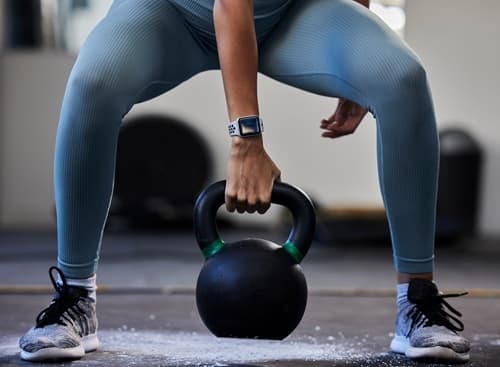
Most gym equipment does one thing or the other. Treadmills burn calories. Resistance machines isolate specific muscles. But kettlebells combine strength, cardio, and mobility into a single tool to challenge your entire body.
Whether your goal is losing weight, building functional capacity, or just getting fitter without a complicated routine, kettlebell training covers all of it. A single bell and enough floor space are all you need to get a serious workout done.
This guide breaks down the best kettlebell exercises, how to structure your training for fat loss, what beginners should start with, and how women can use kettlebell workouts to build a strong, lean physique without unnecessary bulk.
What Makes Kettlebell Training So Effective
The design of a kettlebell is what sets it apart. Unlike a dumbbell, the weight sits below the handle rather than in line with it. That offset center of gravity changes how your body has to work to control the movement. Your stabilizer muscles — the smaller muscles around your joints that rarely get much attention from machines — are constantly engaged throughout every rep.
Kettlebell workouts are built around movements, not muscles. The cardiovascular component is another major factor. Because most kettlebell exercises involve continuous, ballistic movement rather than slow and controlled lifting, your heart rate climbs quickly and stays elevated. A 20-minute kettlebell session can match the calorie burn of a much longer conventional workout. For people with limited time, efficiency matters a lot.
The Best Kettlebell Exercises for Building Strength
With Kettlebells, you load the right movement patterns with enough resistance to challenge your muscles. These are the best kettlebell exercises for building full-body strength — movements that have stood the test of time across every level of training experience.
The Kettlebell Swing
If there's one movement that defines kettlebell training, it's the swing. Hinge at the hips, drive them forward explosively, and let the bell arc up to chest height before pulling it back down and repeating. The power comes entirely from your hips — not your arms, not your lower back. Done correctly, swings develop explosive hip stamina, build the posterior chain, and burn calories faster than almost any other single exercise.
Start with a weight that lets you maintain a flat back and strong hip hinge throughout. From here is everything — a rounded lower back under load is how injuries happen. Once the movement feels second nature, progressively heavier bells will produce serious gain over time.
The Goblet Squat
Hold a kettlebell by the horns at chest height and squat deep, keeping your chest tall and your knees tracking over your toes. The goblet squat is one of the best kettlebell exercises for leg and glute development, and the front-loaded position forces your core to work hard to keep you upright throughout the movement.
It's also one of the most beginner-friendly squatting patterns — the counterbalance the kettlebell provides naturally helps people find better depth and posture than they'd manage with a barbell. Add pauses at the bottom to build stamina through the full range of motion.
The Turkish Get-Up
Lie on your back holding a kettlebell overhead with one arm, then stand up — keeping the bell locked out above you the entire time. Then reverse the sequence back to the floor. That's one rep. The Turkish get-up is one of the most demanding kettlebell exercises, training shoulder stability, hip mobility, core muscles, and total-body coordination in a single slow movement.
Start with a light weight or even no weight at all until the movement pattern is clear. Two or three reps per side is enough — this isn't a high-rep exercise. The quality of each rep is the whole point.
The Kettlebell Clean and Press
Pull the kettlebell from a swing position up into the rack position at your shoulder, then press it overhead. This two-part movement builds serious upper body and shoulder strength while also demanding core stability and hip power on the clean portion. It's one of the most complete upper-body kettlebell exercises and pairs well with swings and squats in a full-body circuit.
Kettlebell Workouts Designed for Fat Loss
Losing weight comes down to creating a calorie deficit — burning more than you consume. You build and preserve muscle while burning a high number of calories, which is the most effective combination for changing body composition.
Moving quickly from one exercise to the next with minimal rest keeps your heart rate elevated and maximizes the metabolic demand of the session. A simple but highly effective circuit looks like this: 10 swings, 8 goblet squats, 6 clean and presses per side, 8 rows per side — rest 60 seconds, repeat four times. That's a 20-minute workout that hits every major muscle group and burns calories well above what a typical steady-state cardio session would produce.
EMOM workouts — every minute on the minute — are another excellent format for kettlebell fat loss training. Set a timer, perform a set number of reps at the start of each minute, and rest for whatever time remains before the next minute begins. As your fitness improves, you complete the reps faster and get more rest.
Kettlebell Workouts for Women
One of the most persistent myths in fitness is that lifting weights makes women bulky. It doesn't — and kettlebell workouts for women are a perfect example of why. Women have significantly lower testosterone levels than men, which means heavy training produces a lean, defined physique rather than excessive muscle mass.
Kettlebell workouts for women work especially well because they train the areas most women want to develop — glutes, legs, shoulders, and core — while burning fat effectively through the cardiovascular demand of the movements. Goblet squats shape the legs and improve hip mobility. Presses develop shoulder definition. The Turkish get-up engages the core in a way that crunches never could.
Weight selection is different for women than for men, but the principles are identical. Most women find that starting with an 8kg or 12kg bell is appropriate for learning the fundamental movements, with progression to heavier weights as the technique develops. Swings and deadlifts can typically handle heavier loads than pressing movements — program accordingly.
Pair that with adequate protein intake and enough sleep, and the outcomes over eight to twelve weeks will be impressive.
A Beginner-Friendly Kettlebell Routine to Start With
The best kettlebell workouts for beginners are short, focused, and built around mastering a small number of movements before adding complexity. Trying to learn six exercises at once leads to poor form across all of them. Starting with two or three and getting them right produces far better results — and far fewer injuries.
A practical beginner routine uses three movements: the two-handed swing, the goblet squat, and the single-arm row. These three kettlebell exercises cover the posterior chain, legs, and upper back — essentially the full body — and all three are relatively forgiving to learn. Spend the first two weeks doing three sets of ten reps of each, three times a week, with two minutes of rest between sets. The goal at this stage is movement quality, not intensity.
By week three, reduce the rest to 90 seconds and add a fourth set.
Video yourself from the side occasionally to check your hip hinge position during swings and your torso angle during rows. Most beginners don't realize how much their form deviates from what they think it looks like until they see it on camera. A few minutes of self-review every couple of weeks accelerates learning significantly.
How Often to Train and What a Weekly Plan Looks Like
Two to four kettlebell workouts per week is the right range for most people. Two sessions maintain fitness and produce slow, steady progress. Three sessions are the sweet spot for most people, balancing fat loss and agility. Four sessions work well for those with more training experience who have built up tolerance to the volume.
Rest days between sessions matter. Kettlebell training is demanding on the posterior chain, core, and grip. Going hard five or six days a week without adequate recovery leads to accumulated fatigue, which degrades performance. Training hard three days and recovering well on the other four consistently outperforms training every day at reduced intensity.
A simple two-day weekly plan might look like this: Monday is a strength-focused session built around swings, squats, and get-ups. Friday is a mixed session combining heavier work with a finisher circuit of high-rep swings. Each session runs 30 to 45 minutes — long enough to be effective, short enough to stay consistent.
Consistency over weeks and months is what produces the visible changes. Two solid sessions a week done consistently for six months will outperform an ambitious five-day plan that falls apart after three weeks. Build a schedule that fits your life, not one that requires your life to revolve around it.
Training at Home With a Kettlebell — Everything You Need to Know
Kettlebell workouts are one of the best options for home training, full stop. A single bell takes up almost no space, costs less than a month's gym membership, and opens up hundreds of exercise variations. For most people, one or two bells of different weights cover everything they need for a complete training program.
The space requirement is minimal. You need enough room to swing a bell overhead without hitting anything — a roughly 2x2 meter area is sufficient for most exercises. A rubber mat under the bell protects your floor and gives you a non-slip surface to work on. That's all the setup required.
Home kettlebell workouts also remove a lot of the friction that stops people from training consistently. No commute, no waiting for equipment, no self-consciousness about being a beginner in a busy gym. You can train in 25 minutes during a lunch break or after the kids are in bed. That accessibility, more than anything else, is what keeps people going long enough to see real outcomes.
For weight selection at home, women typically start well with an 8kg bell and progress to 12kg and 16kg over time. Men usually start with 16kg and move toward 24kg as the primary working weight. Having two bells — a lighter one for pressing and a heavier one for swings and deadlifts — gives you more programming flexibility as your training develops.
Recovery and Pain Management for Kettlebell Trainees
Kettlebell training is demanding on the body in ways that differ from conventional gym work. The ballistic nature of swings and cleans places a significant load on the lower back, hips, and shoulders. Done with good form, this load is manageable and productive. But accumulated fatigue, poor technique on tired reps, or jumping up in weight too quickly can lead to soreness and tightness that slows you down if you don't manage it.
Sleep and nutrition are the foundation of recovery. These two factors alone account for the majority of how well you recover between sessions.
The shoulders and neck are another area that takes on load during pressing, get-ups, and cleans. Tightness in the upper trapezius and neck is common after sessions that include a lot of overhead work. Neck pain relief gel with cooling or anti-inflammatory ingredients applied after training helps manage this localised discomfort and prevents it from building into something that disrupts your next session. A few minutes of gentle neck mobility work alongside topical treatment covers most of the post-training tightness that upper-body kettlebell work produces.
Mobility work before and after sessions also pays dividends. Five minutes of hip circles, thoracic rotations, and shoulder circles before training prepares your joints for the demands ahead. Five minutes of the same after training — when your muscles are warm and pliable — improves flexibility and reduces next-day stiffness more effectively than stretching cold ever could.
Conclusion
Kettlebell workouts have earned their reputation. Few training tools deliver the combination of strength, fat loss, and cardiovascular fitness that a well-programmed kettlebell routine produces — and they do it with minimal equipment, minimal space, and sessions that fit into a real schedule.
Whether you're a beginner working through your first swing, a woman building a stronger, leaner physique, or someone looking to cut fat without living in a gym, kettlebell exercises give you a direct path to the results you're after. The movements are learnable. The progression is clear.
Start with two or three sessions a week, master the foundational movements, and build from there. Support your training with good recovery habits — sleep, nutrition, and targeted pain management when your body needs it. Give it eight weeks of genuine consistency.
The best kettlebell workouts are the ones you actually do. Pick up the bell and get started.
Frequently Asked Questions
What are the best kettlebell workouts for beginners?
The best kettlebell workouts for beginners focus on three foundational movements: the two-handed swing, the goblet squat, and the single-arm row.
Can kettlebell workouts help with full-body strength?
Absolutely. Kettlebell workouts are built around compound movements that train multiple muscle groups simultaneously. The swing develops the entire posterior chain.
Are kettlebell exercises effective for fat loss?
Yes — kettlebell exercises are among the most effective tools for fat loss available. Three sessions per week alongside a reasonable diet produce consistent, visible results for most people within six to eight weeks.
How often should you do kettlebell workouts?
Two to four sessions per week is the right range for most people. Three sessions per week are an ideal frequency for progress and recovery. Beginners should start with two sessions per week.
What are the best kettlebell exercises for weight loss?
These are the ones that demand the most from your body in the shortest time. The swing tops the list — it's explosive, posterior-chain dominant, and burns calories at a remarkable rate. The clean and press and the snatch are close behind. Goblet squats and lunges add significant leg and glute demand.
Can kettlebell workouts be done at home?
Yes, and they're one of the best home workout options available. A single kettlebell, a small amount of floor space, and a rubber mat are all you need for a complete training program. Most kettlebell exercises require no more than a 2x2 meter area. The lack of commute and equipment wait times removes the friction that disrupts consistency, which is often the deciding factor in whether someone sticks with a training program long enough to see the desired results.
Are kettlebell workouts suitable for women?
Kettlebell workouts for women are highly effective and well-suited to goals like fat loss, glute and leg development, and functional ability.
Share this article: