International Yoga Day 2026
2026-06-21 • 5 min read
Every June 21, the world pauses — and breathes. International Yoga Day 2026 arrives on a Sunday, the summer solstice, marking the 12th global celebration of a practice that is over 5,000 years old and still accelerating. This year's theme, Yoga for Healthy Ageing, declared by the United Nations, is not a gentle suggestion. It is a direct answer to one of the most urgent health questions of our time: how do we grow older without falling apart?
Whether you are stepping onto the mat for the very first time or returning after years away, this edition of International Yoga Day is asking something specific of you — not flexibility, not performance, not perfection. Just presence. And a little willingness to move.
This guide covers the importance of yoga through evidence-based science, walks you through essential yoga asanas and the eight-limbed path of ashtanga yoga, shares yoga day quotes worth carrying forward, and hands you a practical ritual to start — today.
The 2026 Theme — “Yoga for Healthy Ageing” and Why It Matters Right Now
The United Nations officially proclaimed June 21 as the International Day of Yoga in December 2014, following a proposal by Prime Minister Narendra Modi at the 69th UN General Assembly. By 2026, the day is observed in over 190 countries. This year's theme was chosen with intention.
"Yoga can be a valuable practice for healthy aging because it supports many of the abilities that help people stay active, independent, and engaged as they grow older." — United Nations, Official IDY 2026 Statement
The theme aligns with the WHO Decade of Healthy Ageing (2021–2030), which targets independence, fall prevention, and quality of life for an aging global population. India's Ministry of Ayush has also launched the Yoga 365 initiative this year, encouraging daily practice throughout the calendar — not just on June 21. The national flagship event is being held in Kolkata at Red Road, underscoring yoga's living relevance in modern India.
For Reset, this theme resonates deeply. Holistic recovery is not only about bouncing back from injury — it is about building a body that resists breakdown in the first place. Yoga, practiced consistently, is one of the most accessible tools available.
The Importance of Yoga — What the Science Actually Says
The importance of yoga is no longer a matter of belief. It is documented across physiology, neuroscience, and public health literature. A regular yoga practice engages the musculoskeletal, nervous, endocrine, and cardiovascular systems simultaneously — which is precisely why it produces results that isolated gym work often cannot.
Table 1: Yoga Benefits by Body System
For those managing chronic pain, stiffness after long work hours, or post-workout soreness, yoga bridges the gap between recovery and preparation. It is both a cool-down from the day and a warm-up for life.
Yoga Asanas Every Practitioner Should Know in 2026
Yoga asanas are far more than physical postures. Each pose is a conversation between breath, structure, and attention. The asanas below have been selected for their alignment with this year's theme — building balance, mobility, and resilience across every decade of life.
Table 2: Yoga Poses by Goal
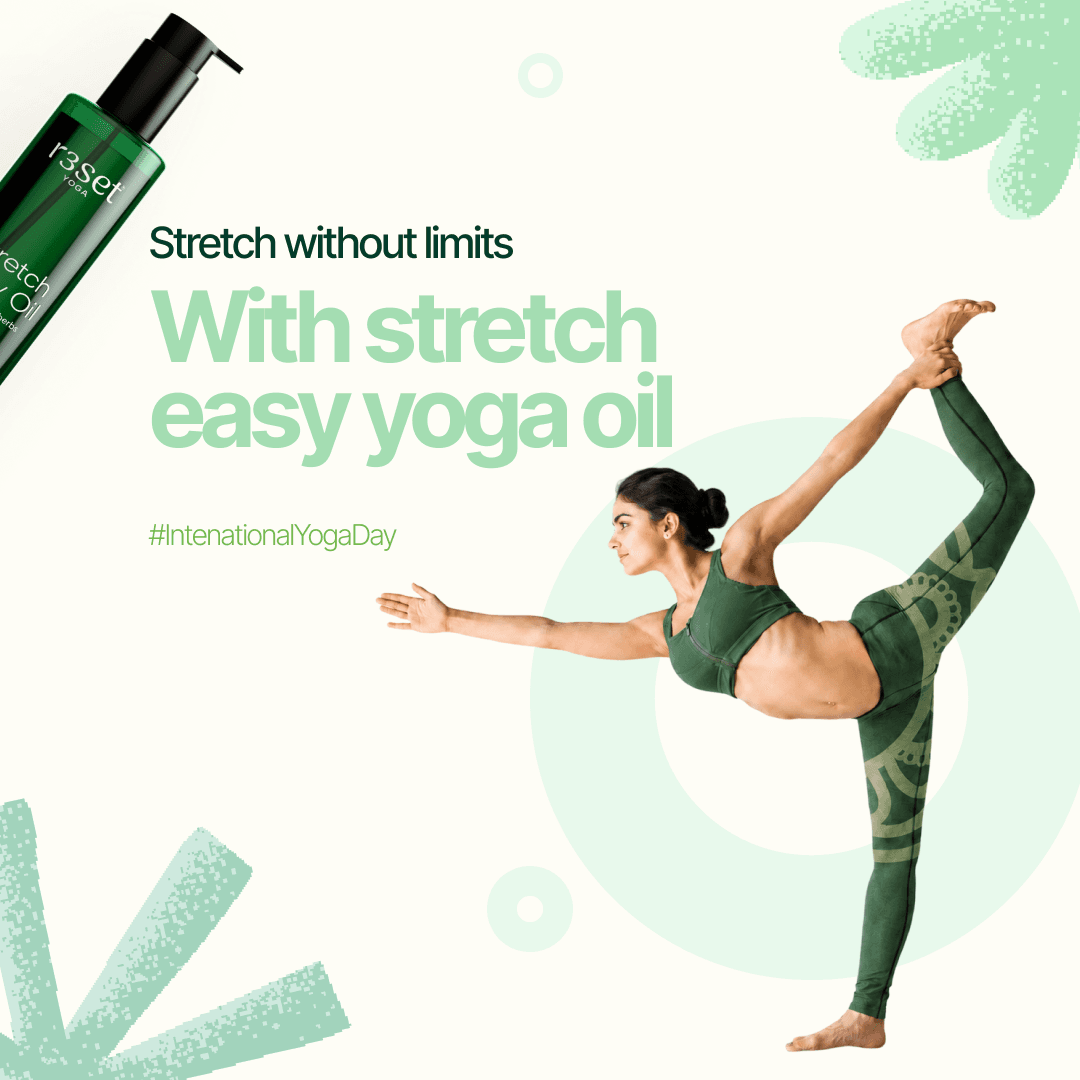
If your joints feel resistant before practice — a common experience, especially in the morning — consider applying Reset Stretch Easy Oil beforehand. Formulated with Wintergreen, Menthol, Eucalyptus (Neelgiri), Nirgundi, Camphor, Boswellia (Shallaki), and Ajmoda, it works with the body's natural warmth to ease stiffness and support deeper, more comfortable movement. Allow 10–15 minutes for absorption before stepping onto your mat.
And if neck tension or cervical stiffness is holding your practice back, this detailed guide on neck pain yoga covers targeted asanas with step-by-step relief instructions worth bookmarking.
What Is Ashtanga Yoga — The Eight-Limbed Path Explained
The term ashtanga comes from Sanskrit: ashta (eight) and anga (limb). It refers to the comprehensive philosophical framework outlined by the sage Patanjali in the Yoga Sutras — often cited as the foundational text of classical yoga. In the modern studio context, Ashtanga Yoga also describes the dynamic, breath-synchronized practice systematized by Sri K. Pattabhi Jois in Mysore, built around the Primary Series (Yoga Chikitsa — yoga therapy).
The two are related. Pattabhi Jois translated Patanjali’s philosophical framework into a daily physical practice that integrates breath (pranayama), gaze (drishti), and energy locks (bandhas) with structured posture sequences. The result is a practice that trains body, breath, and mind in a single session.
Table 3: The Eight Limbs of Ashtanga Yoga
What makes ashtanga yoga particularly relevant for the 2026 theme of Healthy Ageing is that Patanjali’s first two limbs — Yama and Niyama — are entirely lifestyle-based. They ask you to examine how you live, rest, eat, and relate to others. A body is only as recovered as the life surrounding it.
Build Your Yoga Day Ritual — A Practical Morning Flow
The best yoga ritual is the one you will actually do. Here is a grounded, achievable framework for June 21 — and every morning that follows.
Before You Begin
Wake the body gently. Avoid cold surfaces and sudden movement on waking. Massage Reset Stretch Easy Oil into your shoulders, lower back, and ankles — the areas most likely to resist morning movement. The Ayurvedic herbs in the formula (Nirgundi for inflammation, Shallaki/Boswellia for joint support, Wintergreen for circulation) prepare tissues for the range of motion yoga demands. More on the science behind stretch oils here: Reset's Stretch Oil Guide.
Your Mat, Your Sanctuary
Unroll your Reset Yoga Mat — its 6mm anti-slip suede surface provides joint cushioning for poses like Bridge and Warrior II, and the grip keeps alignment honest during transitions. Practice indoors near a window if possible; morning light has a measurable effect on circadian regulation and mood.
The Flow (25–30 Minutes)
•3 minutes: Seated breathwork — equal-ratio breathing (4 counts in, 4 counts out)
•5 minutes: Gentle Cat-Cow transitions with spinal awareness
•8 minutes: Sun Salutation A × 4 rounds, steady pace
•8 minutes: Warrior II → Triangle → Seated Forward Fold
•3 minutes: Bridge Pose, held 30 seconds × 3
•3 minutes: Savasana — do not skip this
Hydration
The breath-based exertion of yoga — even gentle flows — creates meaningful fluid loss. Fill your Reset ZenSip the night before with water infused with lemon or cucumber. Its double-wall vacuum insulation keeps water cold through your entire practice, and the 750ml capacity covers what most practitioners need without mid-session refills. Hydration directly affects joint lubrication and muscle elasticity — both critical on the mat.
Carry It Forward
If you plan to take your practice outside — to a park, rooftop, or community event — the Reset Tote Bag fits your mat, ZenSip, and oil without fuss. Eco-conscious and spacious, it turns your kit into a single, carry-everywhere wellness kit.
For full-body recovery after an intense session, explore the broader benefits of therapeutic massage in this guide on massage oil benefits, types, and how to use them effectively, or learn about the best body massage oils for women for post-practice restoration.
Yoga Quotes to Carry Into June 21 and Beyond
Words from masters carry weight on the mat and off it. The right yoga quote can reset your intention in the middle of a hard pose — or a hard week.
Key Takeaways
•International Yoga Day 2026 falls on June 21 — the summer solstice — with the UN/WHO-backed theme 'Yoga for Healthy Ageing.'
•The importance of yoga extends beyond physical fitness: it engages cardiovascular, musculoskeletal, nervous, and endocrine systems simultaneously.
•Core yoga asanas (Warrior II, Tadasana, Bridge Pose, Savasana) build strength, balance, and recovery capacity across every age group.
•Ashtanga yoga encompasses both a physical practice (Pattabhi Jois's Primary Series) and Patanjali’s eight-limbed philosophical path — the two are complementary, not separate.
•Pre-practice preparation with Reset Stretch Easy Oil (Wintergreen, Nirgundi, Boswellia, Camphor, Eucalyptus, Menthol, Ajmoda) supports deeper, more comfortable movement.
•A consistent 25–30 minute morning flow — with the right tools — is more valuable than an occasional 90-minute class.
•Staying hydrated during yoga is non-negotiable: joint lubrication and muscle elasticity both depend on adequate fluid intake.
•Yoga Day is a catalyst, not a ceiling. The Ministry of Ayush's Yoga 365 initiative reflects the truth: the benefits compound daily.
Frequently Asked Questions
Who is the father of yoga?
The sage Patanjali is widely regarded as the father of yoga. He compiled and systematized yoga philosophy in the Yoga Sutras — a foundational text of approximately 196 aphorisms — around 400 CE. However, yoga's roots in the Indus Valley Civilization predate this by several thousand years. In the modern era, figures like T. Krishnamacharya and his students B.K.S. Iyengar, Pattabhi Jois, and Indra Devi are credited with shaping yoga as it is practiced globally today.
What is the duration of a yoga break?
A yoga break does not need to be long to be effective. Research on workplace wellness and movement breaks suggests that even 5–10 minutes of targeted stretching, breathwork, or a short flow can meaningfully reduce musculoskeletal tension and cognitive fatigue. For sustained benefit, a 20–30 minute daily practice is the recommended baseline. On International Yoga Day, many corporate events offer structured 30–60 minute breaks, but the ideal duration is the one that fits your schedule consistently.
What is Ashtanga yoga?
Ashtanga yoga refers to two related things. First, the eight-limbed philosophical framework (ashta = eight, anga = limb) outlined by Patanjali in the Yoga Sutras, covering ethics, posture, breath, and meditation. Second, the dynamic physical practice developed by Sri K. Pattabhi Jois in Mysore — a breath-synchronized sequence of postures (the Primary, Intermediate, and Advanced Series) that builds heat, strength, and stamina progressively. Ashtanga Vinyasa is more physically demanding than most styles and is suitable for practitioners seeking structure and progression.
When is Yoga Day?
International Yoga Day is observed every year on June 21 — the summer solstice, the longest day of the year in the Northern Hemisphere. It was declared by the United Nations on December 11, 2014, and first celebrated globally on June 21, 2015. In 2026, it falls on a Sunday.
How to clean a yoga mat?
To clean your Reset Yoga Mat (or any anti-slip suede mat): wipe the surface with a damp cloth after each session to remove sweat and oils. For a deeper clean, mix water with a small amount of mild soap and gently wipe, then rinse with a clean damp cloth. Always air-dry flat or hanging — never roll the mat while damp, as this can cause mildew and surface degradation. Avoid harsh chemical cleaners or machine washing, which can break down the suede texture and reduce grip.
Continue Your Wellness Journey with Reset:
•Neck Pain & Yoga:
Neck Pain Yoga — Causes, Best Poses & Step-by-Step Relief
•Understanding Stretch Oils:
The Complete Reset Stretch Oil Guide
•Post-Practice Recovery:
Massage Oils — Benefits, Types & How to Use Them
•Seasonal Body Care:
Best Body Oil for Winter Skin & Joint Recovery
Medical & Wellness Disclaimer
This article is intended for informational and educational purposes only. It does not constitute medical advice. Always consult a qualified healthcare professional before starting any new exercise program, especially if you have pre-existing health conditions, injuries, or are pregnant. Reset products are wellness supplements and topical aids, not substitutes for medical treatment. Individual results may vary.
Share this article: