
Cervical Vertebrae – symptoms, causes, home care and fastest relief methods
2026-02-17 • 4 min
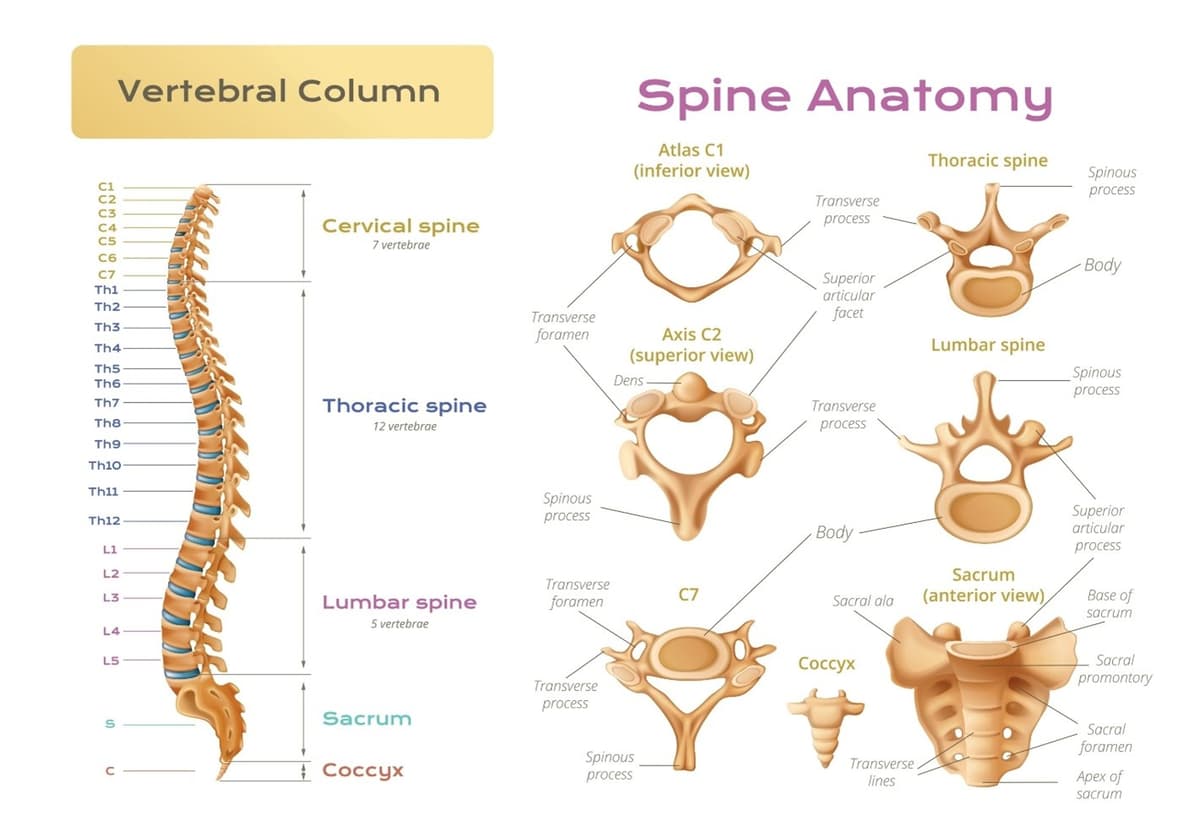
You carry the weight of the world on your shoulders—metaphorically, perhaps, but physically, you carry the weight of your head on just seven small bones. These are your cervical vertebrae (C1–C7).
In the modern high-performance lifestyle, these vertebrae are under siege. Whether you are glued to a laptop, scrolling through emails on your phone, or carrying the tension of a boardroom negotiation, your cervical spine absorbs the impact. The result? Stiffness, tension headaches, and that nagging ache that won't go away.
But here is the truth: Your neck pain is not a life sentence; it is a signal. It is your body telling you that the structural integrity of your cervical spine is compromised.
In this guide, we will move beyond basic "neck pain" advice. We will explore the anatomy of the cervical vertebrae, why they fail under modern stress, and the Reset Protocol to realign, recover, and strengthen your spine for the long game.
Anatomy 101: Meeting Your C-Spine
To fix the pain, you must understand the machinery.
Shutterstock
The cervical spine is an engineering marvel. It consists of the first seven vertebrae of the spinal column, starting from the base of the skull.
C1 (Atlas): The ring-shaped bone that supports the skull. It allows you to nod "yes."
C2 (Axis): Features a pivot point that allows C1 to rotate. It allows you to shake your head "no."
C3–C7: These lower vertebrae support the neck's load and are the most common sites for pain and degradation due to poor posture.
Between each of these vertebrae lie intervertebral discs—shock absorbers that prevent bone-on-bone friction. When we talk about "cervical strain," we are usually talking about the compression of these discs and the tightening of the muscles trying to stabilize them.
The Core Problem: Why Your Cervical Vertebrae Are Suffering
Evolution designed your cervical vertebrae to support the head in a neutral position (ears aligned with shoulders). It did not design them for the digital age.
1. The "Text Neck" Epidemic
The average human head weighs about 10–12 lbs. However, physics dictates that for every inch you tilt your head forward, the load on your cervical vertebrae doubles.
0 degrees: 10-12 lbs of pressure.
15 degrees: 27 lbs of pressure.
60 degrees (looking at a phone): 60 lbs of pressure.
Imagine carrying an 8-year-old child around your neck for 4 hours a day. That is what your C-spine endures when you doom-scroll.
2. High-Cortisol Tension
Stress is not just mental; it is physical. When you are stressed, your "fight or flight" response activates, causing the trapezius and levator scapulae muscles to contract. These muscles attach directly to the cervical vertebrae. Chronic stress creates a "vice-grip" effect on the spine, compressing the C-vertebrae even when you are lying down.
3. Dehydration (The Silent Crusher)
Your intervertebral discs are roughly 80% water. When you are dehydrated—common in high-performers who run on coffee and adrenaline—these discs lose height. Less disc height means less shock absorption, leading to grinding and stiffness in the vertebrae.
Symptoms: Is It Muscle or Vertebrae?
How do you know if your pain is just a stiff muscle or a structural issue with the vertebrae?
Muscular Strain (Soft Tissue)
Sensation: A dull, aching pain or "tightness."
Location: Spread across the back of the neck and shoulders.
Trigger: Feels worse after a long day at the desk but improves with heat and massage.
Vertebral/Disc Issues (Structural)
Sensation: Sharp, shooting, or electric pain.
Radiculopathy: Pain or tingling that travels down the arm into the fingers.
Mobility: Significant inability to turn the head to one side.
Headaches: "Cervicogenic headaches" that start at the base of the skull and wrap around to the eye.
If you experience numbness or loss of strength in your hands, this is a Red Flag for nerve compression. Consult a specialist immediately.
The "Reset Protocol": Fast Relief & Structural Correction
At Reset, we don't believe in masking pain; we believe in addressing the root cause. Here is how to offload your cervical vertebrae and accelerate recovery.
Phase 1: Immediate Relief (The "Un-Lock")
When the neck is locked up, you need to lower the neurological threat level before you can stretch.
1. Topical Modulation with Reset Emulsion
Pain is chemical. Inflammation is chemical. To break the cycle, apply the Reset Emulsion along the sides of the neck (sternocleidomastoid) and the upper traps.
The Science: The emulsion provides a transdermal delivery of cooling and soothing actives that distract the nervous system (Gate Control Theory) and reduce local inflammation.
The Method: Don't just rub it in. Use the slip from the emulsion to gently pinch and pull the skin away from the neck muscles. This "skin rolling" technique increases blood flow to the vertebrae without aggressively manipulating the spine.
2. The Supine Decompression
Gravity is the enemy of an inflamed spine.
Lie on your back on the floor (not a soft bed).
Roll a small towel and place it under the curve of your neck (C-curve).
Lay there for 10 minutes. This allows the muscles to turn off and the vertebrae to gently settle back into their natural lordotic curve.
Phase 2: Mobility & Hydration
1. The "Chin Tuck" (Retraction)
This is the antidote to Text Neck.
Sit upright.
Pull your chin straight back like you are making a "double chin" (do not look down).
Hold for 3 seconds. Release.
Repeat 10 times. This aligns the C-vertebrae and strengthens the deep neck flexors.
2. Spinal Hydration
Your discs rehydrate mostly at night. To support this:
Drink 500ml of water with electrolytes 90 minutes before bed.
Ensure your pillow keeps your neck neutral—not propped up too high, which flexes the C-spine all night.
Phase 3: Ergonomic Architecture
You cannot heal your neck if you spend 8 hours a day destroying it.
Monitor Height: The top 1/3 of your screen should be at eye level. If you are looking down, you are hurting your vertebrae.
Elbow Support: Your arms weigh heavily on your neck muscles. Use armrests so your shoulders don't have to shrug to hold them up.
Long-Term Maintenance: Building a "Reset" Spine
Once the acute pain is gone, the goal is resilience.
1. Strengthen the "Guy Wires"
Your cervical vertebrae are like a radio tower supported by guy wires (muscles). If the wires are weak, the tower sways. Incorporate Isometrics into your routine:
Place your hand on your forehead. Push your head into your hand without moving the neck. Hold for 5 seconds.
Repeat on the back of the head and both sides.
This builds stability without the wear and tear of heavy movement.
2. The Stress-Breath Connection
As mentioned, stress tightens the neck. Incorporate Box Breathing (Inhale 4, Hold 4, Exhale 4, Hold 4) into your workday. This lowers cortisol, forcing the trapezius muscles to relax and taking the pressure off your C1 and C2 vertebrae.
When to Seek Professional Help
While lifestyle changes resolve 90% of cervical issues, mechanical failures need experts. Seek help if:
Pain persists despite 2 weeks of rest and ergonomic correction.
You experience dizziness or vertigo when turning your head.
You notice a loss of fine motor skills (dropping keys, trouble buttoning shirts).
FAQ: Common Questions About Cervical Vertebrae
Q: What is the most common cause of cervical vertebrae pain?
A: In 2026, the leading cause is Postural Kyphosis (slouching) and "Text Neck." Prolonged forward head posture places excessive load on the C5 and C6 vertebrae, leading to premature degeneration and chronic muscle strain.
Q: Can a pillow cause cervical vertebrae pain?
A: Absolutely. A pillow that is too high forces the neck into flexion (chin to chest), while a pillow that is too flat offers no support for the natural C-curve. Side sleepers need a thicker pillow to fill the gap between the ear and shoulder; back sleepers need a thinner, contoured pillow.
Q: How do I know if I have a slipped disc in my neck?
A: A slipped (herniated) disc often presents as sharp, shooting pain that travels down the arm, rather than just local neck pain. You may feel "pins and needles" in specific fingers. An MRI is required for a definitive diagnosis.
Q: Does cracking my neck help my cervical vertebrae?
A: It provides temporary relief by releasing gas bubbles (cavitation) and endorphins, but habitual self-cracking can overstretch ligaments, leading to instability (hypermobility). It is safer to use gentle stretching or see a chiropractor for controlled adjustments.
Key Takeaways
Respect the Load: Your head weighs 12lbs, but looking down at a phone turns that into 60lbs of pressure on your spine. Raise your screens to eye level to instantly offload your cervical vertebrae.
Hydrate Your Discs: Your spinal discs are shock absorbers that depend on water. Chronic dehydration leads to compression and stiffness. specialized hydration is critical for spinal health.
Targeted Topical Relief: Don't power through the pain. Use Reset Emulsion to massage the sternocleidomastoid and trapezius muscles, reducing the tension that pulls on your vertebrae.
The 30-Minute Rule: Reset your posture every 30 minutes. A simple "Chin Tuck" or standing up resets the load distribution and prevents the creep effect (permanent tissue deformation) in the neck ligaments.
Share this article: