
The Science of Pairing Biceps and Triceps Workouts: Why Muscle Sequencing Matters
2026-08-25 • 5 min
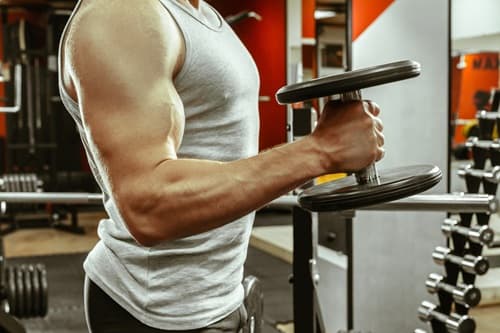
Walk into almost any gym, and you’ll see familiar exercises like bicep curls and tricep pushdowns, with plenty of attention given to how much weight is being lifted. But one important aspect of training often gets overlooked: the order in which these exercises are performed. The order in which you train your arm muscles can affect fatigue, muscle performance, and the ability to keep the form correct during the training session.
Biceps and triceps are cooperative muscles. As the biceps shorten, the triceps lengthen and vice versa. This natural relationship is one reason why a well-designed biceps and triceps workout may be an effective way to develop stronger, more balanced arms. It is necessary to understand how these muscles function collectively and the exercises that should be performed initially.
Biceps: Function and Movement
Biceps brachii is a two-headed muscle that is located at the front of the upper arm. People who want to know what biceps meaning in Hindi can say “बाइसेप्स.” This term is sometimes called biseps, but the correct spelling is “biceps.”
The biceps is made up of the long head and the short head. The long head bicep exercises include incline dumbbell curls. These types of exercises focus on the outer head of the biceps. The short head bicep exercises include preacher curls and wide-grip curls. These types of exercises emphasise the inner head of the biceps. Both heads function together during most bicep curls; hence, neither can be isolated completely.
Primary Movements
Elbow Flexion: Bend the arm at the elbow joint such that the forearm is moved towards the shoulder.
Forearm Supination: Turn the forearm such that the palm faces anteriorly or superiorly.
Shoulder Support: Weakly lifts the arm forward and stabilises the shoulder head.
Triceps: Function and Movement
The triceps brachii is a large, three-headed muscle located at the back of the upper arm. It consists of the long head, lateral head and medial head. It is mainly used for extending the elbow joint. The long head of the triceps also extends the shoulder and helps to stabilise the shoulder joint.
Primary Movements
Lateral Head: Located in the arm area and helps with lower elbow joint movement.
External Head: Located outside the arm area, this part of the muscle is important for arm movement and contributes to the arm's strength and bulk.
Long Head: Originates from the scapula, inserts at the elbow joint, and assists in moving the shoulder joint and in extending the arm.
The Science Behind Biceps-Triceps Pairing
Pairing a biceps and triceps workout is a natural combination because these two muscle groups work in opposition. Alternating between them can help you exercise efficiently while giving each muscle group some time to recover.
Why Biceps and Triceps Pair Well
The biceps and triceps are known as an antagonistic muscle pair. In basic terms, they perform opposing actions. An elbow curl requires considerable effort from the biceps to bend the elbow.
The triceps do the opposite of the biceps in a triceps extension. This makes them easy to work on together. One muscle group is working on an exercise, and the other set is not working the same primary exercise.
A biceps and triceps workout can be combined, allowing you to alternate exercises and maintain a high training density throughout the workout.
Opposing Muscle Training
Antagonist training often uses paired exercises. For example, you might perform a set of dumbbell curls followed by a set of triceps pushdowns. When these exercises are done with little rest between them, this method is often referred to as an antagonist superset.
The advantage is that the resting muscle does not completely recover while the other works. Your cardiovascular system, grip, stabilising muscles, and nervous system may still experience fatigue.
But alternating opposing movements may be more efficient than doing all the sets for one muscle.
Muscle Activation and Performance
Exercise position influences how muscles produce force.
The position of the shoulder and how the forearm moves during a curl may affect the action of the biceps. So, if you want to have a more well-rounded and balanced biceps workout, you can do different curl options.
For example, a routine could combine long head bicep exercises such as incline curls with short head bicep exercises such as preacher or wider-grip curls.
The same principle applies to the triceps. Overhead extensions place the long head in a lengthened position, while pushdowns and pressing variations provide different resistance profiles. There must be an objective behind variety. Changing workouts randomly makes it difficult to track progress.
Time Efficiency
One of the biggest advantages of pairing biceps and triceps is time efficiency. Instead of taking long breaks between a single exercise, you can do an alternating bicep-triceps workout while resting for 30 seconds in between.
Why Exercise Order Matters
The sequence of exercises can affect your strength, technique and the quality of your workout. When training muscles at the beginning of your session, it is likely that you will perform them with more intensity as fatigue is low. Knowing what to do first, second, and last to build the right exercise sequence can help you stay in good form.
The Impact of Fatigue
Your muscles generally perform best before they accumulate substantial fatigue.
Let’s say that after doing some heavy curls, you try doing some pulls. Fatigued biceps will act as a constraint even if your back muscles can still be used effectively. This applies to triceps before performing pressing exercises as well.
Fatigue is not necessarily something negative. It’s a natural part of resistance exercise. The goal is to manage it rather than allowing it to dictate poor technique.
Biceps or Triceps First?
There is no universal rule saying everyone must train biceps or triceps first. Your choice can determine the order.
If you want to develop your biceps, do a biceps workout when your energy levels and concentration are at their highest point. If your triceps need improvement, then it might be wise to do a triceps workout first.
For well-rounded development, change the order of workouts every time. The important point is to avoid consistently leaving your priority muscle until the end when fatigue is highest.
Compound or Isolation First?
In most conventional resistance-training programmes, technically demanding compound movements are performed before smaller isolation exercises. Compound exercises involve multiple joints and muscle groups. Some examples are the close-grip bench press and chin-ups.
Isolation exercises are those that target the muscles involved only in elbow flexion and extension, such as curls and triceps extensions. It is wise to start with compound exercises because they can be performed when energy levels are high.
Isolation exercises can then follow the compound exercises. There are exceptions, such as specialised pre-exhaustion exercises, but in general, beginners should learn the simpler compound-first approach.
Building a Biceps-Triceps Workout
These biceps and triceps exercises should be well-structured and match your training goals, experience level, and recovery capacity. Selecting appropriate exercises, matching exercise moves correctly, and controlling sets, reps, and rest can help make the sessions more productive. The important thing is to have a plan that allows you to have a good workout without increasing the exercise volume.
Choose Exercises Based on Your Goal
A good workout starts with a clear purpose.
For muscle growth, choose exercises that allow controlled repetitions, progressive overload, and sufficient weekly training volume.
For strength, heavier compound movements may receive greater emphasis.
For general fitness, a smaller number of exercises performed consistently may be enough.
Two or three well-selected biceps exercises and a similar number of triceps movements can provide plenty of stimulus in a dedicated arm session.
Pair Complementary Movements
An effective antagonist pairing could look like:
Chin-up or curl variation + close-grip press
Incline dumbbell curl + overhead triceps extension
Preacher curl + cable triceps pushdown
This structure gives both muscles direct attention while using different joint positions.
You could also include one movement from your preferred long head bicep exercises and another from your short head bicep exercises to create a more varied biceps session.
The objective is not to chase the biggest pump possible. It is to create a workout that you can perform consistently and progressively.
Set Reps, Sets, and Rest
Moderate repetition ranges tend to be appropriate for resistance exercises aimed at building muscles, as they offer an efficient way of creating resistance while retaining control.
In the case of a general workout, try to do 2 to 4 sets of each exercise.
Rest periods must be sufficient so that you can efficiently perform your next set. Compound movements usually need more recovery time than isolation movements.
For beginners, it’s unwise to copy a routine meant for advanced weightlifters. It is better to begin with less volume and then work up as necessary.
Common Training Mistakes
Poor Exercise Pairing
Doing hard moves back-to-back: Pairing heavy squats with heavy deadlifts drains your energy fast.
Fighting for grip or muscle groups: Doing pull-ups right before heavy rows tires your upper back too much.
Using Too Much Weight
Bad form: Lifting a weight that is too heavy causes your body to compensate for it.
High injury risk: The joints and the lower back end up getting the strain instead of the muscle group being trained.
Overusing Supersets
Reduced strength: More than a couple of sets may cause fatigue and make it difficult to build strength and maintain form.
Less focus on resistance: A quick pace of training can change resistance emphasis toward cardiovascular endurance.
Excessive Training Volume
Unnecessary workload: Performing more sets than needed can increase fatigue without providing additional benefits.
Poor recovery: Excessive volume may leave insufficient time for the muscles to recover before the next workout.
When to See a Doctor
See a doctor when experiencing the following symptoms:
Pain in arms, shoulders, and elbows.
Swelling in the affected part.
Weakness of the arms.
Difficulty bending and straightening the arms.
Leg Joint Pain should also not be ignored, especially if it affects your regular training.
Final Thoughts
Good training is not about increasing the volume of exercise or repeating the same things every day. Choose wisely based on what you can do, how well you recover and where you want to go. A gym quote might make you feel like a boss, but your body will ultimately tell you the truth. Refine your approach as you continue and let your body indicate what you need. With hard work, you should find that your gains come quicker as opposed to slow and steady. A smart, safe plan will keep you motivated and confident throughout your training.
FAQ
1. What is muscle sequencing in a biceps and triceps workout?
The concept of muscle sequencing refers to the order in which you train your biceps and triceps. This workout can influence your strength and muscular endurance.
2. Should you train biceps or triceps first for better muscle growth?
Train the muscle you want to prioritise when your energy levels are high. This helps you to give the muscle greater effort and focus while supporting a more balanced training approach.
3. Why is pairing biceps and triceps in the same workout effective?
Because the biceps and triceps are opposing muscle groups, you can train both in the same session, allowing one muscle group to rest while the other works.
4. How does exercise order affect arm strength and performance?
Exercises performed early in a workout usually allow you to train with greater strength and effort. As your muscles become fatigued from earlier exercises, you may be able to perform fewer repetitions.
5. Can muscle sequencing help prevent fatigue during arm workouts?
Yes. Alternate between biceps and triceps exercises to reduce fatigue in each muscle group and allow more recovery time between sets.
6. What are the most common mistakes when pairing biceps and triceps exercises?
Common mistakes include using more weight than necessary, using poor technique, performing too many sets, and always training the same muscle group first
Share this article: