
How to Use Moringa Powder: 8 Easy Ways to Add It to Your Diet
2026-10-21 • 4 min
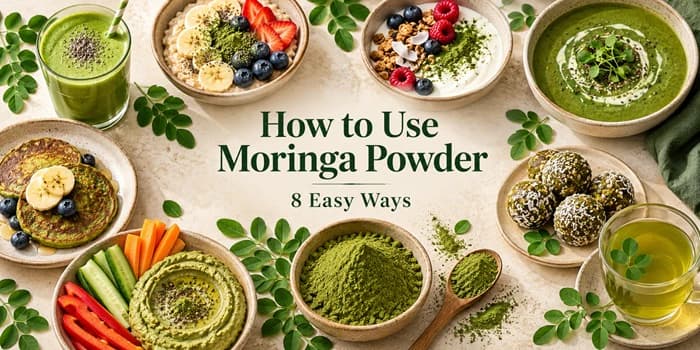
What if the easiest nutrition upgrade in your kitchen is a spoonful you never actually taste? That is the promise of moringa powder when you use it well. The trick is not a strict routine or a special recipe. It is matching the right amount with the right food, so the flavour fades into the background while the benefits stay. Let’s cover eight easy ways to do exactly that, plus how much to take and what to avoid.
What Is Moringa Powder?
It comes from Moringa oleifera, the drumstick tree that grows in backyards and farms across India. Its pods flavour sambar, and its leaves have long been cooked into everyday dishes. Ayurveda has valued the tree for generations as part of daily wellness.
Moringa leaves powder is what you get when those leaves are picked young, washed, dried gently, and ground fine. The moringa powder ingredients are that simple: just leaves, with nothing added. They hold vitamins, minerals, amino acids, and antioxidants, and drying them concentrates all of that into a spoonful-sized form.
The best moringa powder keeps its bright green colour and earthy smell because low-heat drying protects both. Many people lean towards organic moringa powder for the same reason, since the leaves are grown without synthetic pesticides.
In Indian kitchens, the appeal is simple. Fresh leaves are fiddly to strip from their stems, and they spoil quickly. Moringa leaves powder stays in the cupboard for months and goes into a dal or a smoothie.
Nutritional Value of Moringa Leaves
The moringa powder ingredients list may be short, but for something that weighs almost nothing, the leaf is remarkably dense:
Benefits of Moringa Leaf Powder
Moringa powder is made from dried moringa leaves and has long been part of traditional diets. Alongside a balanced diet and healthy lifestyle, it’s a simple way to add extra nutrition to your day.
1. Nutritional Support
Iron, calcium, magnesium, and vitamins help fill small nutritional gaps, especially in vegetarian diets, where some of these nutrients can be harder to get consistently. Iron gives energy and healthy blood, calcium and magnesium support bones and muscles, and the vitamins add general nutritional benefits. It doesn’t replace a multivitamin for women or men, but it works well as a food-based boost to your regular meals. Pair it with a vitamin C-rich food like lemon or amla, and your body can use the iron more easily.
2. Antioxidant Protection
Flavonoids, vitamin C, and vitamin E help your body handle everyday oxidative stress from pollution, sun, and processed food. They quietly look after your cells while you go about your day. All it takes is a teaspoon of moringa leaf powder stirred into something you already eat.
3. Blood Sugar Balance
Moringa has traditionally been used for blood sugar levels, and its fibre slows carbohydrate absorption. That can help you avoid sharp spikes and dips in energy after a meal. It works well stirred into dal, curd or a smoothie.
4. Heart Health
Potassium and magnesium support normal blood pressure, while antioxidants help look after your blood vessels. Combined with a diet rich in vegetables, whole grains and healthy fats, a small daily serving can be an easy addition to a heart-friendly routine.
5. Reduce Inflammation
Several plant compounds in the leaf are traditionally linked with calming low-grade inflammation, the kind that follows stress, poor sleep, and irregular meals. Just like Ashwagandha gummies benefit stress reduction, moringa leaf powder carries similar properties.
6. Immune and Digestive Wellness
Vitamin C and beta-carotene in organic moringa powder support your natural defences, which is helpful during seasonal changes when colds and low energy are common. Fibre keeps digestion moving and feeds helpful gut bacteria, so you may feel more comfortable after meals. Taking it with curd or buttermilk adds probiotics to the mix.
7. Skin and Hair Support
Vitamins A and E, iron, and protein all play a part in healthy skin and hair. Eating them regularly helps your skin look healthy, and your hair stay strong. Some people also stir moringa leaf powder into curd for a face pack. Do a patch test on your wrist first, and rinse off after ten minutes.
8 Easy Ways to Use Moringa Powder
Start with an idea that sounds like something you already eat. The best method is the one you will repeat, and a pinch is plenty at first. When choosing the best moringa powder, look for a bright green colour and a fresh, mild aroma.
Smoothies
This is the easiest way to begin. Blend a quarter to half a teaspoon of the powder with banana, mango, pineapple or berries and a cup of milk, curd, or a plant-based drink. The fruit softens the earthy taste, while spinach, cucumber, or a scoop of protein powder turn it into a great post-workout shake.”
Moringa Tea
Stir half a teaspoon of moringa powder into a cup of lukewarm water rather than boiling water, which can dull its delicate compounds. Add a few drops of lemon and a little honey, or a slice of ginger. If it clumps, a quick stir with a spoon fixes it. It makes a calm morning drink and a pleasant alternative to a second cup of chai.
Juice or Lemonade
Mix the powder into fresh nimbu pani with a pinch of black salt, or into orange, pineapple or coconut water. Tart and sweet flavours cover the grassy taste, and the drink turns a pretty jade green. Serve it chilled and drink it fresh.”
Yoghurt, Oats or Smoothie Bowls
Mix 1/8 teaspoon of moringa powder into plain dahi for a cucumber raita or a quick side bowl. Overnight oats and smoothie bowls work the same way, topped with nuts, seeds and fruit. Fermented dairy mellows the flavour and tends to be gentle on the stomach. A pinch stirred into chaas with roasted jeera and coriander also tastes natural beside lunch.
Soups, Dals and Curries
Add the moringa powder near the end of cooking, in the last five to ten minutes, or even after switching off the heat. Toor, moong or masoor dal, sambar, rasam, tomato soup and mixed vegetable curries all take half a teaspoon per pot comfortably. A pinch also works over khichdi, lemon rice or curd rice. Tadka spices do an excellent job of covering the green flavour.
Rotis, Parathas or Dosa Batter
Knead a small spoon into a cup of atta, or fold a pinch into dosa, idli or pancake batter. It sits happily beside ajwain, cumin and green chillies. You will barely notice it, though your plate will look a little greener.
Baking and Snacks
Moringa powder works well in muffins, tea cakes, pancakes, savoury crackers, bread, and energy balls or laddoos made with oats, dates and nuts. Mix about one teaspoon of the powder into the dry ingredients first, so the colour spreads evenly and there are no green clumps. Chocolate and nut-based recipes hide the flavour best, and this amount gives a mild green tint without overpowering the taste.
Dips, Dressings and Chutneys
Stir a pinch into curd dips, salad dressings, mint raita or a fresh coriander-mint chutney for an easy nutrient boost. It also blends well into dry chutney powders like idli podi or peanut, coconut, and sesame mixes, so every serving adds a little goodness. Cold preparations suit it especially well, since heat won’t dull its colour or flavour.
A small pack lasts a long time, so the moringa powder price per serving stays very reasonable.
How Much Moringa Powder Should You Take Daily?
Start low and build up slowly. In the first week, try a quarter to half a teaspoon a day, split across one or two meals or drinks. From the second week, you can move towards half to one teaspoon if you enjoy the taste and feel comfortable.
Many brands print a serving of about one teaspoon (2 g) on the label, so always follow the directions on yours.
Spreading it matters too. Small amounts in two or three places suit your digestion better than one big spoon, and eating it with food is gentler than taking it on an empty stomach. Morning or lunch works for most people, but consistency matters more than the exact hour.
Small portions also mean a pouch lasts a long time. When you compare moringa powder price across brands, work out the cost per serving rather than the cost per pack, and a good pouch is often costly but it will be beneficial for wellbeing.
How to Choose and Store Moringa Powder
Buying moringa leaves powder doesn’t need to feel like a gamble. A few simple tips will help you pick a good one and keep it fresh at home. If you are unsure where to start, organic moringa powder from a brand that shares its lab reports is a safe first pick.
1. Start with the label
Turn the pack around and read the moringa powder ingredients. You should see just one thing: moringa leaves. If you spot sugar, fillers, or artificial flavours, put it back. A short list is an honest list.
2. Trust your eyes and nose
Good powder is a bright, lively green with a soft, earthy smell. If it looks dull or brownish, it has probably been sitting around for a while. Take a second to check the manufacturing and expiry dates before you buy.
3. Find out where it comes from
A good brand won’t dodge this question. Look for one that tells you plainly where the leaves are grown and how each batch is tested. Organic moringa powder is a solid pick, especially if the brand shares independent lab reports showing it’s free from contaminants. If you can’t find that information anywhere on the label or website, that’s worth noticing.
4. Think about value, not just price
A higher price tag doesn’t automatically mean you’ve found the best moringa powder. Line up a few brands and compare what you actually get: how pure it is, what certifications it carries, whether it’s lab-tested, and what the moringa powder price works out to per serving. Then go with the one that feels like a fair deal for what’s in the tin, not just the one that’s cheapest or flashiest.
5. Store it with a little care
Moringa leaves are fussy about moisture, heat, and sunlight, so give the powder a good home. Store it in an airtight container in a cool, dry place. Always scoop with a dry spoon, and press the pack firmly shut after every use. Do that, and your powder will stay fresh and bright all the way to its expiry date.
Common Mistakes to Avoid
Starting with a big spoonful: Too much too soon can cause loose stools, gas, or an upset stomach.
Using boiling water or high heat: Heat dulls both the flavour and the colour. Add it at the end of cooking or into lukewarm drinks.
Taking it on an empty stomach: Some people find it harsh this way. Pair it with food instead.
Treating it as a replacement for meals or medicines: It is a supporting player, not the whole team.
Buying on price alone: A very cheap pouch with a dull, brownish colour is rarely a bargain.
Final Thoughts
If you want to naturally boost your energy, improve your skin and hair, or just want to up the nutrient content of your everyday diet, moringa powder can be a game changer. Moringa is a plant that has been used in traditional medicine for centuries and is now being recognised around the world, supported by science, for its broad spectrum of nutrition and health benefits.
Frequently Asked Questions
1. How much moringa powder should I take per day?
Most adults do well with ½ to 1 teaspoon (about 2-3 g) a day. If you’re new to it, begin with ¼ to ½ teaspoon and build up over a week or two so your body can adjust. Going above 1 teaspoon, up to about 2 teaspoons, doesn’t add much benefit and can upset your stomach or loosen your stools.
2. What is the best time of day to take moringa powder?
There’s no single “right” time, so pick whichever you’ll stick with. Many people take it in the morning with breakfast for steady energy through the day, and others prefer it with lunch. It’s better to avoid taking it late at night, as some people find it slightly energizing. If you have a sensitive stomach, take it with food rather than on an empty stomach.
3. Can I mix moringa powder in hot water or tea without losing nutrients?
Yes, but let the water cool a little first. Moringa’s vitamin C and some other heat-sensitive nutrients decline in boiling water, while minerals such as calcium and iron hold up well. Water at about 70-80°C (just off the boil) or warm tea works best. Stir it in thoroughly, as the powder doesn’t dissolve fully and tends to settle at the bottom.
4. How do I hide the bitter taste of moringa powder in food?
The easiest way is to pair it with strong or naturally sweet flavors. Blend it into smoothies with banana, mango, or dates, or stir it into yogurt or lassi with a little honey. It also disappears well into fruit juice like orange or pineapple, and into chutneys, soups, or pesto. Whatever you choose, start with just ¼ teaspoon and increase slowly as your taste adjusts.
5. Can I add moringa powder to chapati, dal, or curries while cooking?
Yes. You can knead ½ to 1 teaspoon into chapati dough per serving, or stir it into dal and curries at the end of cooking, after you turn off the heat. Adding it at the end keeps more of the nutrients and prevents the flavor from turning harsh. Prolonged boiling or frying will reduce the nutrient content and deepen the bitterness.
6. Is it safe to give moringa powder to children, and how much?
In small food-level amounts, moringa powder is generally considered safe for older children. For ages 4 and up, ¼ teaspoon a day mixed into food, like roti dough, dal, or a smoothie, is a sensible starting point. For toddlers and infants, check with your pediatrician before offering it. Avoid supplement-style doses for children, and stop if you notice stomach upset or an allergic reaction.
7. Who should avoid taking moringa powder?
Pregnant women should avoid it, since some parts of the moringa plant may affect the uterus, and breastfeeding mothers should check with their doctor first. People taking medication for diabetes or blood pressure should also be careful, as moringa may lower both. Those on blood thinners or thyroid medication should consult a doctor because of possible interactions, and anyone with a known moringa allergy should skip it. If you have any ongoing medical condition or an upcoming surgery, it’s best to check with your doctor before adding moringa powder to your routine.
Share this article: