
Pain Relief
The 10 Best Yoga Poses for Alleviating Back Pain
2024-10-02
4 min read

2024-10-14 • 4 min read
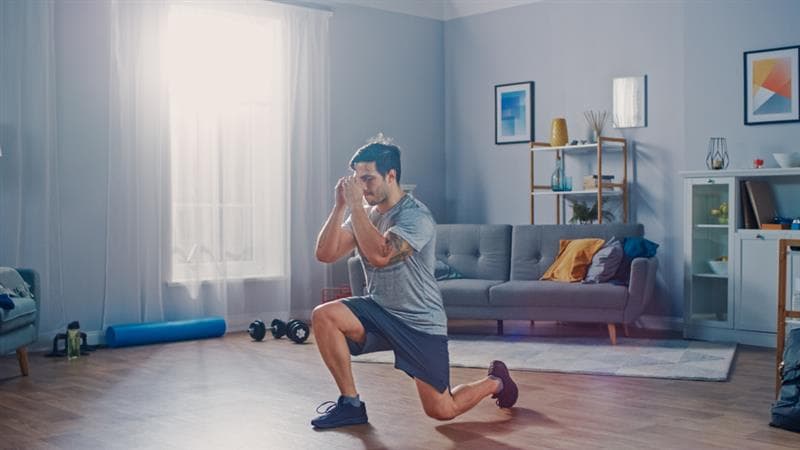
Lunges are a highly effective and versatile exercise for building lower body strength. They engage multiple muscle groups and offer various benefits, making them a staple in many fitness routines. This guide will cover the muscles worked during lunges, their advantages, how to perform them correctly, and various modifications to enhance your workout.
Lunges engage several key muscle groups, making them a compound exercise that promotes both mobility and stability. The primary muscles worked include:
Quadriceps: Located at the front of the thigh, these muscles are crucial for knee extension.
Gluteals: The glutes are vital for hip extension and stabilization.
Hamstrings: These muscles at the back of the thigh work to control movement and stabilize the knee.
Calves (Gastrocnemius and Soleus): These muscles support ankle stability and help in pushing off the ground.
Core Muscles: This includes the transverse abdominis, obliques, multifidus, and erector spinae, which stabilize the torso throughout the movement.
During a lunge, both concentric (shortening) and eccentric (lengthening) muscle contractions occur. For instance, as you lower into a lunge, your quads and glutes lengthen under tension. When you push back to the starting position, these muscles contract to lift your body back up.
Lunges offer numerous advantages that make them essential in both strength training and rehabilitation programs:
Muscle Engagement: Lunges work multiple muscle groups simultaneously, enhancing lower body strength and endurance.
Injury Prevention: They help strengthen the knees and hips, which is crucial for preventing injuries, especially for athletes. Lunges can be particularly beneficial for ACL injury prevention.
Functional Fitness: This exercise mimics movements used in daily life, such as walking, running, and climbing stairs, which makes it practical for improving overall functional strength.
Balance and Stability: Lunges challenge your balance, improving your stability and coordination over time. This is especially beneficial for activities requiring unilateral movements.
Efficiency: As a compound movement, lunges efficiently work multiple joints and muscle groups, making them a time-effective choice in your workout regimen.
Starting Position: Stand with your feet hip-width apart.
Step Forward: Take a step forward longer than a walking stride, ensuring one leg is ahead of the other.
Lower Your Body: Bend both knees until they are at approximately 90 degrees. Keep your trunk upright and engage your core.
Return to Start: Push through your front foot to return to the starting position.
Ensure your lead knee doesn’t extend past your toes.
Your back knee should not touch the ground.
Maintain symmetrical hips throughout the movement.
Keep your feet hip-width apart during the landing and return.
Lunges can be adapted to emphasize different muscle groups or adjust the difficulty. Here are some popular variations:
Static Lunge: Also known as the split squat, this variation involves a stationary movement that is gentler on the knees, focusing more on the quadriceps.
How to: Stand in a split-stance position and lower your body without stepping forward or backward.
Back Lunge: In this version, you step back instead of forward, reducing the emphasis on the quadriceps and shifting it more towards the glutes and hamstrings.
How to: Start in a standing position and step back while bending both knees to about 90 degrees.
Lateral Lunge: This variation involves stepping out to the side, engaging the inner thigh muscles (adductors) more effectively.
How to: Stand with feet hip-width apart and step out to the side, bending the stepping knee while keeping the other leg straight.
Curtsy Lunge: This lunge adds a crossing motion, targeting the gluteus medius and inner thighs.
How to: Stand with feet hip-width apart, step one leg behind the other, and lower your body until your front thigh is parallel to the ground.
Walking Lunge: This dynamic variation allows you to continuously move forward, emphasizing the glutes and hamstrings even more.
How to: Step forward into a lunge, push off, and bring your back foot forward into the next lunge.
To increase the challenge of your lunges, consider adding weight. You can start with lighter weights than you would typically use for squats or deadlifts, particularly for lunges that step away from your center of gravity.
Dumbbells: Hold a dumbbell in each hand.
Barbell: Perform the lunge with a barbell on your shoulders for added resistance.
Single Dumbbell: Holding a dumbbell in the opposite hand of your lead leg can help engage your obliques more effectively.
Lunges are an exceptional exercise for targeting multiple muscle groups in the lower body, enhancing strength and stability. With various adaptations, they can be tailored to suit different fitness levels and objectives. Incorporating lunges into your workout routine not only strengthens your muscles but also prepares you for the physical demands of daily life.
For those seeking to optimize their fitness journey, consider integrating lunges into your regimen alongside other exercises and possibly using pain relief products for muscle recovery, ensuring you maintain peak performance while avoiding injury.
Share this article:

